Apps available on demand provide many businesses with the ability to grow. Customers want to receive their service as quickly as possible and have a seamless digital experience while doing so. Companies that provide instant service will see more frequent use and an increased chance of their being a long-term customer. As a result, many companies within the healthcare, logistics, finance, and at home service industries are investing heavily into on-demand app development to keep up with consumer expectations.
To maximize your financial investment in on-demand application development, it's important to understand how much you're going to spend before moving forward with any project. This includes identifying your features, how you would like to develop the application (e.g., iOS vs. Android), and sizing the complexity of the project – all of which will affect the total cost of developing your application. Utilizing a structured process throughout the life cycle of on-demand application development will reduce project risk and provide a better return on investment. This guide will help you understand all aspects of costs, features, methods of development, and timelines for developing your application.
Why On Demand Apps Continue to Grow
Customer expectations changed significantly. Users prefer convenience and speed. Businesses offering instant services attract more users and increase conversions. Faster services improve customer satisfaction and repeat usage.
Market data supports this growth. PwC reports the on demand economy will reach 335 billion dollars by 2027. Statista reports mobile apps account for more than 70 percent of digital media usage. Forbes reports 86 percent of customers pay more for convenience.
Businesses entering niche markets like on demand dog walking app development often start with location based service models.
Businesses investing in on demand apps improve operational efficiency. Digital platforms reduce manual work. Automated workflows increase productivity and revenue.
What is an On Demand App?
An on demand app connects customers with service providers. Users request services through mobile apps. Providers accept requests and complete services. The platform manages bookings, payments, and communication.
Most on demand apps include three core components.
- Customer application
- Service provider application
- Admin panel
The customer app allows users to search services and place requests. The service provider app helps professionals manage availability and requests. The admin panel controls operations, payments, and analytics.
This structure supports scalability and business growth. Many companies also expand services and create on demand delivery app platforms to meet rising consumer expectations.
Types of On Demand Apps
Different industries adopt on demand apps. Each category requires specific features and development strategy.
Service Marketplace Apps
Service marketplace apps connect customers with professionals. Examples include cleaning services, repair services, and maintenance platforms. These apps require scheduling and booking features.
Delivery Apps
Delivery apps focus on logistics and order management. Food delivery and grocery apps fall into this category. Real time tracking becomes essential.
Professional Service Apps
Professional service apps connect users with experts. Finance advisors, consultants, and healthcare professionals use this model. These apps require secure communication and appointment scheduling. Financial platforms continue to grow as businesses evaluate the cost to create an app for on demand finance advisor solutions.
Each category influences on demand app development cost.
Must Have Features in On Demand Apps
Features determine user experience. A strong feature set improves engagement and retention.
Customer App Features
Your customer app should focus on simplicity and speed. Essential features include user registration, service search, booking system, real time tracking, payment gateway, notifications, and ratings.
These features improve usability and customer satisfaction.
Service Provider Features
Service providers require management tools. These features improve service quality and efficiency.
- Availability management
- Request acceptance
- Navigation integration
- Earnings tracking
- Notifications
These features help service providers manage operations effectively.
Admin Panel Features
The admin panel controls the platform. Admins manage users, payments, and analytics.
- User management
- Payment tracking
- Analytics dashboard
- Commission management
- Customer support
These features ensure smooth operations.
Advanced Features That Improve Engagement
Advanced features improve competitiveness and user retention. Businesses should add advanced features based on growth goals.
AI recommendations improve personalization. In app chat improves communication. Multi language support expands user base. Dynamic pricing improves revenue management. Analytics dashboards improve decision making.
Adding advanced features increases on demand app development cost. Strategic planning helps manage expenses.
On Demand App Development Cost
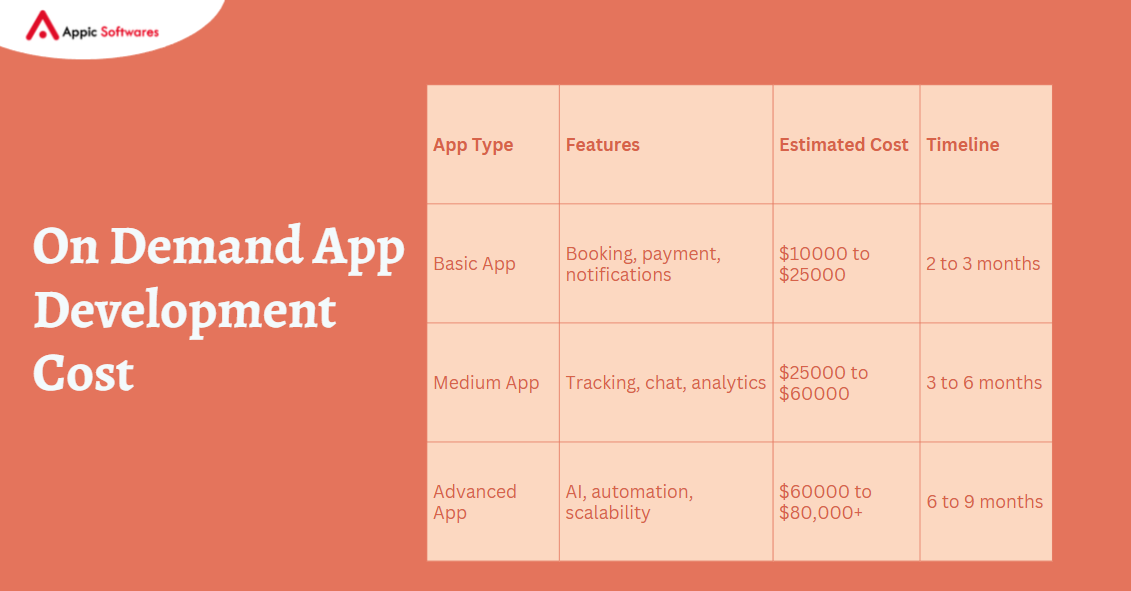
On demand app development cost depends on complexity, features, and platform selection. Understanding cost structure helps businesses estimate budget accurately.
Startups often begin with MVP for ecommerce website models to validate ideas and reduce initial development cost.
Factors That Affect On Demand App Development Cost
Several factors influence development cost beyond features.
Platform Selection
Businesses choose Android, iOS, or both. Building for multiple platforms increases development cost. Cross platform frameworks reduce expenses.
UI and UX Design
User experience impacts engagement. Custom design increases development time and cost. Better design improves retention.
Backend Infrastructure
Scalable backend supports growth. Cloud infrastructure improves performance and flexibility.
Third Party Integrations
Payment gateways, maps, and analytics add functionality. Each integration increases development cost.
Maintenance Cost
Maintenance improves performance and security. Businesses should plan ongoing updates. Maintenance cost ranges between 15 and 20 percent annually.
Development Timeline
Development timeline depends on complexity and features.
Basic app takes two to three months.
- Medium app takes three to six months.
- Advanced app takes six to nine months.
- Clear planning reduces delays and improves delivery.
Challenges in On Demand App Development
Scalability remains a major challenge. Your app should handle increasing traffic. Security plays a critical role. Protecting user data remains essential.
Competition continues to increase across industries. Businesses should focus on user experience and performance.
How to Build a Successful On Demand App
Start with market research. Identify user needs. Define features clearly. Build MVP first. Launch quickly. Collect feedback from users. Improve features based on usage data.
Use analytics to understand user behavior. Optimize performance regularly. Focus on customer satisfaction.
Your development partner influences success. Appic Softwares builds scalable on demand applications for startups and enterprises. Their team supports consultation, design, development, and post launch support.
Their approach improves efficiency and reduces development risks.
The on demand economy continues to grow. Businesses adopting early gain competitive advantage. Your idea deserves execution.
Frequently Asked Questions
How long does it take to build an on demand app?
Development timeline depends on features and complexity. A basic on demand app takes two to three months. A medium complexity app requires three to six months. Advanced apps with custom features take six to nine months. Clear planning and defined requirements reduce development time.
What features should an on demand app include?
Your on demand app should include essential features for customers, providers, and admin. Customer features include registration, search, booking, payments, and notifications. Service provider features include request management, availability settings, and earnings tracking. Admin features include analytics, user management, and payment tracking. These features support scalability and improve user experience.