The healthcare industry is under tremendous pressure to improve the quality of its services, improve the efficiency with which it manages patient records, and decrease the time it takes to operate. Paper-based medical records impede the delivery of care to patients by being slow and increasing the chances for error during the delivery of those same services. Electronic health records solve all of these problems by allowing for the use of technology to create and manage patient information in a structured format.
The development of EHR software gives hospitals and clinics the ability to electronically store, retrieve and share patient information over secured electronic networks. Physicians can now access their patients’ medical histories in a matter of seconds. The physician’s administrative team can now perform administrative tasks without the need for paper-based information. Patients can now be diagnosed and treated considerably faster than was once possible.
Increased adoption of technology by healthcare establishments is one of the more significant trends affecting healthcare today. As of 2021, 96 percent of non federal hospitals and 78 percent of office based physicians had adopted certified EHR systems, compared with 28 percent of hospitals and 34 percent of physicians in 2011.
This trend has created a tremendous need for healthcare organizations to match up with partner companies that have experience in providing IT solutions to healthcare organizations. Many hospitals and clinics are searching for the best healthcare app development company for their EHR emulation and eHealth application development projects.
This guide provides information on EHR and EMR systems, principal software features, development phases, and costs, along with general information and advice for hospitals and clinics that are seeking to implement electronic health systems.
Understanding EMR and EHR Systems
Healthcare technology includes two commonly used systems. EMR systems and EHR systems. Many people treat these terms as identical. They serve different purposes.
Understanding the difference helps healthcare organizations select the correct solution.
What is EMR Software
Electronic Medical Records store digital versions of patient medical history inside a single healthcare organization.
Doctors record diagnoses, prescriptions, test results, and treatment plans inside the system. Staff members retrieve information quickly during consultations.
Typical data stored inside EMR systems includes:
- Patient demographics
- Medical history
- Medication lists
- Diagnostic reports
- Treatment notes
Clinics and hospitals rely on EMR software development services when they want systems tailored for internal workflows.
EMR systems improve internal data management. They reduce administrative workload and improve record accuracy.
These systems rarely share patient data outside the organization.
What is EHR Software
Electronic Health Records store patient information across multiple healthcare providers. A hospital, diagnostic lab, specialist clinic, and pharmacy access the same patient record.
Doctors review complete patient history before diagnosis. This improves treatment accuracy and reduces duplicate tests.
EHR systems support coordinated healthcare. They connect doctors, nurses, insurance providers, and laboratories.
Healthcare organizations hire an EHR software development company when they require integrated platforms with secure data exchange.
Hospitals also invest in custom EHR software development to match complex clinical workflows.
EMR vs EHR Software
Understanding EMR vs EHR software helps decision makers choose the correct system.
EMR systems
- Store patient records inside a single healthcare organization
- Support internal clinical workflows
- Offer limited data sharing
EHR systems
- Share records across multiple providers
- Improve coordination among specialists
- Support integrated healthcare delivery
Hospitals with multiple departments or networks require EHR systems rather than EMR systems.
Why Healthcare Organizations Invest in EHR Software Development
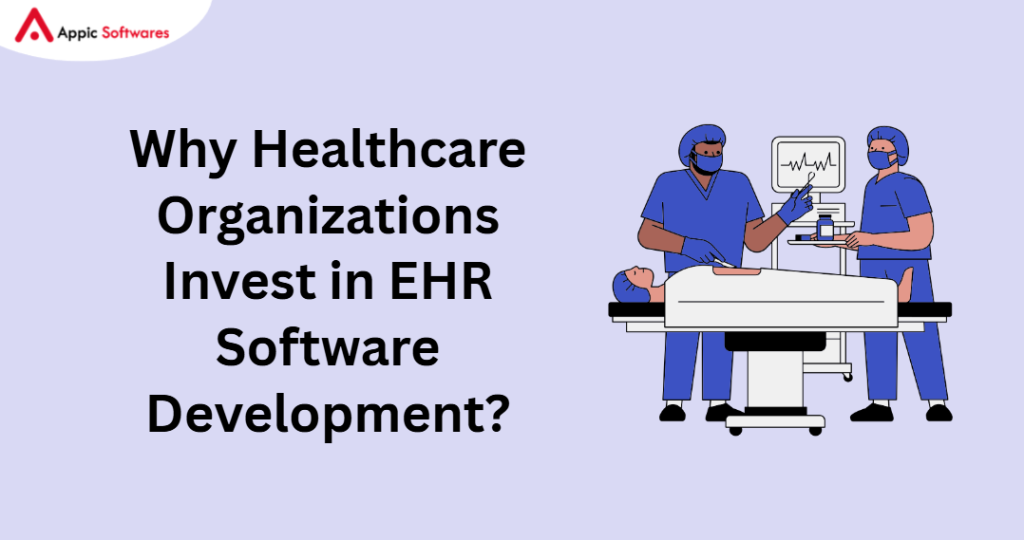
Healthcare operations depend on accurate patient data. Delays in information access lead to treatment delays and administrative errors.
EHR software development improves both clinical workflows and operational efficiency.
Healthcare providers report measurable improvements after digital system adoption.
Faster Access to Patient Information
Doctors access patient history within seconds. This reduces consultation time and improves treatment decisions.
Reduced Medical Errors
Electronic prescriptions prevent handwriting mistakes. Automated alerts warn doctors about drug interactions.
Research published by the Journal of the American Medical Informatics Association shows digital prescription systems reduce medication errors by more than 50 percent.
Improved Coordination Between Providers
Specialists review patient data without waiting for paper files. This improves collaboration between departments.
Lower Administrative Costs
Digital systems reduce paperwork and manual data entry. Hospitals save operational expenses.
Healthcare organizations evaluate the benefits of EHR systems before initiating digital transformation.
Core EHR System Features
Every healthcare platform requires specific functional modules. These EHR system features support clinical and administrative tasks.
Patient Records Management
Healthcare staff store patient history, test results, allergies, and treatment plans inside structured digital records.
Doctors access complete medical history during consultations.
Appointment Scheduling
Patients schedule appointments online. Clinics manage doctor availability and patient flow efficiently.
Digital Prescriptions
Doctors issue electronic prescriptions. Pharmacies receive medication orders digitally.
Prescription history stays stored inside the system.
Billing and Insurance Integration
Healthcare billing systems connect with insurance providers. Automated claim processing reduces administrative workload.
Clinical Decision Support
Advanced systems analyze patient data and suggest diagnostic insights. This improves treatment planning.
Healthcare organizations implement custom EHR software development when standard platforms fail to meet operational requirements.
Technology Behind Modern Healthcare Platforms
Modern healthcare systems combine multiple technologies. These technologies improve performance, scalability, and security.
Artificial Intelligence in Healthcare Systems
AI systems analyze large healthcare datasets. Hospitals identify disease patterns and predict treatment outcomes.
Organizations integrate AI in healthcare strategies to improve clinical decision support.
Cloud Based Healthcare Infrastructure
It allows hospitals to store large volumes of patient data securely. Cloud platforms scale infrastructure during high demand. Hospitals avoid infrastructure maintenance costs.
Healthcare data platforms such as AWS HealthLake store structured and unstructured medical records for analytics and interoperability.
Telemedicine Platforms
Remote consultations expanded significantly after the global pandemic. Telemedicine platforms allow patients to consult doctors through video calls.
Healthcare organizations adopt telemedicine app development when they want to offer digital consultations and remote healthcare services.
EMR And EHR Software Development Guide
Healthcare software development follows structured processes. Each stage addresses security, compliance, and usability requirements.
This EMR software development guide outlines the development lifecycle.
Step 1 Requirement Analysis
Development teams consult healthcare administrators, doctors, and IT teams.
They identify clinical workflows, data storage requirements, and regulatory compliance standards.
Step 2 System Architecture Design
Architects design secure system infrastructure. Healthcare platforms require encryption, secure authentication, and access control.
Integration with hospital systems remains essential.
Hospitals often integrate ERP for healthcare systems with EHR platforms to manage inventory, billing, and administration.
Step 3 UI and UX Design
Doctors require interfaces that support quick data access.
Design teams create simple dashboards and efficient workflows.
Step 4 Development and Integration
Developers build core modules including patient management, scheduling, billing, and analytics.
Integration with diagnostic labs, insurance providers, and pharmacies occurs during this stage.
Step 5 Testing and Compliance Validation
Healthcare software requires strict testing procedures. Teams perform security testing, performance testing, and compliance validation.
Step 6 Deployment and Maintenance
The system launches in the hospital environment. Continuous monitoring ensures system stability.
Cost to Build EHR or EMR Software
Healthcare organizations analyze the cost to build EHR software before starting development.
Costs vary depending on system complexity and technology requirements.
Several factors influence development budgets.
Feature Requirements
Advanced features increase development effort. AI analytics, remote monitoring, and interoperability systems require additional development time.
Compliance and Security
Healthcare regulations require encryption, audit logs, and access control systems.
Security implementation increases development cost.
Integration Requirements
Hospitals connect EHR systems with laboratories, insurance providers, pharmacies, and billing platforms.
Integration complexity influences project budgets.
Healthcare leaders must review the cost to create a healthcare software before planning digital transformation investments.
Healthcare IT Outsourcing for Software Development
They often lack in house development teams with medical technology expertise.
Outsourcing solves this challenge.
Development partners provide specialized healthcare technology expertise.
Healthcare organizations evaluating outsourcing strategies analyze healthcare IT outsourcing benefits before selecting a development partner.
Outsourcing provides three clear advantages.
Access to experienced healthcare developers
Faster project delivery timelines
Lower operational expenses
Many healthcare startups choose outsourcing during early development stages.
Emerging Trends in EHR Software Development

Healthcare technology continues to evolve. Several trends shape the future of EHR software development.
AI Assisted Diagnostics
AI systems analyze medical records and imaging data. Doctors receive decision support insights.
Interoperable Healthcare Networks
Healthcare platforms exchange patient data across hospitals, labs, and insurance providers.
Mobile Healthcare Applications
Doctors access medical systems through mobile apps during hospital rounds.
Specialized Digital Health Platforms
Healthcare technology expands beyond hospitals. New platforms track specialized medical data.
Examples include pet health tracker app development which focuses on digital tracking of animal healthcare records.
Healthcare technology innovation continues to influence healthcare software development solutions worldwide.
Why Healthcare Organizations Choose Custom EHR Software Development
Generic healthcare software rarely fits complex hospital workflows.
Custom EHR software development allows healthcare organizations to build platforms aligned with operational requirements.
Custom systems provide several advantages like:
- Workflow specific functionality
- Integration with existing hospital systems
- Higher scalability
- Improved data security
- Full control over system updates
Hospitals planning large scale digital transformation rely on customized platforms.
Organizations researching healthcare platforms often study ehr software development resources before initiating projects.
Why Appic Softwares for EHR Software Development
Healthcare organizations require experienced technology partners. Appic Softwares delivers EHR software development services for hospitals, healthcare startups, and medical networks.
Their development teams understand healthcare compliance standards, interoperability requirements, and hospital workflows.
Appic Softwares provides full cycle healthcare technology services including system planning, UI design, software development, integration, and maintenance.
The company also develops advanced healthcare software development solutions including telemedicine platforms, hospital management systems, and analytics platforms.
Healthcare providers partner with Appic Softwares to implement secure, scalable digital health systems.
Build Your Healthcare Platform with Appic Softwares
Healthcare organizations require efficient digital infrastructure. Hospitals handle thousands of patient records daily. Manual systems slow down operations and increase risk of errors.
EHR software development solves these operational challenges. Digital record systems improve care quality, reduce administrative workload, and improve coordination between healthcare providers.
Healthcare startups and hospitals seeking advanced healthcare technology platforms require reliable development partners.
Appic Softwares delivers customized healthcare software development solutions for organizations seeking scalable and secure digital healthcare systems.
Book your free consultation now!
FAQs
1. What is the difference between EMR and EHR systems?
The EMR stores all of a particular patient’s medical records within the same healthcare provider organization; a doctor will be able to track their patients’ diagnosis, prescription(s), and treatment history through this system but will only have access to their own internal systems.
The EHR contains information about patients from many healthcare providers, including hospitals, labs, specialists, and pharmacies, and it is accessible by everyone involved in a patient’s healthcare, thereby helping to improve the coordination and accuracy of care. Healthcare networks adopt EHR systems if they need to be able to share they patient’s data with multiple entities.
2. What features should be included in the EHR software?
Core functionality of an EHR system should feature both Clinical and Administrative functional modules. Examples of the clinical modules include modules such as appointment scheduling, patient record management, electronic prescription, billing integration, and clinical decision support systems. Many of the more advanced healthcare systems also include functionality for telemedicine integration into their systems and have analytic dashboard functionality.
3. What is the cost of EHR software developed for my organization?
The total cost to develop EHR software will depend on the complexity of the software provided, the feature sets offered, the integration of any third-party applications, and the level of security necessary. The software development cost will be around $10,000 to $80,000.