EHR Software Development: Complete Guide to Benefits and Costs
Electronic Health Records (EHR) software is changing how healthcare providers manage patient information. Doctors and hospitals no longer rely on scattered files or manual records. Everything is organized, secure, and easy to access.
A strong EHR system helps medical teams make faster decisions. It improves coordination between doctors, nurses, and staff. Most importantly, it supports safer and better patient care.
This shift has increased the demand for healthcare software development. Clinics and hospitals now need digital tools that simplify workflows, protect patient data, and improve efficiency.
But when healthcare providers or entrepreneurs plan to build an EHR system, the first question is: What real value will it bring to patient care? And how much will it cost to develop?
The ONC says that around 78% of doctors in the U.S. now utilize an EHR system. This shows how common and important these platforms have become.
This guide will teach you everything you need to know about developing EHR software, including what it is, how it can help healthcare organizations, the different types of EHR systems, the most significant features, the development process, and, most importantly, the cost.
Understanding EHR Software
EHR software is a digital platform that stores a patient’s complete medical history. Unlike paper-based records, EHRs are accessible from multiple locations and can be updated in real time. They contain critical information such as patient demographics, diagnosis history, lab test results, treatment plans, prescriptions, and medical images.
Modern EHR systems also integrate with other healthcare applications, allowing different healthcare professionals to collaborate seamlessly.
This means a specialist, primary care physician, and lab technician can all access the same patient record instantly. For healthcare organizations, EHR software is more than just a record-keeping tool; it’s a central hub for managing patient care, streamlining workflows, and ensuring regulatory compliance.
Bonus read: AI in real estate examples
Why Healthcare Providers Are Moving Towards EHR Systems
Over the past decade, the healthcare industry faced strong pressure to improve patient outcomes, reduce operational inefficiencies, and protect sensitive data. Paper records create delays. Staff spend hours searching files and updating charts. Files get damaged or lost. Information sharing between departments becomes slow.
EHR systems fix many of these problems. Medical staff update records in real time. Departments access the same patient data.
Reporting becomes automated. Digital storage improves record security and tracking.
Government policy also pushed EHR adoption. In the United States, the HITECH Act encouraged hospitals and clinics to adopt certified EHR systems. The program offered financial incentives for meaningful use of digital health records. As digital health adoption grows, many organizations hire healthcare developers to build custom EHR platforms. A skilled development team builds systems that match clinical workflows, support compliance requirements, and improve long-term system reliability.
Benefits of EHR Software Development
The benefits of EHR software go beyond convenience. They directly impact the quality of care, patient satisfaction, and financial performance of healthcare facilities.
Improved Patient Care
EHR systems give doctors immediate access to accurate patient data. This means they can make faster and better-informed decisions. For example, if a patient is allergic to a specific medication, the EHR can alert the physician instantly before prescribing it.
Streamlined Workflow for Healthcare Staff
Administrative tasks like scheduling appointments, managing billing, or sending follow-up reminders are automated. This reduces paperwork and frees up healthcare staff to focus more on patient care.
Enhanced Collaboration Between Providers
When multiple specialists are involved in a patient’s care, the EHR acts as a shared workspace. Each provider can view and update the record, ensuring everyone is working with the latest information.
Regulatory Compliance and Security
EHR systems can be built to comply with industry regulations such as HIPAA (US) or GDPR (EU). This ensures sensitive health data remains private and secure, protecting both the patient and the healthcare provider from legal risks.
Data-Driven Decision Making
EHRs generate valuable data analytics that help organizations identify trends, track treatment outcomes, and improve long-term strategies. For example, hospitals can track the average length of stay for certain conditions and adjust their care protocols accordingly.
Bonus read: Hire indian developers
Types of EHR Software
Understanding the different types of EHR software is crucial before starting development.
Cloud-Based EHR
These systems are hosted on remote servers and accessed through the internet. They require lower upfront investment and are easier to scale, making them popular among small and medium-sized practices. Many organizations choose reliable infrastructure providers from the best cloud server hosting sites for startups when building or launching digital health platforms
On-Premise EHR
This system is installed locally on a hospital’s servers. It offers more control over data but comes with higher initial costs and maintenance responsibilities.
Specialty-Specific EHR
These are tailored for specific medical fields such as pediatrics, cardiology, or dental care. They include features and templates unique to those specialties.
Open-Source EHR
These are customizable platforms that can be modified according to the healthcare provider’s needs. They offer flexibility but require technical expertise for customization.
You may like reading: Tinder clone
Key Features Every EHR System Should Have

When developing EHR software, certain features are non-negotiable.
- Patient Record Management
Centralized storage of all patient data, including medical history, allergies, diagnoses, and test results.
- Appointment Scheduling
Integrated calendars for booking, rescheduling, and sending reminders to reduce no-shows.
- E-Prescription
Allows doctors to send prescriptions electronically to pharmacies, minimizing errors.
- Lab Integration
Automatic import of lab results into the patient’s record for quick review.
- Billing and Insurance Management
Streamlined medical billing, insurance claims processing, and payment tracking.
- Data Security
Advanced encryption, access controls, and audit logs to ensure patient data privacy.
- Reporting and Analytics
Tools to generate reports for patient outcomes, operational efficiency, and compliance tracking.
The EHR Software Development Process
Creating an EHR system is a multi-step process that requires close collaboration between healthcare providers, developers, and compliance experts. During planning, organizations review technical scope, infrastructure needs, and long-term maintenance costs. Many businesses also compare budgets with the AI software development process of advanced digital health features, such as predictive analytics or decision support tools.
Requirement Analysis
The first step is gathering detailed requirements from the client. This includes understanding the size of the healthcare facility, its existing systems, preferred workflows, and compliance requirements.
Design and Prototyping
Developers create wireframes and prototypes to visualize the system’s interface and features. This ensures the final product matches the client’s vision.
Development
This stage involves coding the application, setting up the database, integrating third-party tools (like lab systems), and implementing security protocols.
Testing
The software is tested for performance, usability, and security. This stage also includes checking compliance with healthcare regulations.
Deployment
Once approved, the EHR system is deployed to the client’s servers or cloud platform.
Training and Support
Staff members are trained to use the system effectively. Ongoing technical support ensures smooth operations and regular updates.
How Much Does It Cost to Develop EHR Software?
The cost of EHR software development can vary greatly depending on complexity, features, and technology stack.
A basic EHR system with core features like patient management, scheduling, and e-prescriptions might cost between $40,000 and $80,000.
A mid-level system with advanced integrations (lab results, analytics, billing) can range from $80,000 to $150,000. A fully customized EHR solution with AI-driven decision support, telemedicine integration, and large-scale data analytics can exceed $250,000. Ongoing costs include software maintenance, cloud hosting (if applicable), and regular security updates.
Factors Affecting EHR Development Costs
Several factors influence the total cost:
- Feature Set: More features mean more development hours.
- Type of EHR: Cloud-based systems usually cost less upfront than on-premise ones.
- Customization: Tailoring the system to a specific specialty or workflow increases complexity.
- Compliance Requirements: Meeting strict security and regulatory standards adds to development time.
- Team Location: Developer rates vary widely across countries.
Why Partnering with an Experienced EHR Development Company Matters
EHR software development is not just about coding; it’s about understanding healthcare workflows, patient safety, and compliance. Working with a team experienced in healthcare software ensures the final product meets your needs and regulatory requirements. When you work with an experienced technology partner such as Appic Softwares, often recognized as the best mobile app development company, you receive structured support. The team studies your requirements, designs clear user interfaces, implements strict security measures, and provides long-term technical support.
Final Thoughts
EHR software development is a strategic investment for healthcare organizations aiming to improve efficiency, patient care, and compliance. While the costs can be high, the long-term benefits in terms of improved patient outcomes, reduced administrative workload, and better data management far outweigh the initial expenses.
If you are ready to explore EHR software development for your healthcare organization, partnering with the right development company like Appic Softwares can help you build a secure, scalable, and user-friendly system tailored to your specific needs.
Reach out to us!
FAQs
1. How long does it take in EHR software development?
Developing a custom EHR software can take between four and six months if it is going to be just a simple system that contains features like patient records, appointment scheduling, and simple report generation. Otherwise, if it is going to be more complex with features like integration of telehealth, analytics dashboards, and if you want to integrate AI in healthcare into the platform, then it could take anywhere from eight to twelve months or more to complete development.
2. Is it better to buy ready-made EHR software or a custom one?
They are good for companies that need to implement a digital solution quickly. However, most of the shelf solutions have limitations on their use, such as restrictions on configuring customizations, recurring subscription fees, and limited integrations. Custom EHR solutions are built specifically for you, allowing the ability to create custom features, integrated with other healthcare organizations, and scale as your organization scales over time.
3. How much does EHR software development cost?
The cost to develop EHR software depends on the feature set, the integration requirement, and the compliance regulations to which the software must adhere. A basic EHR system can range from $10,000 to $30,000. A semi–complex EHR solution can range from $30,000 to $60,000. A fully functional enterprise solution can range from $60,000 and beyond $80,000+ at Appic Softwares.
Frequently Asked Questions
1. How long does it take in EHR software development?
Developing a custom EHR software can take between four and six months if it is going to be just a simple system that contains features like patient records, appointment scheduling, and simple report generation. Otherwise, if it is going to be more complex with features like integration of telehealth, analytics dashboards, and if you want to integrate AI in healthcare into the platform, then it could take anywhere from eight to twelve months or more to complete development.
2. Is it better to buy ready-made EHR software or a custom one?
They are good for companies that need to implement a digital solution quickly. However, most of the shelf solutions have limitations on their use, such as restrictions on configuring customizations, recurring subscription fees, and limited integrations. Custom EHR solutions are built specifically for you, allowing the ability to create custom features, integrated with other healthcare organizations, and scale as your organization scales over time.
3. How much does EHR software development cost?
The cost to develop EHR software depends on the feature set, the integration requirement, and the compliance regulations to which the software must adhere. A basic EHR system can range from $10,000 to $30,000. A semi–complex EHR solution can range from $30,000 to $60,000. A fully functional enterprise solution can range from $60,000 and beyond $80,000+ at Appic Softwares.
Related Articles
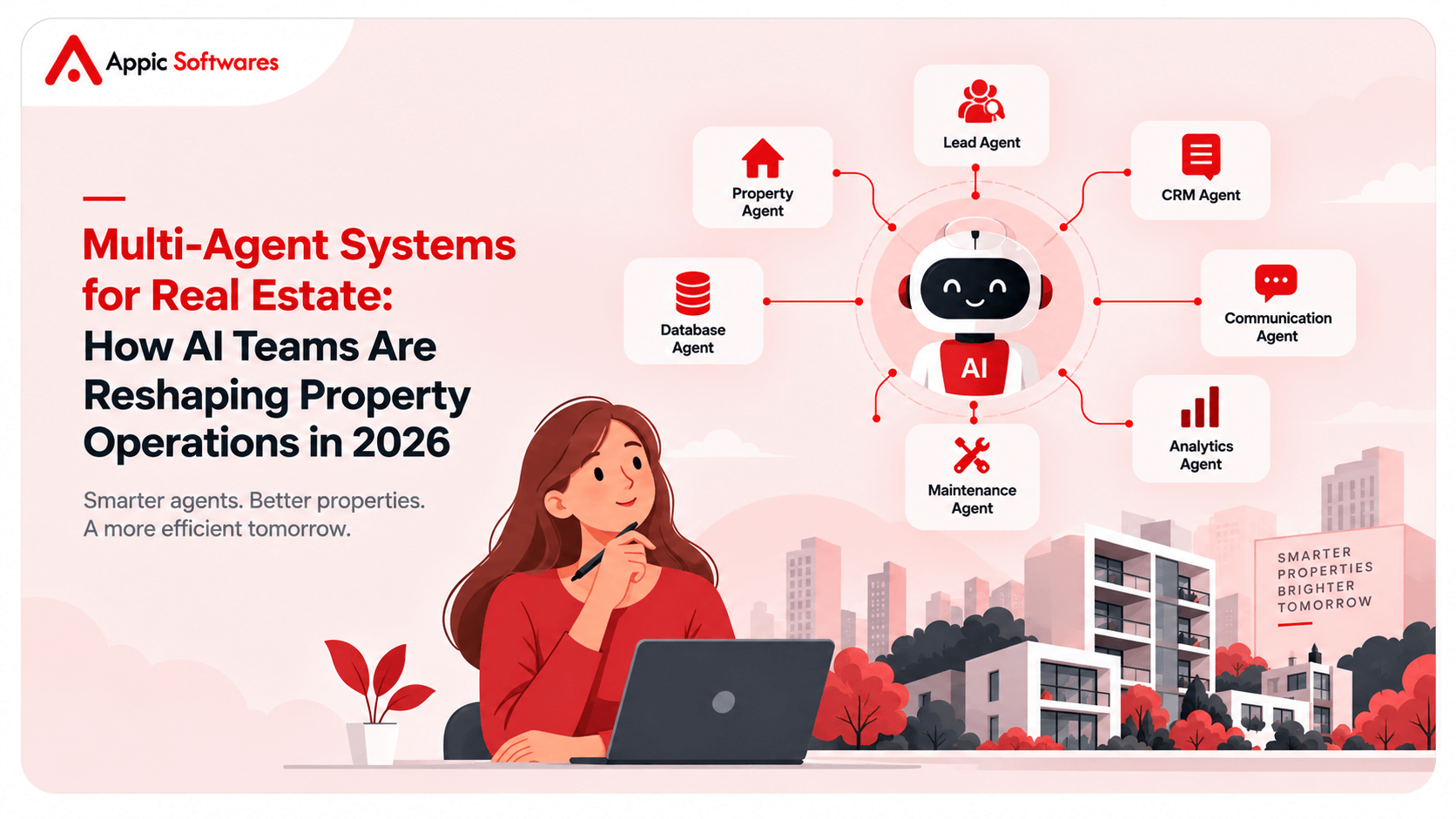
Multi-Agent Systems for Real Estate: How AI Teams Are Reshaping Property Operations in 2026

How Agentic AI Is Transforming Real Estate Operations in 2026