
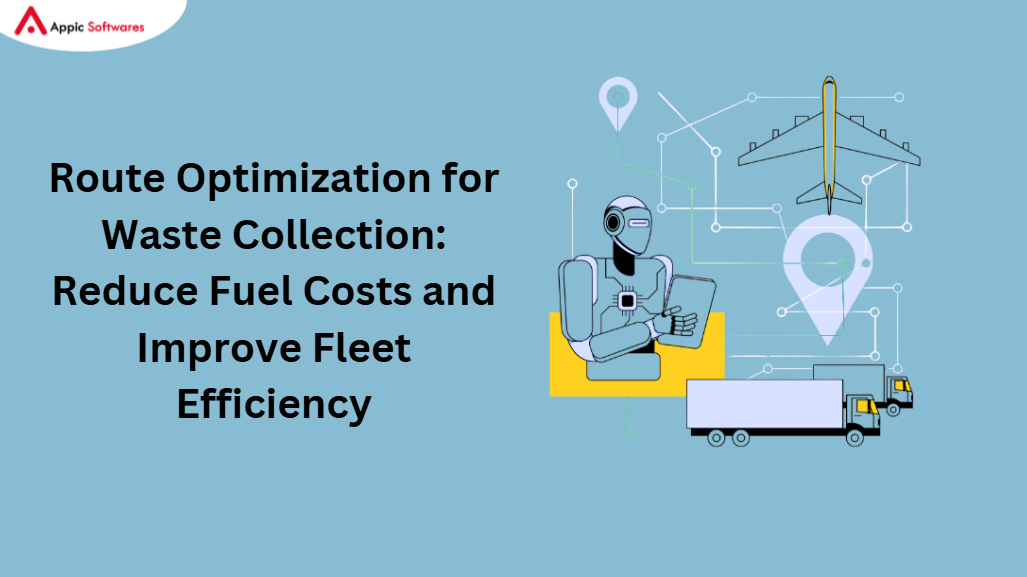
Route optimization
Fuel-efficient paths with live traffic, capacity, and collection schedules.
12+
Years of product engineering
150+
Software products shipped
35%
Avg. operational cost reduction
98%
Client retention rate
Written by the Appic Softwares team · Last updated July 2026
Overview
Waste management software digitizes collection routing, fleet and bin tracking, weighbridge ticketing, customer portals, recycling workflows, and regulatory reporting so haulers, cities, and plants run on one system instead of spreadsheets and phone tag. A waste management software development company designs and builds this system around your existing routes, contracts, and compliance rules, rather than selling you a fixed off-the-shelf product.
Custom development typically runs $40,000 to $250,000+ depending on IoT sensors, ERP integrations, compliance modules, and analytics depth — with MVPs often shipping in 10 to 16 weeks.
Fuel-efficient paths with live traffic, capacity, and collection schedules.
Digital manifests for solid, hazardous, and e-waste from source to disposal.
GPS for trucks, compactors, and IoT-enabled smart bins.
Automated ticketing, yard management, and outbound material invoicing.
Pickup requests, recycling metrics, and invoice self-service.
Audit trails and exports aligned to regional waste regulations.
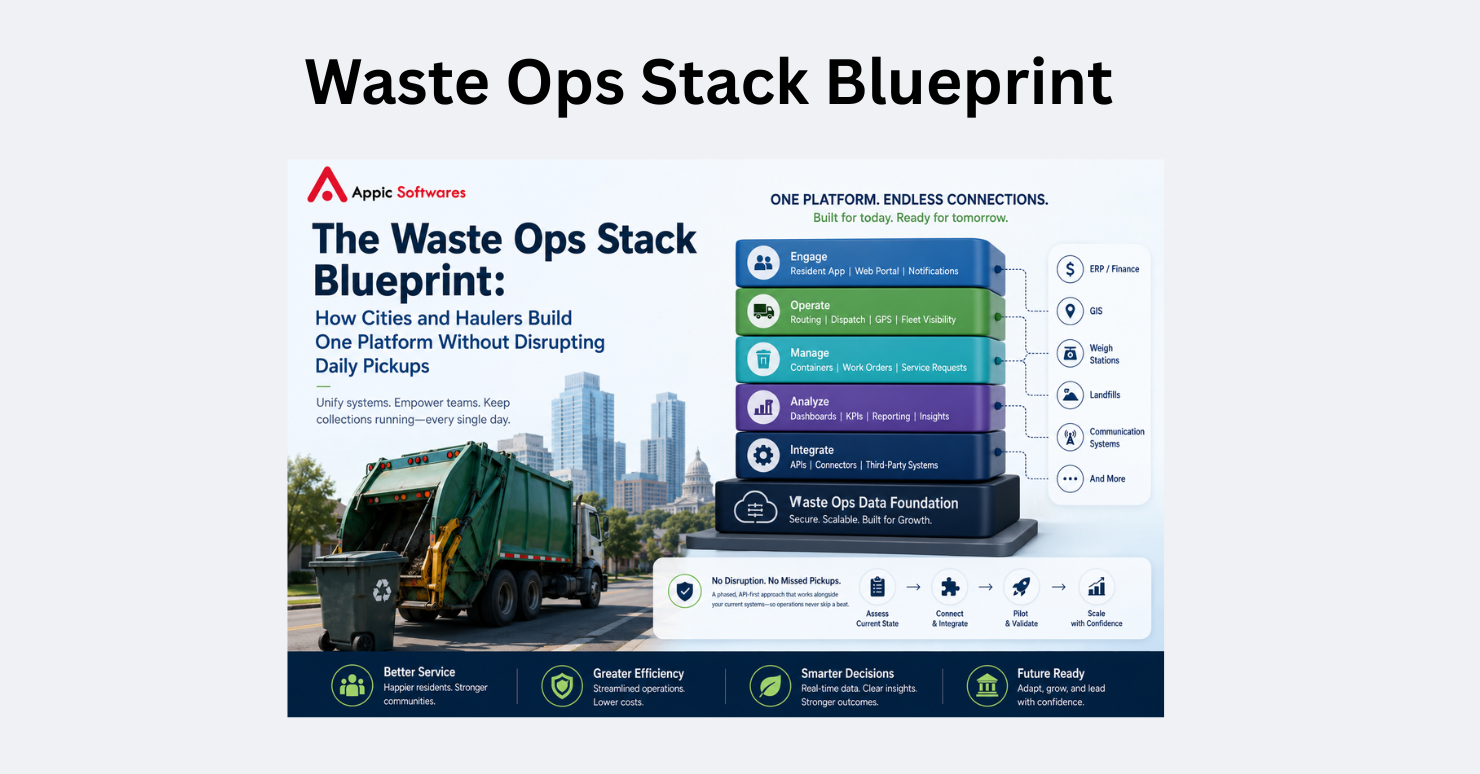
We follow a proven build path — discovery with ops and finance, MVP focused on scheduling, routing, and billing, then scale with IoT integrations, analytics, and compliance modules tied to your jurisdictions.
The Problem
Teams patch together maps, accounting, and telematics until something breaks loudly. Fuel creeps up, missed stops pile up, and compliance becomes a scramble the week before filings are due.
🗺️
When routes are guesses, trucks burn miles half empty next to overloaded runs. Fuel and overtime are usually the first place money leaks.
30%
of fuel cost wasted on sub-optimal routes on average
📋
Local rules and hazardous paperwork punish small mistakes. If reporting is assembled by hand each month, you are always one missed field away from trouble.
$70K+
average regulatory fine for non-compliant waste disposal records
🔭
If dispatch cannot see trucks, skips, or proof of service, they chase problems after customers already called. Leading indicators rarely exist.
4.5 hrs
average delay in issue detection without live tracking
💸
Invoices keyed from memory or month-end summaries miss carts, swaps, and extras. Revenue walks out quietly month after month.
8 to 12%
of monthly revenue lost to billing inaccuracies in manual operations
♻️
Buyers ask where material came from and how clean it stayed. Without weight and movement tied to loads, contracts and ESG answers get vague fast.
60%
of recyclables are contaminated due to poor sorting visibility
🔌
Accounting lives in QuickBooks, routes in spreadsheets, and telematics in another tab. Nobody sees one timeline, so the business always reacts late.
3 to 7
disconnected tools used by the average mid-size hauler
The Solution
We ship software shaped to your contracts, zones, tariffs, and safety rules instead of forcing you into a template meant for someone else's landfill or city limit.
Start with the slice that hurts most, then widen. Twenty trucks or a regional contract should grow inside the same core, not force a rewrite every time you win a new bid.
Talk to a Domain Expert →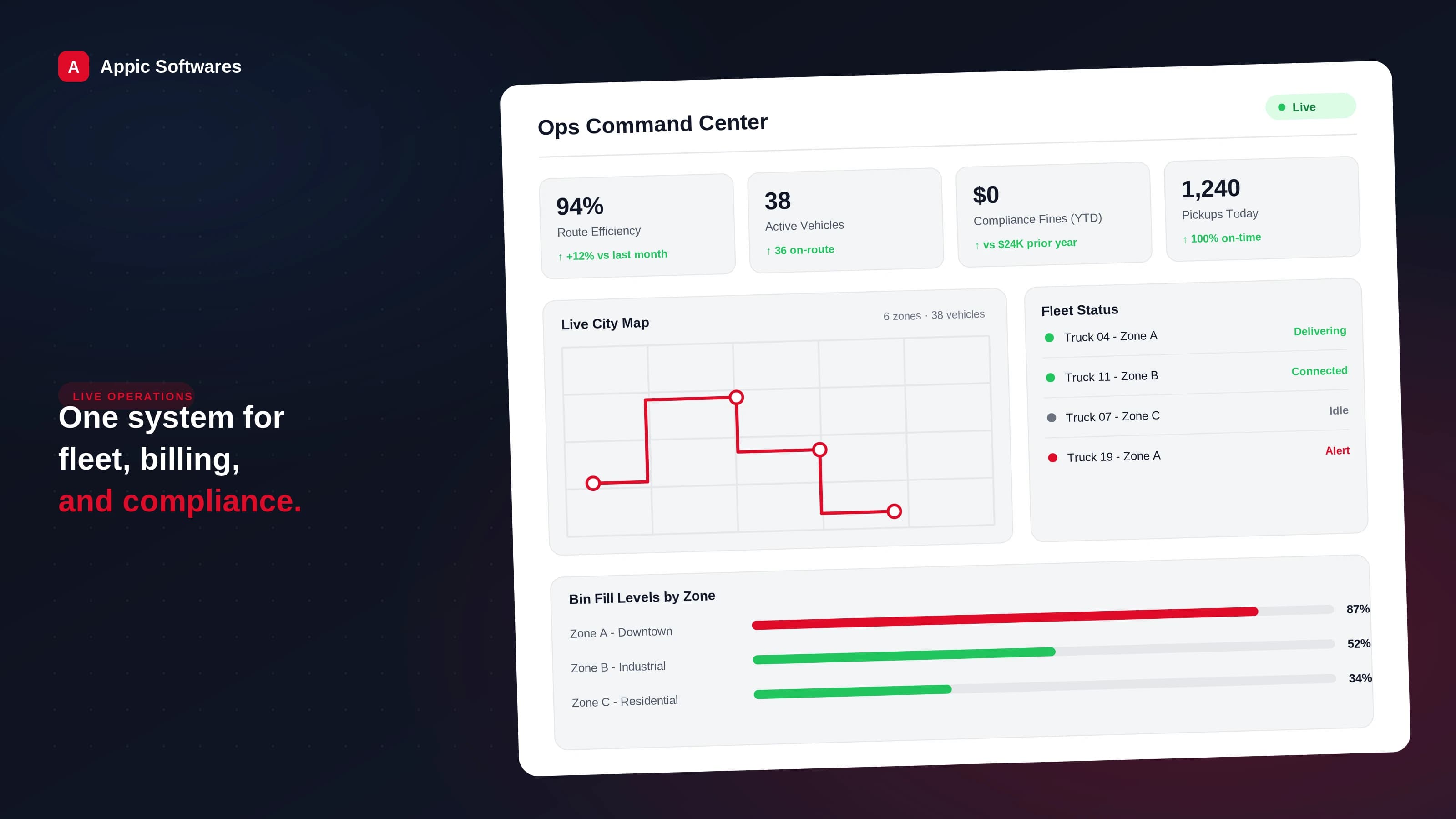
Our Services
Greenfield or a rewrite of creaky internal tools, we cover collection, processing, customer surfaces, and the integrations your finance team refuses to do by hand again.
End-to-end custom software for waste management including collection, billing, logistics, customer and resident portals, and custom apps.
Routes that react to fullness, truck capacity, traffic, and who is actually on shift, so supervisors spend less time redrawing boards.
GPS, utilization, harsh events where you care about them, and early warnings when a vehicle tends to fail on the same route every week.
Track material in and out with waste management software for recycling facilities, hook to scales where you have them, and see yield.
Bins that report levels, forecasts when history supports them, and computer vision only where cameras and labeling make sense.
Manifests, hazardous moves, signatures, and exportable audit trails so you can answer an inspection without pulling files from six folders.
Platform Features
Screens match what each role needs: exceptions for dispatch, proof for billing, quick taps for drivers.
🛰️Real-Time GPS & Fleet Tracking
A single map with ETAs, geofenced sites, and history you can reopen when someone disputes a missed stop.
📊Operational Analytics Dashboards
Cost per tonne, misses, truck use, and SLA-style views your team configures instead of dumping raw exports into BI.
🤖AI-Powered Workflow Automation
Schedules that adjust when bins fill faster than expected, nudges for missed pickups, and rules you define for escalations.
📱Driver & Field Mobile Apps
Manifests and navigation offline first, photos and signatures tied to stops, sync when signal returns.
🔗Third-Party System Integrations
Hooks into accounting, ERP, payments, CRM, and the telematics vendor you already pay for.
📍 Live Fleet View - 38 Vehicles
● Real-timeRoute Map - GIS Layer Active
12.4 km
Avg. Route Length
↓ -18% vs manual
97.2%
On-Time Pickups
↑ SLA Met
Fuel Efficiency by Vehicle Class
Who We Build For
We have shipped for cities, haulers, MRF operators, hazardous programs, enterprise site programs, and startups pitching new pickup models.
🏛️
Multi-zone pickup, citizen requests instead of voicemail-only complaints, and reports leadership can reuse for council packs.
♻️
Track loads in and out, flag contamination early, and export numbers when a customer asks how much actually got recycled.
🚛
Fast MVPs with booking, portals, subscriptions, and driver apps so you can show investors live usage, not slideware.
🏭
Chain of custody from drum to disposition, manifests that stay with the shipment, and modules shaped to how your EH&S team already works.
🌱
Gate queues, inbound mix, production output, and the environmental filings that tie to what actually crossed the weighbridge.
🏢
Site-level audits, vendor scorecards, and spend views for teams that negotiate national contracts but still answer to facility managers.
Repeated across more than a hundred product launches: steady demos, staged risk, architecture and security treated like features, not a phase at the end.
01
We ride along on calls with dispatch, finance, and field leads, sketch real workflows, then write scope you can defend internally.
02
Wireframes plus system design: data model, APIs, roles, and what happens when a truck loses signal.
03
Two-week slices, demos you can invite ops to, and staging early enough that you stop guessing how it will feel.
04
Cutover planning, training, migration when there is legacy data, and close attention for the first month in production.
05
Agreed response times, a backlog you can prioritize with us, and periodic reviews when you want them.
Case Studies
Representative engagements based on typical client work: midsize municipality, recycler chasing contracts, venture-backed hauler sprinting for launch.
Composite examples reflecting the type of outcomes clients typically see — swap in real, named case studies here as they become available for stronger proof and trust signals.
Municipal Corporation, US Midwest
Thirty-eight routes across six zones still leaned on dated GPS exports and handwritten manifests. Residents called complaints in, finance rebuilt the same regulatory packet for three solid days each month.
Recycling Operator, Australia
Loads moved from curb to buyer without clean digital proof. Contamination guesses were hurting margin, spreadsheets passed for sustainability answers, and tender losses mentioned traceability outright.
Waste-Tech Startup, UK
A London team needed bookings, dispatch, subscriptions, and route optimization shipping in under five months before a seed close and real customers on the curb.
Business Impact
Software costs money up front. These are the line items finance teams reopen after the first steady quarter on the new stack.
Better routes trim dead miles, match truck type to the stop mix, and reshuffle when roads or bin signals change mid shift.
When filings repeat on a calendar with data already in the system, missed deadlines are rare. Teams that once paid $30K to $70K a year on EPA-related penalties often get that line near zero after the first stable year.
Invoice from confirmed service events, not from whoever remembered the ticket at month end. Fewer arguments, faster cash, extras stop vanishing.
Schedules, exceptions, and driver pings stop living in three chat threads. Good dispatchers spend less time chasing status and more time fixing root causes.
IoT-connected vehicle diagnostics flag maintenance needs before breakdowns occur. Clients report 25 to 35% reduction in unplanned vehicle downtime within the first 6 months.
Typical 12-Month ROI Snapshot
Fleet, dispatch, supply chain, and field operations software for logistics and industrial teams.
Smart bin sensors, telematics, and real-time device integrations for field operations.
Farm management, precision agriculture, and AgriTech platforms with IoT and analytics.
Why Appic
Plenty of shops will quote your PDF and disappear into a black box. We keep operators, finance, and IT inside the same feedback loop the whole way through.
🏭
We have shipped routing, manifests, scales, portals, and back-office tooling before. Fewer onboarding lectures, more specifics in week one.
🤖
We wire telemetry and histories so models have something to eat from day one, instead of pretending a bolt-on predicts routes with no data.
📐
Services and integrations you can peel apart later: add a region or a subsidiary without rewriting the core.
🔐
Roles, encryption in transit and at rest, and logs that auditors like. Permissioning is modeled up front, not patched in panic.
🌍
Build teams in India with delivery leads who overlap US and UK hours so approvals do not stall a full day.
📈
Milestones tied to working slices, invoices that track value delivered, fewer meetings billed for their own sake.
Get Started
Book a 45-minute call. Bring your rough scope, your existing systems, and what has to go live first. We will talk architecture, integrations, team shape, and sequencing so you can judge fit without a slide deck pitched at you.
A tight MVP often lands near $40,000. A full enterprise build with heavy integrations, compliance, and analytics can run past $250,000. We give you a line-item estimate after we understand routes, users, integrations, and compliance needs.
Startups usually plan roughly $40,000 to $80,000 for a credible first product. Enterprise work with many departments, legacy systems, and strict reporting tends to sit around $120,000 to $250,000 or more, depending on what you are replacing.
Plan on about 10 to 16 weeks for an MVP you can run with real drivers and customers. A broader platform with fleet, analytics, and compliance modules is more often 5 to 8 months.
Yes. We connect through APIs to common ERPs, accounting tools, and telematics vendors. Early in the project we document what you already use and what has to stay the system of record.
Yes. We have shipped citizen request flows, zone-based routing, sanitation KPIs, and reporting that staff can hand to council or regulators without retyping spreadsheets.
Typical builds include fill-level sensors on bins, better routes from live data, maintenance warnings from vehicle telemetry, and in some cases camera-assisted sorting or contamination checks. We only add what your operation can actually feed with data.
We deploy on standard cloud setups with services that can grow with more trucks, users, and telemetry. You should not need a rewrite just because volume doubled.
We map your jurisdictions first, then build manifests, audit trails, and exports that match what auditors expect. Rules differ by region, so we treat compliance as a product requirement, not a footer note.
Yes. Most teams keep us on an annual maintenance plan for patches, security updates, small features, and monitoring so production stays stable after go-live.
Yes. We place dedicated engineers and leads in India with overlap for US and UK hours when you need it. You get the same product practices we use on other long-life operations software.
Yes. When dispatch, proof of service, billing, and compliance live in one place, you spend less time on phone tag and spreadsheet cleanup. The point is fewer manual handoffs from the street to the back office.
Stacks we commonly use when your product touches maps, realtime data, billing, or heavy reporting.
CEO, City Of Car
I wanted to take a moment to express my gratitude and appreciation for Shubham Jain. Shubham quickly assumed the leadership of the project during a critical phase when things were uncertain. Despite facing numerous challenges and obstacles along the way, Shubham remained a calm and steady presence, always putting the needs of the project first. He took the time to truly understand the project specifications and overall concept, diving deep to identify potential issues before they could become problems.
CEO, Furniture.Mu
This is one of the best team I have worked with, very professional, submitted within the deadline, and always ready to cooperate. Did a great job, submitted the project one time, and had prompt communication, I will be happy to work with him again. I will also recommend Appic Softwares to anyone looking for a software development company. They were very professional and took the time to listen to our requirements and also provided recommendations that greatly enhanced our software.
Co-founder, Laiqa
The team exceeded my expectations by delivering the project not only on time but also ahead of schedule, which was truly impressive. Their professionalism and attention to detail were evident in every aspect of the work they did. I am genuinely delighted with the results, as they went above and beyond to ensure everything was perfect. The entire process was seamless and hassle-free, making it a pleasure to work with them. I highly recommend their services to anyone seeking quality and reliability!
Founder, SimpleTechX Inc.
Shubham and his team truly went above and beyond in delivering the project, showcasing their dedication and expertise throughout the entire process. Their commitment to achieving high-quality results was evident in every detail, as they took extra steps to ensure the final outcome exceeded my expectations. They met the project requirements and also consistently demonstrated a willingness to go the extra mile to ensure satisfaction. I am thoroughly impressed with their work.
Operations Head, Primemetrics
The quality of work delivered by the team has been truly exceptional, far surpassing my expectations. Their attention to detail and commitment to excellence were evident in every aspect of the project, making the entire experience smooth and satisfying. They demonstrated a high level of professionalism, ensuring that all my requirements were met with precision. Based on this impressive performance, I am highly inclined to hire them again for my next project, confident that they will deliver outstanding results once more.
CEO & Founder, NolimitQR
Very satisfied with the customer service of Shubham. Avinash was taking care of my project and has been very helpful and answered all my questions. He was very professional and replied very fast and with the proper knowledge for my project. We worked on a QR code manu platform and will be happy to again collaborate and work on some other project. They were very clear about the development phase and ensured that my product was delivered within the set time frame.
"I wanted to take a moment to express my gratitude and appreciation for Shubham Jain. Shubham quickly assumed the leadership of the project during a critical phase when things were uncertain. Despite facing numerous challenges and obstacles along the way, Shubham remained a calm and steady presence, always putting the needs of the project first. He took the time to truly understand the project specifications and overall concept, diving deep to identify potential issues before they could become problems."

"This is one of the best team I have worked with, very professional, submitted within the deadline, and always ready to cooperate. Did a great job, submitted the project one time, and had prompt communication, I will be happy to work with him again. I will also recommend Appic Softwares to anyone looking for a software development company. They were very professional and took the time to listen to our requirements and also provided recommendations that greatly enhanced our software."

"The team exceeded my expectations by delivering the project not only on time but also ahead of schedule, which was truly impressive. Their professionalism and attention to detail were evident in every aspect of the work they did. I am genuinely delighted with the results, as they went above and beyond to ensure everything was perfect. The entire process was seamless and hassle-free, making it a pleasure to work with them. I highly recommend their services to anyone seeking quality and reliability!"

"Shubham and his team truly went above and beyond in delivering the project, showcasing their dedication and expertise throughout the entire process. Their commitment to achieving high-quality results was evident in every detail, as they took extra steps to ensure the final outcome exceeded my expectations. They met the project requirements and also consistently demonstrated a willingness to go the extra mile to ensure satisfaction. I am thoroughly impressed with their work."

"The quality of work delivered by the team has been truly exceptional, far surpassing my expectations. Their attention to detail and commitment to excellence were evident in every aspect of the project, making the entire experience smooth and satisfying. They demonstrated a high level of professionalism, ensuring that all my requirements were met with precision. Based on this impressive performance, I am highly inclined to hire them again for my next project, confident that they will deliver outstanding results once more."

"Very satisfied with the customer service of Shubham. Avinash was taking care of my project and has been very helpful and answered all my questions. He was very professional and replied very fast and with the proper knowledge for my project. We worked on a QR code manu platform and will be happy to again collaborate and work on some other project. They were very clear about the development phase and ensured that my product was delivered within the set time frame."

We are all ears!