Route Optimization for Waste Collection
Waste collection companies deal with fuel costs, overtime, route delays, and customer complaints every day. Manual route planning slows operations and increases operational expenses. Dispatch teams struggle with missed pickups, overloaded routes, and weak fleet visibility.
Waste collection companies now partner with a best waste management software development company to build route optimization platforms that improve dispatch control, fleet visibility, collection scheduling, and operational efficiency across daily waste management operations.
The waste management market continues to grow due to urban expansion and stricter environmental regulations. The size of the global waste management market was estimated to be USD 10.09 billion tons. The market is expected to expand at a compound annual growth rate of 6.63% from USD 10.58 billion tons in 2025 to USD 16.58 billion tons by 2032. With a 38.25% market share in 2024. Waste collection companies now focus heavily on automation, fleet intelligence, and route optimization software to control costs and improve daily operations.
This guide explains how route optimization software improves waste collection operations, which features matter most, and how waste collection companies reduce fuel costs and overtime through smarter route planning.
Why Waste Collection Routing Is More Complex Than Standard Delivery Routing
Many people compare waste collection routing with delivery route planning. Both involve vehicles moving between stops. Both require efficient scheduling. The operational complexity differs significantly.
Delivery companies mainly focus on shortest travel distance and customer delivery windows. Waste collection operations handle far more operational variables during daily route execution.
Multiple Waste Collection Service Models Increase Routing Complexity
Waste management fleets handle different service categories every day. Each category requires different route planning logic, vehicle assignments, and operational workflows.
Common waste collection service types include:
- Residential waste collection
- Commercial waste pickup
- Recycling collection
- Industrial waste transport
- Hazardous waste collection
- Roll-off container transport
- Bulk waste pickup
Residential collection routes involve high stop density with repetitive service patterns. Commercial waste collection includes strict pickup schedules and access limitations. Roll-off container services involve unpredictable loading and unloading times.
A single routing model cannot manage every service category efficiently.
Vehicle Limitations Affect Route Planning
Waste collection vehicles operate under several operational constraints:
- Vehicle weight capacity
- Waste volume capacity
- Compaction limits
- Turning radius restrictions
- Fuel consumption
- Disposal trip requirements
Large refuse trucks consume significant amounts of fuel. Even small mileage reductions lower operational expenses across the fleet.
According to industry fuel economy studies referenced in waste fleet research, heavy-duty refuse trucks often average around 4.4 miles per gallon during collection operations. Fuel waste becomes expensive quickly when routes include unnecessary travel distance.
Disposal Site Delays Create Operational Bottlenecks
Transfer stations and landfills create additional routing complexity. Drivers often wait in disposal queues before unloading waste. Long waiting times affect route completion schedules and overtime costs.
Traditional routing systems fail because they ignore disposal cycle delays during route planning.
Smart routing software includes:
- Disposal site schedules
- Queue delays
- Tipping fee calculations
- Transfer station availability
- Distance from disposal facilities
This improves route accuracy and operational predictability.
Problems Created by Manual Waste Collection Routing

Many waste collection companies still depend on dispatcher experience and manual planning methods. These systems struggle when operations scale across larger fleets and service areas.
Fuel Costs Increase Rapidly
Poor stop sequencing increases deadhead miles and unnecessary travel distance. Waste collection vehicles burn large amounts of fuel during stop-and-go operations.
Fuel inefficiencies increase operational expenses daily.
Driver Overtime Becomes Unpredictable
Routes running beyond scheduled hours create overtime costs across multiple collection teams. Small delays during collection operations often compound throughout the day.
Long disposal waits, traffic congestion, and inefficient route structures increase labor costs significantly.
Missed Pickups Damage Customer Satisfaction
Missed collection services increase customer complaints and support requests. Dispatch teams spend additional time resolving disputes and handling rescheduled pickups.
Commercial customers especially expect strict service consistency.
Weak Fleet Utilization Reduces Efficiency
Poor route balancing creates overloaded trucks on some routes and underutilized vehicles on others. Inefficient scheduling increases disposal trips and operational waste.
Dispatch Teams Lack Real-Time Visibility
Without live GPS tracking and route monitoring, dispatchers struggle to respond to operational disruptions quickly.
They cannot:
- Track delayed vehicles
- Reassign collection stops
- Identify route bottlenecks
- Monitor route completion status
Operational visibility becomes critical for large-scale waste collection businesses.
How Route Optimization Software Improves Waste Collection Operations
Modern route optimization software improves waste collection performance through intelligent scheduling, automation, and real-time operational monitoring.
Intelligent Route Planning Improves Daily Operations
Advanced routing systems analyze operational data to create efficient collection schedules.
The software helps operators:
- Group nearby stops efficiently
- Reduce unnecessary travel distance
- Balance workloads across drivers
- Reduce disposal trips
- Assign suitable vehicle types
- Improve route completion times
This reduces operational inefficiencies across the fleet.
Real-Time Route Adjustments Reduce Service Disruptions
Waste collection operations rarely follow fixed schedules perfectly. Road closures, vehicle breakdowns, traffic congestion, and disposal delays constantly affect routes.
Smart routing systems help dispatch teams respond faster.
Dispatchers receive live operational visibility across all active routes. The software supports:
- Live route tracking
- Route reassignment
- Delay management
- Driver communication
- Emergency route changes
Real-time route management reduces missed pickups and overtime hours.
Driver Productivity Improves Through Mobile Access
Drivers receive optimized stop sequences directly through mobile applications. Clear navigation and live route updates improve route completion accuracy.
Driver applications often include:
- GPS navigation
- Route sequencing
- Incident reporting
- Proof of service
- Customer notes
- Offline access
Many waste collection companies also integrate AI in inventory management to improve fuel tracking, spare parts availability, and preventive maintenance scheduling across fleet operations.
Reporting and Analytics Improve Operational Control
Modern waste routing software provides detailed operational reporting.
Management teams gain visibility into:
- Fuel usage trends
- Driver productivity
- Route efficiency
- Overtime patterns
- Disposal cycle performance
- Missed pickup frequency
Data-driven reporting helps operators identify inefficiencies faster.
Core Features Every Waste Route Optimization Platform Should Include
Selecting the right waste routing platform affects long-term operational performance directly.
GPS Fleet Tracking
Live GPS tracking helps dispatch teams monitor route progress and vehicle movement in real time.
Fleet visibility improves:
- Route monitoring
- Driver accountability
- Delay response time
- Customer service operations
Dynamic Route Optimization
Static route planning fails during real-world operations. Dynamic routing systems update schedules based on operational conditions.
The software should respond to:
- Traffic conditions
- Vehicle breakdowns
- Disposal delays
- Road restrictions
- Emergency pickups
Driver Mobile Applications
Drivers require mobile access to operational workflows during collection routes.
Essential mobile app features include:
- Route navigation
- Stop verification
- Route updates
- Incident documentation
- Digital proof of service
Disposal Site Management
Waste collection software should include disposal site tracking and planning.
The platform should monitor:
- Disposal schedules
- Queue delays
- Tipping fees
- Disposal capacity
- Transfer station routing
Billing and ERP Integration
Waste management businesses often operate multiple disconnected systems. Routing software should integrate with operational platforms for centralized management.
Many businesses work with an inventory management software development provider to connect waste routing, inventory tracking, billing, and maintenance operations within one system.
Data Inputs Required for Smart Waste Route Optimization
Smart routing systems rely heavily on accurate operational data.
Poor-quality data creates inaccurate route planning and weak operational results.
Essential Routing Data
Waste collection companies should maintain:
- Accurate customer locations
- Service frequency information
- Vehicle specifications
- Driver schedules
- Disposal site information
- Route operating hours
Location accuracy remains critical for route optimization success.
Advanced Operational Data
Advanced routing platforms also analyze:
- Historical service times
- Traffic pattern analysis
- GPS telemetry
- Fill-level sensor data
- Weather impact trends
- Driver behavior metrics
These data inputs improve route prediction accuracy over time.
Important KPIs Waste Collection Companies Should Track
Waste collection businesses should monitor operational performance continuously.
Fuel Cost Per Route
This KPI identifies inefficient route structures and excessive mileage.
Stops Per Hour
This measures driver productivity across different service categories.
Overtime Hours
Track overtime patterns across routes, drivers, and operational zones.
Missed Pickups Per 1,000 Stops
Customer satisfaction depends heavily on consistent collection service.
Route Duration Variance
Compare planned route duration against actual completion time.
Disposal Cycle Time
Measure landfill and transfer station delays consistently.
Large waste management companies often connect routing systems with an expense tracker platform to improve fuel monitoring, overtime tracking, and operational budgeting accuracy.
Real-World Results From Waste Route Optimization Software
Several waste collection organizations reported measurable operational improvements after implementing smart routing technology.
Franklin, Tennessee
A RouteSmart case study reported a 37 percent reduction in annual operating costs after optimizing waste collection routes. Annual savings exceeded USD 1 million.
Mill Valley Refuse
Route optimization improvements reduced:
- Recycling collection days by 22 percent
- Garbage collection days by 12 percent
- Overtime hours by 21 percent
Ferrovial Servicios
Geotab reported improved collection efficiency through telematics integration and fill-level monitoring systems. Dynamic pickups reduced unnecessary collection trips and improved operational scheduling.
These examples show how routing improvements reduce operational expenses and improve fleet performance simultaneously.
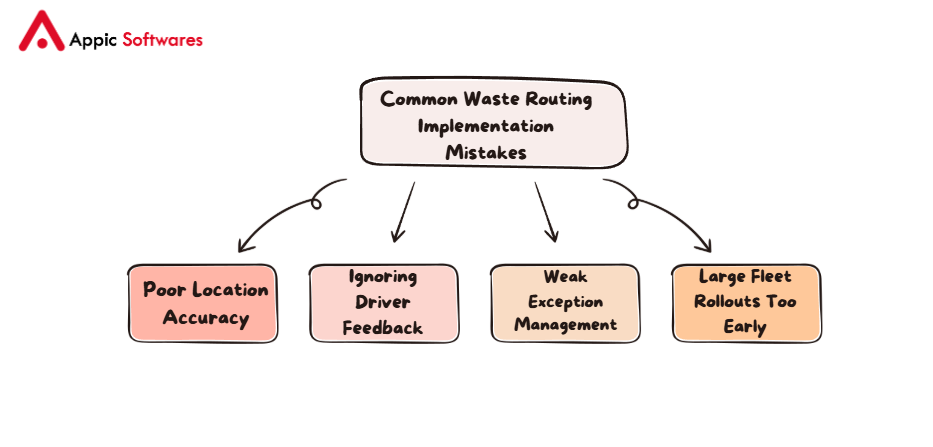
Common Waste Routing Implementation Mistakes
Software implementation strategy affects long-term operational success.
Poor Location Accuracy
Incorrect stop locations create routing errors and reduce driver trust in optimized schedules.
Ignoring Driver Feedback
Drivers understand road conditions and operational challenges better than static mapping systems.
Driver feedback improves routing accuracy significantly.
Weak Exception Management
Waste collection businesses should categorize operational issues properly.
Common issue categories include:
- Blocked access
- Overflow bins
- Vehicle failure
- Contamination issues
- Missed service
Structured operational reporting improves long-term route optimization.
Large Fleet Rollouts Too Early
Companies should begin with smaller operational pilots before scaling routing systems across the entire fleet.
Controlled implementation improves adoption rates and operational stability.
How AI Improves Waste Route Optimization
Artificial intelligence improves routing systems through predictive operational analysis.
AI systems analyze:
- Traffic patterns
- Historical collection trends
- Seasonal waste volume
- Vehicle maintenance risk
- Disposal congestion
- Driver performance data
These insights improve operational planning and fleet efficiency.
Many waste management companies hire the best mobile app developers to build driver applications with live dispatch communication, GPS tracking, digital proof of service, and offline route support.
What to Look for in Waste Route Optimization Software
Waste management businesses should evaluate software capabilities carefully before implementation.
Multi-Fleet Support
The platform should support:
- Residential fleets
- Commercial fleets
- Roll-off operations
- Recycling collection
- Hazardous waste transport
Real-Time Dispatch Visibility
Dispatch teams need live operational monitoring across active routes and collection zones.
Mobile Driver Workflow
Drivers should access route updates, navigation, and reporting tools directly from mobile devices.
Reporting and Compliance Management
Strong reporting improves operational control and regulatory compliance.
Integration Support
The routing platform should integrate with:
- ERP systems
- Billing software
- GPS tracking systems
- Fleet maintenance platforms
- Customer management systems
Integrated operations improve long-term scalability.
Why Waste Collection Companies Invest in Route Optimization Software
Waste collection companies operate under constant operational pressure from fuel costs, labor expenses, environmental regulations, and customer expectations.
Manual routing systems struggle to support modern waste collection operations efficiently.
Smart waste routing software improves:
- Operational efficiency
- Fleet visibility
- Fuel management
- Driver productivity
- Route completion rates
- Customer satisfaction
- Dispatch coordination
Waste management businesses adopting intelligent route optimization systems gain stronger operational control, lower operating costs, and better long-term scalability.
Conclusion
Route optimization software helps waste management companies reduce fuel costs, improve fleet visibility, minimize missed pickups, and increase operational efficiency. Smart routing systems improve dispatch control, driver productivity, and daily route planning across waste collection operations.
Looking to improve waste collection performance? Partner with a waste management software development company to build custom routing software with GPS tracking, AI-powered route optimization, and real-time fleet management features.
Get a Custom Waste Management Solution!
FAQs
What is waste collection route optimization software?
Waste collection route optimization software helps companies plan smarter collection routes, reduce fuel costs, track vehicles in real time, and improve daily pickup efficiency.
How does route optimization reduce fuel costs?
Smart routing reduces unnecessary miles, traffic delays, and repeated routes. This lowers fuel usage, disposal trips, and overtime costs.
Which features matter most in waste routing software?
The most important features include GPS fleet tracking, live dispatch monitoring, driver mobile apps, route analytics, disposal management, and real-time route updates.
How does AI improve waste collection operations?
AI analyzes traffic, route history, waste volume, and fleet performance to improve route planning, reduce delays, and increase operational efficiency.
Frequently Asked Questions
What is waste collection route optimization software?
Waste collection route optimization software helps companies plan smarter collection routes, reduce fuel costs, track vehicles in real time, and improve daily pickup efficiency.
How does route optimization reduce fuel costs?
Smart routing reduces unnecessary miles, traffic delays, and repeated routes. This lowers fuel usage, disposal trips, and overtime costs.
Which features matter most in waste routing software?
The most important features include GPS fleet tracking, live dispatch monitoring, driver mobile apps, route analytics, disposal management, and real-time route updates.
How does AI improve waste collection operations?
AI analyzes traffic, route history, waste volume, and fleet performance to improve route planning, reduce delays, and increase operational efficiency.
Related Articles

Multi-Agent Systems for Real Estate: How AI Teams Are Reshaping Property Operations in 2026

How Agentic AI Is Transforming Real Estate Operations in 2026