More than ever before, the healthcare system is going through rapid change and patients expect to receive healthcare quickly, easily and from a convenient location. As a result, telemedicine applications have seen increased demand and they are receiving huge amounts of investment from numerous healthcare organisations. Telemedicine allows healthcare providers to consult with patients about their health (via online video or chat) no matter where they might be.
Telemedicine will allow for the improvement of access to healthcare for patients as well as providing improvement for providers in the performance of their work.
The global telemedicine market was estimated to be worth approximately USD 141.19 billion in 2024 and will grow to USD 380.33 billion by 2030 with a CAGR of 17.55%. This indicates that telemedicine is continuing to gain popularity as a delivery system for healthcare services.
In this article we will examine the features of telemedicine applications, the laws and regulations governing telemedicine applications, costs associated with developing a telemedicine application and how Appic Software has assisted companies in developing a successful telemedicine application.
Understanding Telemedicine App Development
Telemedicine app development includes creating digital applications that allow patients and physicians to connect from afar. These applications may facilitate video consultations, messaging, electronic prescriptions, and remote patient monitoring. Telemedicine applications can help to decrease overcrowding in the hospital and make it more convenient for the patient.
New technology is being used to integrate telemedicine solutions with new technologies in order to provide more accurate treatment options. Many healthcare organizations are working to integrate AI in healthcare while building digital healthcare platforms. AI is able to help physicians analyze a patient’s information and create a personalized treatment plan based on those statistics.
Telemedicine applications also enable patients to use wearable technology and monitoring devices. These features can help with managing chronic illness as well as providing preventative health services.
How Telemedicine is Changing the Healthcare Business
Digital healthcare is changing how patients seek care. Telemedicine can enable patients to see their physician without having to drive to their office and wait in line to see him/her. Thus, telemedicine increases access to healthcare services for patients located in remote and rural areas.
Telemedicine has helped physicians be more productive and effective at managing their patients. It is easy for physicians to provide consultations using digital scheduling systems. Healthcare organizations report that telemedicine has helped to increase patient satisfaction.
More than 42% of physicians report using telemedicine for patient consultations and a larger number use it for follow-ups and chronic disease management. Remote monitoring can allow for detecting and treating complications faster. Telemedicine platforms can often integrate with mobile app development healthcare ecosystems to ensure seamless connectivity to the healthcare system.
Why Telemedicine is Transforming Healthcare Services
Digital healthcare is changing how patients receive treatment. Telemedicine allows patients to consult doctors quickly without travel delays. This technology improves healthcare access in remote and rural areas.
Healthcare providers benefit from improved productivity and patient management. Doctors can handle consultations efficiently through digital scheduling systems. Healthcare organizations also report improved patient satisfaction after adopting telemedicine platforms.
Remote monitoring helps identify medical complications early. Telemedicine platforms often integrate with mobile app development healthcare ecosystems for seamless healthcare connectivity.
Essential Healthcare App Features in Telemedicine Platforms
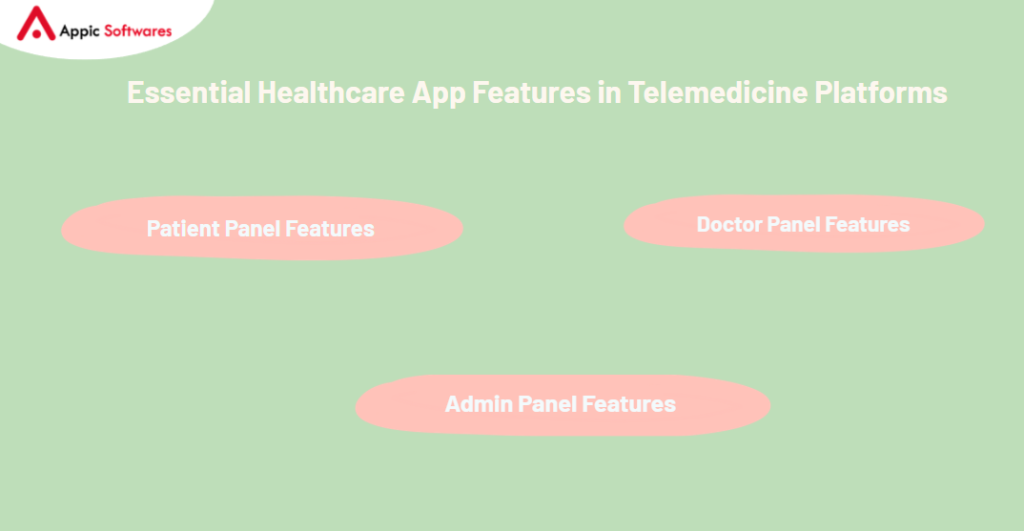
Creating successful telemedicine platforms will be achieved by implementing advanced features of healthcare applications that provide both patient care and healthcare workflow support.
Patient Panel Features
Registration and Profile Management
Patients will need to register quickly and easily using secure identification methods. Along with this process, patient profiles will contain a medical record and treatment history.
Appointment Scheduling and Calendar
Users will schedule consulting appointments easily. Real-time appointments will improve the doctor’s availability and convenience for patients.
Video Consultation and Messaging
Doctors will conduct an interactive, secure video consultation with their patients. Patients can use a messaging service to communicate with their doctor regarding treatment instructions and subsequent follow-up questions.
Using Digital Prescriptions & Ordering Medicine
Doctors will send patients their prescription digitally immediately following the consultation. Patients can also purchase their medication using the integrated pharmacy service.
Doctor Panel Features
Appointment Management
A doctor will need to have access to a dashboard to manage their appointments. The automatic scheduling of appointments significantly reduces the manual workload of a doctor.
Access to Electronic Health Records
Instant electronic access to a patient’s health records is crucial for the doctor. The use of electronic health records improves accuracy for treatment and increases efficiency with respect to physician decision-making.
Teleconsultation Dashboard
User-friendly dashboards help doctors conduct video consultations smoothly. These dashboards improve workflow efficiency and user experience.
Payment and Billing Integration
Secure payment gateways allow seamless consultation payments. Automated billing improves transparency and reduces administrative errors.
Admin Panel Features
User and Doctor Management
Administrators monitor patient and doctor activities across the platform. This ensures quality healthcare service delivery.
Analytics and Reporting
Healthcare analytics help track performance metrics and patient engagement. Data-driven insights improve operational decision-making.
Notification and Communication Systems
Automated reminders notify patients about upcoming appointments. These reminders reduce cancellations and improve healthcare compliance.
Compliance and Security in Telemedicine Application Development
Healthcare platforms must follow strict regulatory standards. Compliance ensures patient data security and builds platform credibility.
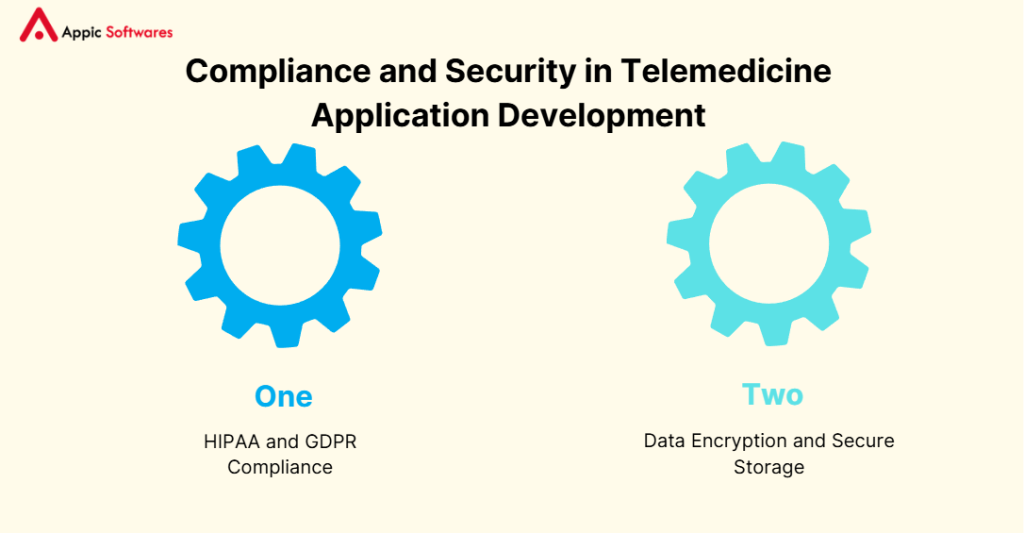
HIPAA and GDPR Compliance
Healthcare applications must comply with HIPAA regulations for data protection. GDPR regulations protect patient privacy across European healthcare systems. Telemedicine platforms often follow structured compliance practices found in a comprehensive healthcare software development guide to ensure regulatory security.
Data Encryption and Secure Storage
Telemedicine apps must use end-to-end encryption to protect patient data. Cloud-based storage improves accessibility while maintaining strong security. Multi-factor authentication reduces unauthorized access risks.
Healthcare businesses must also follow licensing requirements based on location. Telemedicine regulations vary across countries and healthcare jurisdictions.
Telemedicine App Development Cost Breakdown
Understanding telemedicine development costs helps businesses plan healthcare investments effectively. Costs vary based on app complexity, features, and technology selection.
Basic Telemedicine App Cost
Basic telemedicine apps include video consultation and appointment scheduling. These applications typically cost between $15,000 and $30,000.
Mid-Level Telemedicine Platform Cost
Mid-level telemedicine platforms include EHR integration and payment gateways. Development usually costs between $30,000 and $60,000.
Advanced Telemedicine Solution Cost
Advanced telemedicine platforms include AI analytics and remote monitoring tools. These applications usually cost between $60,000 and $80,000. Many healthcare organizations evaluate investment strategies while understanding how much it costs to create healthcare software during digital transformation planning.
Factors Affecting Development Cost
Feature Complexity
Advanced features increase development time and cost. AI-driven healthcare features require specialized expertise.
Technology Stack Selection
Cloud infrastructure improves scalability but increases initial investment requirements.
Platform Compatibility
Developing Android, iOS, and web platforms increases cost. Cross-platform frameworks help reduce development expenses.
Development Team Expertise
Hiring experienced health app developers improves application performance and security. Many healthcare organizations prefer to hire healthcare developers with industry-specific expertise.
Emerging Trends in Telemedicine Application Development
Telemedicine continues evolving with advanced healthcare technologies. Businesses must adopt innovative solutions to remain competitive.
AI and Machine Learning Integration
Artificial intelligence improves diagnostic accuracy and patient engagement. Predictive analytics supports personalized treatment planning. Digital healthcare platforms are increasingly adopting innovations driven by AI in healthtech.
White Label Telemedicine Solutions
White label telemedicine platforms help businesses launch healthcare apps quickly. These solutions reduce development time and improve scalability. Healthcare startups frequently adopt models similar to building a white label telemedicine app to accelerate market entry.
Veterinary Telemedicine Expansion
Telemedicine is expanding into animal healthcare services. Pet owners can now consult veterinarians remotely through digital platforms. Veterinary healthcare solutions continue growing alongside innovations similar to creating a veterinary telemedicine app.
Global AI Healthcare Innovations
Healthcare providers worldwide are adopting AI-powered telemedicine solutions. These innovations improve treatment accuracy and patient monitoring efficiency. Global healthcare markets continue evolving through technology adoption similar to advancements in AI and machine learning in healthcare industries.
Why Businesses Choose Appic Softwares for Custom Health App Development
Appic Softwares is recognized among the top healthcare app developers offering scalable telemedicine platforms. Their expertise covers complete custom health app development solutions. The company focuses on building secure, scalable, and performance-driven healthcare applications.
Their development approach prioritizes user experience and regulatory compliance. They provide end-to-end support from concept development to deployment. Their telemedicine solutions integrate artificial intelligence, analytics, and cloud infrastructure.
Appic Softwares also develops specialized healthcare platforms. Businesses expanding into niche healthcare services often analyze digital solutions similar to pet health tracker app development models.
Challenges in Telemedicine App Development
Telemedicine platforms require careful planning and technical expertise. Businesses often face several development challenges.
Data Privacy Risks
Healthcare data remains highly sensitive and vulnerable to cyber threats. Strong encryption reduces breach risks significantly.
User Adoption Resistance
Patients and doctors may hesitate to adopt digital healthcare solutions. Simple interface design improves adoption rates.
Regulatory Complexity
Healthcare compliance varies across countries and states. Experienced healthcare app development teams help maintain legal standards.
Future of Telemedicine App Development
Telemedicine will be one of the primary healthcare services around the globe. As digital healthcare platforms grow at a rapid pace, telemedicine innovation will continue to be driven by advances in AI, IoT, and wearable technologies.
As a result, healthcare providers will begin focusing more on personalized care for patients. Telemedicine platforms will enhance the accuracy of remote monitoring and treatment. Furthermore, companies investing in telemedicine solutions today will have a significant competitive edge over their competitors.
Build Your Telemedicine Platform with Appic Softwares
Healthcare is transitioning from in-person services to online services first. Therefore, firms must implement telemedicine platforms in order to remain competitive. Telemedicine applications provide remarkable improvements in patient engagement and access to healthcare.
With a commitment to delivering high-quality telemedicine app development services, Appic Softwares has the capacity and expertise to develop scalable, secure healthcare applications. It will allow healthcare professionals to launch their telemedicine platforms in a timely manner.
By partnering with Appic Softwares, you can rest assured that you will have reliable health technology solutions. Their expert team has an in-depth understanding of healthcare compliance, security, and digital transformation challenges, and they will develop customized telemedicine applications based on your business requirements.
If you are interested in creating a telemedicine platform, Appic Softwares can make your vision a reality.
FAQs
1. What is telemedicine app development?
Telemedicine app development involves building digital healthcare platforms that let patients consult doctors remotely. These apps support video calls, messaging, digital prescriptions, and health monitoring. They improve access and save travel time for patients.
2. How much does telemedicine app development cost?
The cost varies based on app complexity and features. A basic telemedicine app can range from $25,000 to $50,000. Apps with advanced features like AI, EHR integration, and analytics may exceed $100,000.
3. Do telemedicine solutions include separate doctor apps?
Yes, most telemedicine platforms include a dedicated doctor app with features such as appointment management, patient history, and consultation tools. A professional example of a doctor platform is available at doctor app development, which showcases key features and design elements for clinicians.