Do you know why schools in the USA are shifting to AI driven learning?
Schools across the United States face pressure to improve outcomes. Student expectations are rising. Parents demand better results. Teachers manage large classrooms with limited time.
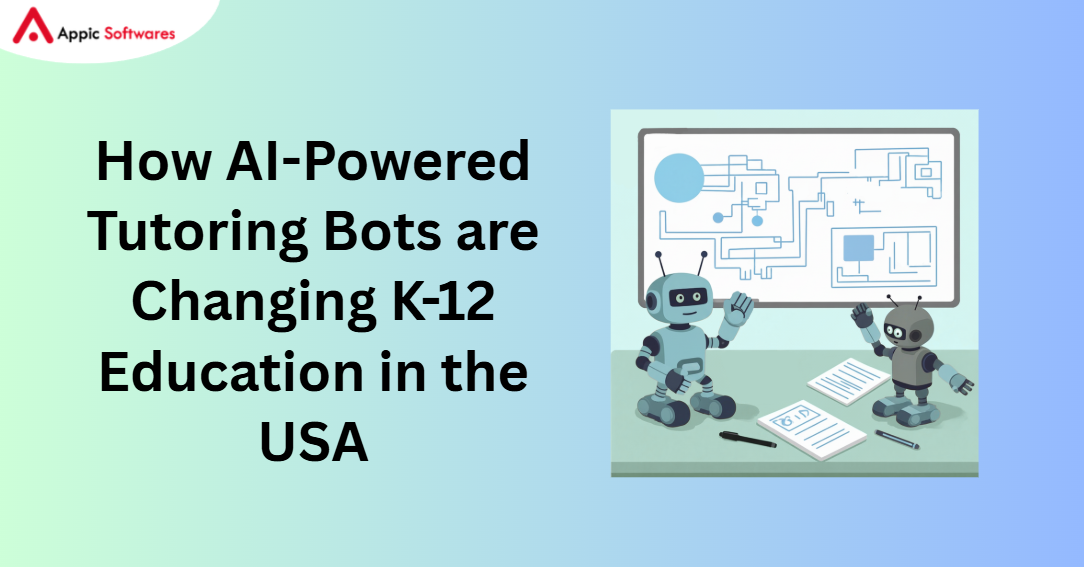
This shift drives the growth of AI Tutoring Bots in K-12 Education. These systems focus on performance, personalization, and scale.
McKinsey reports AI improves student outcomes by up to 30%. Not just this, a surveys shows 73 percent of teachers report higher engagement with AI tools.
You face a clear situation. Traditional methods limit growth. AI driven systems improve efficiency and results.
Many institutions invest in AI app development services to build scalable education platforms.
What Are AI Tutoring Bots?
Clear Structure and Working
AI tutoring bots are intelligent systems designed for student learning. They provide explanations, assign exercises, and track performance.
These systems rely on data. Every student interaction updates the system. The bot adjusts difficulty levels and content delivery.
They operate within AI powered learning platforms. These platforms combine content, analytics, and automation in one system.
Experts define these systems as intelligent tutoring systems. They learn continuously and improve accuracy over time.
Why AI Tutoring Bots for Schools are Gaining Demand
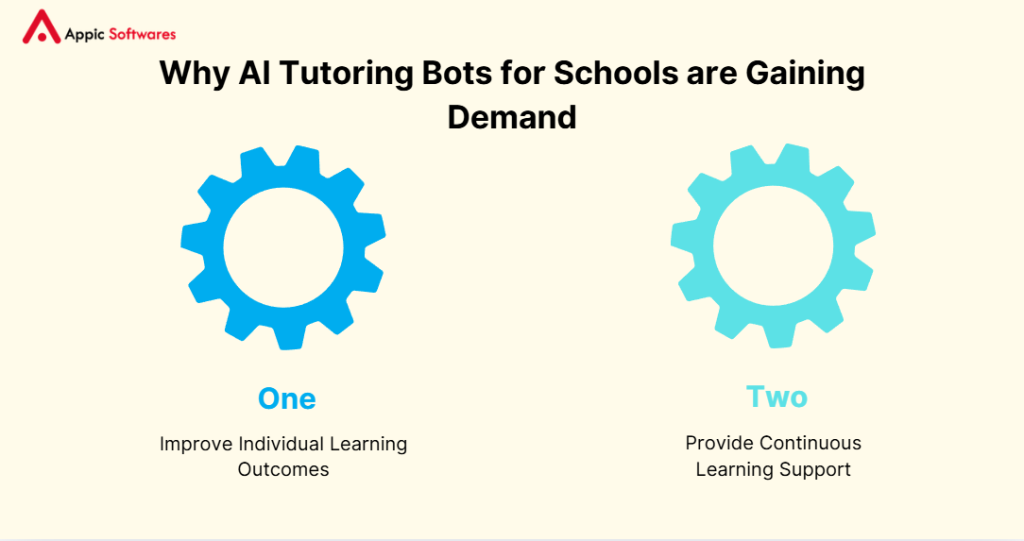
Improve Individual Learning Outcomes
Every student learns at a different pace. Some grasp concepts quickly. Others need repetition.
AI tutoring bots for schools solve this issue through personalization. Each student receives a custom learning path.
The system identifies weak areas. It assigns targeted exercises. Students improve faster because they focus on gaps.
Teachers benefit from this structure. They spend less time repeating lessons. They focus on mentoring and strategy.
Provide Continuous Learning Support
Learning does not stop after school hours. Students need help during homework and revision.
An AI chatbot for students provides instant responses. Students ask questions and receive structured answers.
This improves learning consistency. Students practice more and build confidence.
How AI is Transforming AI in K-12 Education USA
Real Time Data Improves Decisions
AI tracks student behavior across lessons. It records accuracy, response time, and engagement.
Teachers access this data through dashboards. They identify struggling students quickly. They adjust teaching methods based on insights.
Many institutions align their systems with ways AI is transforming the education sector. This improves classroom efficiency and planning.
Improves AI in Classroom Learning
AI introduces interactive learning formats. Students engage with quizzes, simulations, and adaptive content.
This increases participation. Students stay focused longer. Learning becomes structured and measurable.
Core Features of AI Tutoring Bots
Adaptive Learning Paths
The system adjusts difficulty after each response. Students progress based on understanding.
This prevents overload. It ensures steady improvement.
Natural Language Interaction
Students interact using simple language. The system responds with clear explanations.
This removes hesitation. Students ask more questions and learn better.
Data Driven Recommendations
AI analyzes patterns in student performance. It suggests lessons and exercises.
Teachers use this data to refine teaching strategies.
Role of AI in EdTech Solutions
AI in EdTech solutions connects learning systems, analytics, and communication tools. Schools manage operations through a unified platform.
Student information systems app development supports data management. Schools track attendance, grades, and performance in one place.
AI also integrates with connected devices. Institutions explore IoT in edtech to create smart classrooms with better monitoring.
Practical Use Cases of AI Tutoring Bots
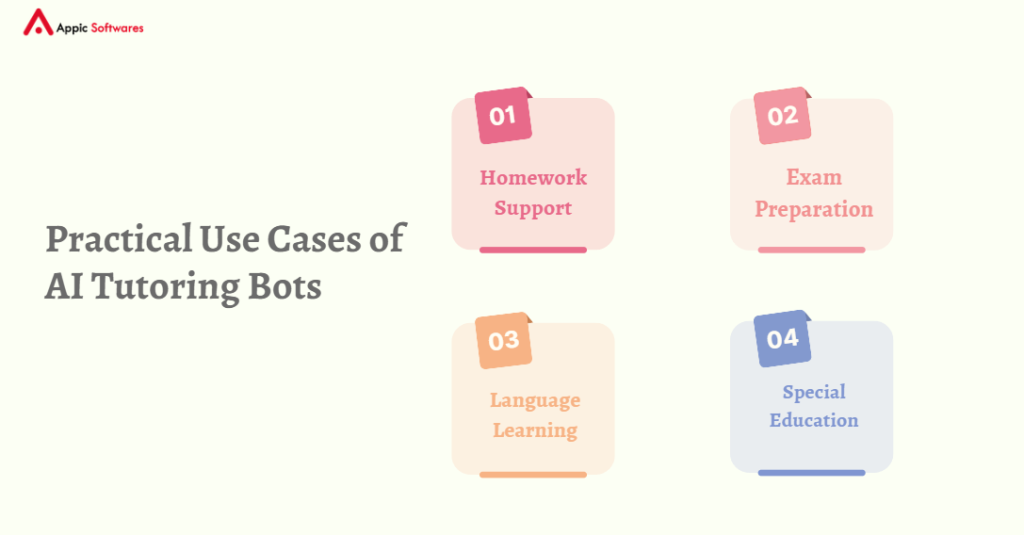
Homework Support
Students receive step by step solutions. This reduces dependence on external tutors.
Exam Preparation
AI creates customized tests based on performance data. Students focus on weak areas and improve scores.
Language Learning
Bots help students improve grammar and vocabulary. Instant feedback improves accuracy.
Special Education
AI adapts to different learning needs. Students with disabilities receive personalized content.
Challenges in Implementing AI Systems
Resistance From Educators
Some teachers prefer traditional teaching methods. Training programs help them adapt to AI systems.
Data Privacy Concerns
Schools handle sensitive student data. Secure systems ensure compliance and protection.
Integration with Existing Systems
Legacy infrastructure creates compatibility issues. Schools need structured implementation plans.
Organizations should understand challenges in Edtech startups to know common barriers and solutions.
Importance of Education App Development
You build Scalable Systems
Strong education app development ensures your platform handles large user bases. It improves performance and reliability.
Many types of edtech apps define how platforms serve different needs. Schools choose models based on their goals.
You Improve User Experience
Students prefer simple and interactive platforms. A well designed edtech app improves engagement and retention.
Future of AI Chatbot for Education
AI chatbot for education continues to improve in accuracy and personalization. These systems provide structured guidance based on student behavior.
AI agents in education support automation in administrative tasks. Teachers save time and focus on teaching.
AI tutoring Software Development Process
Steps you Follow
- Define your target audience and learning goals.
- Design system architecture and AI models.
- Develop the platform with scalable infrastructure.
- Test performance and user experience.
- Deploy and monitor system performance continuously.
Develop school mobile apps to ensure accessibility across devices. Students access learning from anywhere.
Organizations also evaluate benefits of hiring educational app development company to ensure quality development and faster execution.
Impact of Technology on Education Systems
Technology continues to shape learning environments. There are many powerful ways technology is impacting education today to improve efficiency.
Corporate learning systems follow similar models. Benefits of corporate learning mobile apps in business show how digital platforms improve training outcomes.
Take Action to Build Your AI Education Platform
AI adoption in education continues to grow. Schools invest in AI tutoring bots for schools to improve performance and scale operations.
You need a structured approach and expert development support. AI driven systems improve student outcomes and operational efficiency.
Appic Softwares provides education app development tailored for education platforms. You build scalable systems with strong performance and user engagement.
Start building your AI powered learning platform today.
FAQs
1. What are AI tutoring bots in K-12 education?
AI tutoring bots in K-12 education are software systems that provide personalized learning support to students. They analyze student performance, adjust content, and deliver real time assistance through AI powered learning platforms.
2. How do AI tutoring bots for schools improve student performance?
AI tutoring bots for schools improve performance by offering adaptive learning paths and instant feedback. They identify weak areas, provide targeted exercises, and support continuous learning through AI chatbot for students. And here is the fact, around 60 percent of teachers in the USA use AI tools in classrooms, showing rapid adoption of AI in education.
3. Why should schools invest in AI tutoring software development?
Schools invest in AI tutoring software development to scale personalized learning and improve efficiency. These systems support AI in classroom learning, reduce teacher workload, and enhance outcomes across AI in K-12 education USA.