The global pet food market was valued at USD 103.3 billion in 2023 and is expected to grow to approximately USD 139.29 billion by 2030 at 4.4% CAGR from 2024 to 2030. Pet owners are now making long-term health choices regarding pet nutrition rather than just purchasing it as an everyday item. Consequently, this shift in thinking has resulted in a demand for consistency, personalization, and dependability through digital experiences. Companies that recognise these changes are creating their platforms with a focus on lifetime value rather than one-off transactions.
This article will look at how pet food delivery apps organise themselves. We will also see how they generate revenue and which types of business models will dominate in 2026.
Changing Consumer Expectations in Pet Food Purchasing
Transparency, convenience, and relevance have become essential for modern pet owners throughout the entire purchasing process. In 2024, the global pet food e-commerce sector (including delivery and online sales) is estimated to reach USD 19.18 billion and is projected to grow to USD 37.56 billion by 2033, achieving a CAGR of around 7.8% between 2025 and 2033. This rapid increase has been fueled by mobile-first behaviour with a particular focus on urban and millennial consumers.
The expectations of modern pet owners with respect to mobile applications include remembering their preferences with regard to past orders, adjusting food quantities based on their pet’s growing needs, and anticipating future requirements. Many food delivery platforms expand naturally alongside trends seen in pet adoption app development, where digital trust becomes the foundation of long-term engagement.
What Defines a Competitive Pet Food Delivery App in 2026
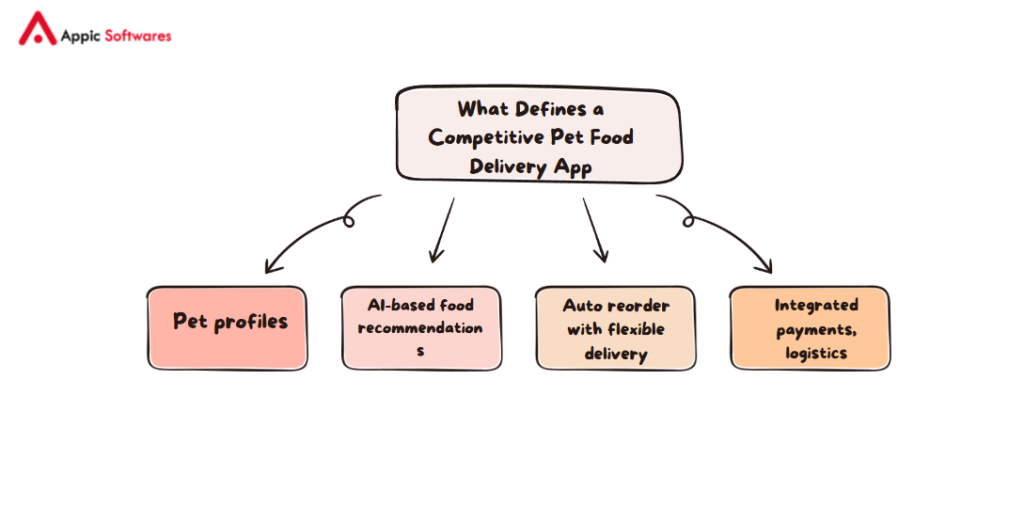
When designing a successful pet food delivery app, the primary focus should be on the device’s intelligence, automation capabilities, and overall user experience rather than simply how to place an order. Consumers are no longer satisfied with having to search indefinitely for products to reorder or having to manually reorder essential items. Consumers want their applications to perform some things on their behalf.
Some of the features that define a successful modern platform include:
- Pets’ profiles that include all details about the pet, such as the age, breed, size, allergies, and dietary requirements
- Smart recommendations based on consumers’ pets’ consumption data and health history
- Automated reorder feature with flexible delivery schedule options
- Seamless integration of payment, logistics, and customer support functions
Many platforms strengthen these capabilities through broader pet care app development, allowing food delivery to align with wellness tracking and service management.
Core Business Models Used by Pet Food Delivery Apps
The choice of a business model plays an important role in determining both how rapidly a pet food application will be able to grow, as well as how profitably it will be able to operate moving forward. Industry studies indicate that nearly 39% of consumers who purchase items for their pets utilize online subscription services.
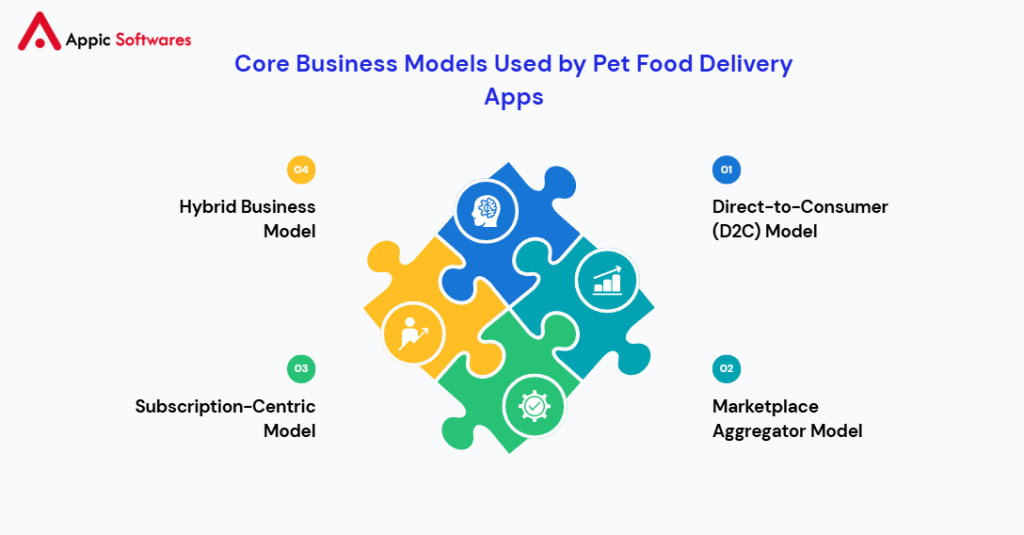
Direct-to-Consumer (D2C) Model
In a Direct-To-Consumer model, the brand sells its own food product directly using the app, rather than through third-party distribution channels. Therefore, the brand has complete control over how its brand is identified, priced, and how it interacts with its customers. The DTC brand also realizes higher margins and collects more precise data about its customers that can be used to personalize subsequent purchase experiences and increase customer retention.
A Direct-To-Consumer approach is particularly effective for:
- High-end and organic pet food brands
- Prescription-based and/or veterinarian-recommended diets
- Custom-tailored nutritional plans for individual pets
Marketplace Aggregator Model
Marketplace-based applications are platforms that combine several sellers of PC’s pet food on an integrated marketplace. These sellers can include local pet stores, distributors from a particular region, and manufacturers and distributors with global reach. Marketplace applications allow the seller to earn a commission for sales and manage their inventory risk through an integrated platform.
Marketplace-based applications are typically built to achieve three common objectives:
- Provide a wide variety of product options
- Establish competitive pricing
- Expand customers geographically at a quicker rate
Many aggregators enhance engagement by adding features similar to those described in pet care app, such as reviews, smart filters, and subscription options.
Subscription-Centric Model
In 2026, the pet food delivery app landscape is dominated by subscriptions. As food consumption is predictable, subscription models using recurring billing are ideal. As noted in industry data, customers who purchase pet food through subscription-based services realize 2.5x more lifetime value than non-subscribers.
Platforms that prioritize subscriptions is focused upon:
- Automated replenishment of items
- Dynamic quantity changes
- Loyalty-based pricing programs
This model is expected to increase customer retention, reduce churn, and allow for reliable cash flow.
Hybrid Business Model
Many of the more developed platforms are implementing a hybrid business structure that includes a combination of D2C sales, third-party marketplaces, and subscriptions. The hybrid business model allows for flexibility for the business, less reliance upon a single source of revenue, and increased potential for long-term growth.
Comparison of Pet Food Delivery Business Models
| Business Model | Revenue Source | Scalability | Best For |
| Direct-to-Consumer | Product margins | Medium | Premium food brands |
| Marketplace | Commission per order | High | Multi-vendor platforms |
| Subscription | Recurring payments | Very High | Long-term retention |
| Hybrid | Mixed revenue streams | Very High | Enterprise platforms |
Monetization Strategies Beyond Food Sales
The primary source of income for many businesses is selling food through apps; however, companies are beginning to explore more creative monetization layers within their pet food app development. A good example is implementing monetization layers that allow users to feel comfortable making purchases without being pressured by an aggressive upsell approach.
Examples of these types of monetization layers include:
- Subscription plans with flexible deliveries
- Product placements that are sponsored and based on specific pets’ profiles
- Food and health insight bundled offerings
Most platforms incorporate food delivery subscriptions along with a pet health tracker app within the pet’s mobile application, enabling recommendations to automatically be updated based on changes in a pet’s health.
Service-based cross-selling also plays a significant role. Food delivery often becomes the entry point for fitness, grooming, or activity monitoring features aligned with pet exercise tracker app development trends.
Technology Stack Powering Scalable Pet Food Apps
Technology choices have a direct impact on performance, scalability and end user trust. Many modern pet food delivery apps rely on a highly scalable backend architecture, intelligent processing of data using AI and seamless integration of services into the pet’s mobile application.
Examples of core technology components used in the development of a pet food delivery solutions include:
- AI-driven recommendation engines
- Predictive analytics for reorder timing
- Secure subscription payment systems
- Logistics and delivery tracking APIs
IoT integration has become increasingly important, particularly with smart feeders and wearable devices. These capabilities mirror architectures discussed in how to build an IoT application for pet care, where real-time data improves accuracy and engagement.
Cost and Investment Planning
The cost to develop an app will be affected by the complexity of the app, the number of features, and how scalable it needs to be. An MVP will focus on the essential features related to ordering and delivering products to customers, whereas an enterprise platform will include features such as artificial intelligence, IoT, and health analytics.
Businesses typically benchmark investment decisions using frameworks similar to those outlined in cost to create an app, ensuring alignment between budget and long-term growth goals.
Expanding Into a Full Pet Care Ecosystem
In 2026, food delivery rarely exists in isolation. Successful platforms expand horizontally into veterinary services, health monitoring, and operational tools.
Incorporating veterinary aspects into your app allows you to create food plans that work in accordance with your pet’s medical needs, just as you would create a veterinary app for pets to use at the vet’s office.
Operationally, you would use tools like those you would find for operating a pet care business operations tools to manage your suppliers, logistics and your relationships with your customers more effectively.
Why Appic Softwares Is the Right Partner
Building a scalable pet food delivery app requires more than development skills. It requires domain understanding, UX strategy, and long-term architectural planning.
Appic Softwares specializes in pet-tech platforms that combine food delivery with health, wellness, and service integration. Their approach reflects global benchmarks and insights from pet care app development companies, ensuring competitive positioning from launch.
The pet food delivery market in 2026 rewards platforms that prioritize personalization, reliability, and ecosystem thinking. Businesses that act now can secure long-term customer relationships and recurring revenue.
Appic Softwares helps you design, develop, and scale high-performance pet food delivery apps built for growth and retention. From business modeling to advanced integrations, their team delivers solutions that convert users into loyal customers.
Partner with Appic Softwares today and build a pet food delivery platform that leads the future of pet care.
FAQs
Pet food delivery apps should not only provide information about food items but also additional benefits to pet owners, such as pet profile creation, smart food recommendations, order tracking, flexible subscription options, in-app payment methods, delivery scheduling, and push notifications. These features make it possible to improve the user experience and raise the possibility that a client would use the service again.
Several aspects influence the overall cost when it comes to pet care app development, including the amount of functionality selected, if the program should be available on both iOS and Android platforms, and the sort of technological stack employed. At Appic Softwares, the cost varies from $10,000 to $80,000 depending on the complexity of an app.