AI In Healthcare: A Complete Guide
Artificial Intelligence is the new era, and AI in healthcare bridges the gap between finding new links when it comes to genetic codes, powering surgery assistant robots, deploying efficient healthcare software, and much more. The most versatile feature of healthcare in AI is the ability to offer predictive analysis and advanced sensing to consumers. According to Grandview Research, the market size for AI in healthcare is projected to reach $505.59 billion by 2033, growing at a CAGR of 38.90% to over 47%. If you also want to learn about its use cases, benefits, and real-life examples, you are at the right place. Keep reading this blog for a better understanding.
What is AI in Healthcare?
AI in healthcare refers to a proactive approach that uses machine learning (ML), natural language processing (NLP), and computer vision to interpret complex data, leading to faster diagnoses, personalized treatments for patients, and administrative assistance.
AI Healthcare Use Cases
- Improving medical diagnosis
- Speeding up drug discovery
- Transforming patient experience
- Managing healthcare data
- Performing robotic surgery
AI implementation in healthcare is known for reinventing modern healthcare through machines that can comprehend, learn, and act.
Examples of AI in Healthcare

There are numerous examples of AI in healthcare, which are as follows:
AI in Personal Health
AI in persona; healthcare refers to proactive wellness that speaks about how we use biometrics collected from wearable devices. There are multiple tools available in the market that you can use for it, such as:
- ChatGPT for Health
- Claude for Life Sciences
These tools and integrations help in identifying subtle trends weeks before symptoms appear.
AI in Medical Diagnosis
AI in medical diagnostics is known to protect patients who are suffering from any kind of preventable harm. It is estimated that every year around 400,000 patients are hospitalised and 100,000 patients die because of inaccurate or poor medical diagnosis. In such scenarios, AI healthcare applications can predict and diagnose disease at a faster rate than most medical professionals.
AI in Patient Experience
An AI-oriented health care virtual agent helps patients in digital communications, answering health queries, providing schedule reminders, and so on. This offers a personalized experience to the tolerant and allows hospitals, clinics, and physicians to treat more patients on a daily basis.
AI in Drug Discovery
Drug discovery involves huge development costs, and research requires dedicated human hours for finding a solution. The clinical trial cost of each drug is around $1.3 billion, and among them, only 10% is launched successfully in the market. AI is being brought into this industry to speed up the drug design process, evaluating drug side effects, identifying ideal candidates for clinical trials, and potentially minimizing costs by up to 50 percent.
AI in Healthcare Data Management
Healthcare information is highly sensitive and confidential. There are times when, as a healthcare provider or drug specialist, you may be searching for a piece of information, and it's just the data silops. To tackle such situations, bulk data AI is leveraged. It helps time and costs of healthcare administrative processes, contributing to more efficient daily operations and patient experiences.
Benefits Of AI In Healthcare
AI healthcare benefits are endless. Healthcare organizations and startups in the USA are using AI developments to improve the efficiency of all kinds of processes, from back-office tasks to patient care. Here is how AI benefits healthcare providers and patients:
Efficient Healthcare Operations
AI in healthcare is introduced to improve administrative workflows and automate the manual tasks that used to be time-consuming, prone to errors, and lacked transparency. This also increases the time to the patient’s care. Moreover, virtual nursing assistants are the new normal. A study found that 64% of patients are comfortable with the use of AI for around-the-clock access to answers that support nurses provide. Virtual nurse assistants help to answer questions about medications, forward reports to doctors or surgeons, and help patients schedule a visit with a physician.
Improves User Experience
As a healthcare provider, if you are not working on enhancing user experience, there is a high possibility that you may lose your patient. A recent study shows that 83% users reported a bad experience and poor communication between the tolerant and the healthcare provider.
This is when AI in healthcare comes into place, as it uses advanced technologies like NLP, predictive analysis, and speech recognition. This helps to provide more specific information about a patient’s treatment options. It allows the healthcare provider to have more meaningful conversations with the patient for shared decision-making.
AI-efficient Healthcare Diagnosis
As per the Harvard School of Public Health, AI-enabled healthcare diagnosis reduces treatment costs by up to 50% and improves health outcomes by 40%. From breast cancer risk prediction, identifying cardiomegaly in chest X-rays to recognizing skin cancer, AI simplifies the work ecry everywhere and gives an accurate prediction to the patient.
The Future of AI in the Healthcare Sector
The future of AI is going to be highly progressive with various enhancements and upgradations. Currently, AI in the healthcare sector is at the baby stage. Continuous experiments and evaluations are shifting the focus from generalized care to personalized patient care. While the growth of AI in healthcare is substantial, balancing innovation with patient safety, privacy, and ethical considerations will always be the key areas as the technology evolves.
To Wrap Up
Investing in health is the best decision you can ever make as an individual. For businesses and startups, being interested in AI in healthcare is what is required at this moment. Adopting new technologies and trends significantly gives a boost to your business and enhances productivity and work efficiency. If you want to build a reliable and trustworthy AI healthcare application for the US and UK markets. This is the time to grab your opportunity. Transform the journey from development to deployment with Appic Softwares.
FAQs
1. How is AI being used in healthcare today?
AI is being used in healthcare to improve diagnosis, assist in robotic surgeries, manage health records, and support virtual nursing assistants. It also helps analyze health data from wearables and predict diseases early using advanced algorithms. For a deeper dive, check out our blog on machine learning in healthcare.
2. Why should healthcare businesses consider building AI-based solutions?
AI-based solutions help reduce costs, improve patient care, automate administrative tasks, and make diagnoses more accurate. If you’re planning to build one, it’s smart to start with a detailed healthcare software development guide.
3. Where can I find developers to build AI healthcare apps?
If you’re looking to create a custom AI-powered healthcare app, it’s best to hire healthcare developers who understand the unique needs and compliance requirements of the medical industry. This ensures your app is both secure and effective.
Frequently Asked Questions
How is AI being used in healthcare today?
AI is being used in healthcare to improve diagnosis, assist in robotic surgeries, manage health records, and support virtual nursing assistants. It also helps analyze health data from wearables and predict diseases early using advanced algorithms. For a deeper dive, check out our blog on machine learning in healthcare.
Why should healthcare businesses consider building AI-based solutions?
AI-based solutions help reduce costs, improve patient care, automate administrative tasks, and make diagnoses more accurate. If you’re planning to build one, it’s smart to start with a detailed healthcare software development guide.
Where can I find developers to build AI healthcare apps?
If you’re looking to create a custom AI-powered healthcare app, it’s best to hire healthcare developers who understand the unique needs and compliance requirements of the medical industry. This ensures your app is both secure and effective.
Related Articles
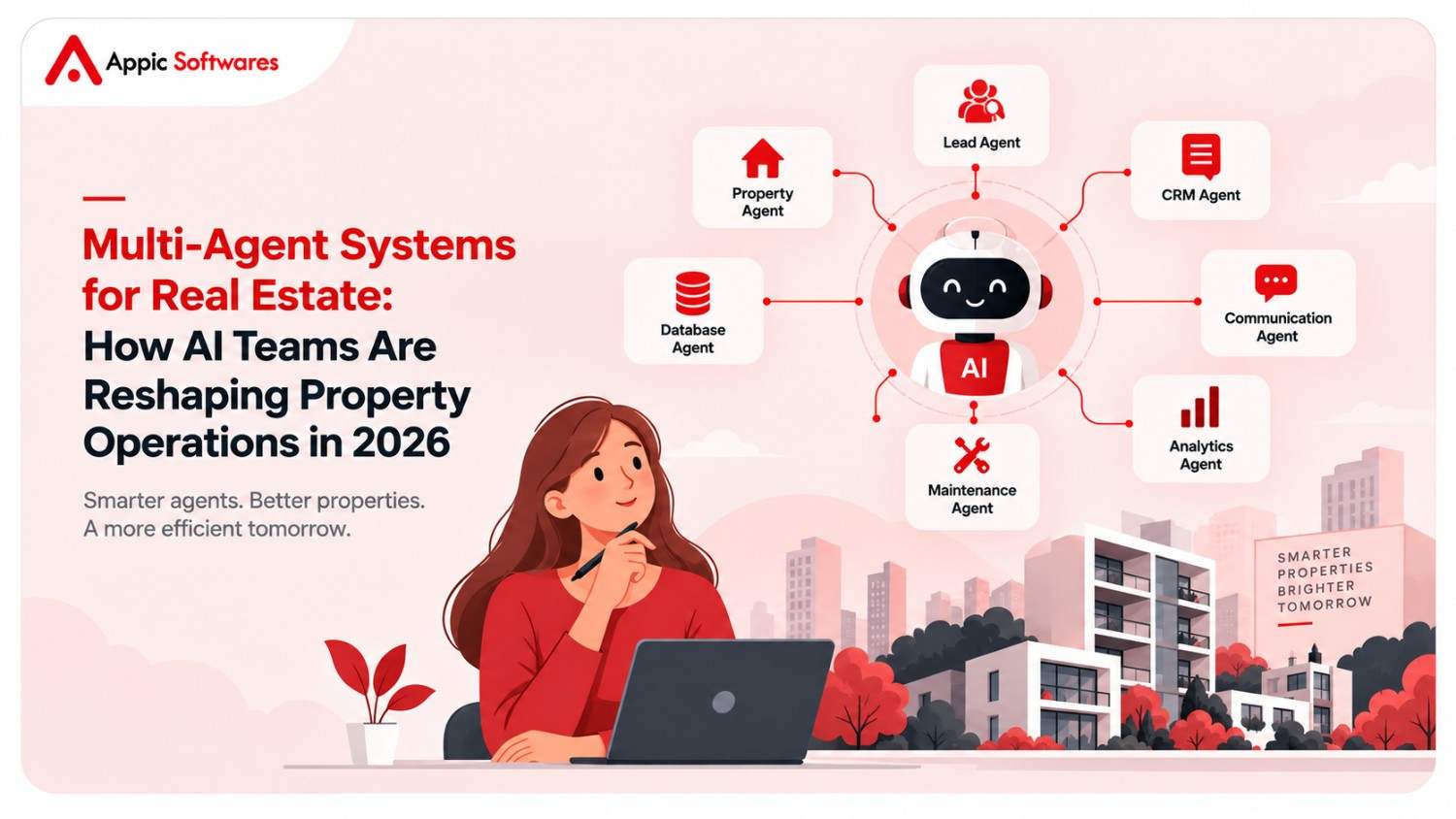
Multi-Agent Systems for Real Estate: How AI Teams Are Reshaping Property Operations in 2026
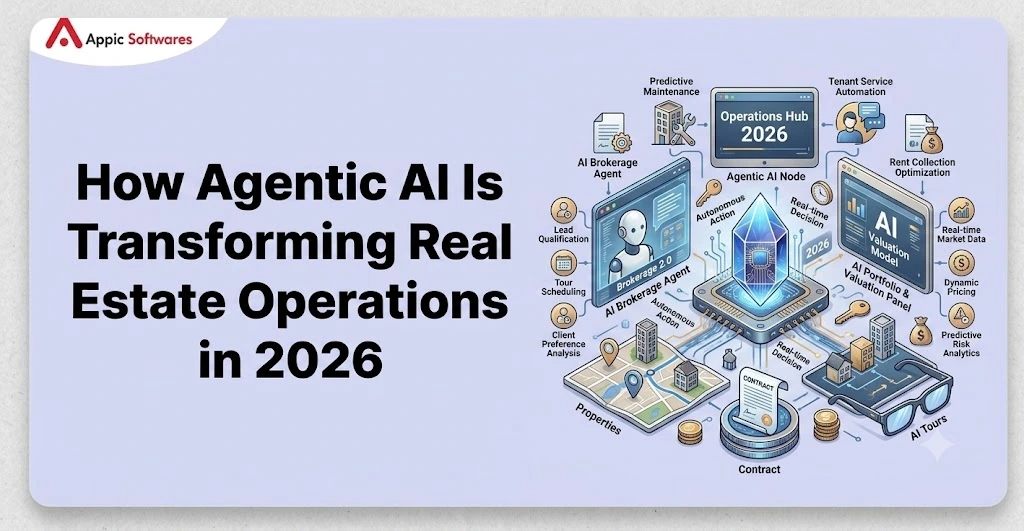
How Agentic AI Is Transforming Real Estate Operations in 2026