Travel App Architecture Explained: APIs and Data Flow
You plan to build a travel platform that ranks on search engines and performs under real demand. You need fast response time, accurate pricing, and stable bookings. These depend on your travel app architecture. If your structure fails, users leave and revenue drops. This guide explains how your architecture works, how APIs manage data flow, what top competitors do, and how your investment converts into long-term returns. Furthermore, if you're looking to partner with a travel app development company, then you are at the right place. Keep reading this blog to understand everything related to travel app architecture.
What Travel App Architecture Means for Long-Term Growth
Travel app architecture defines how your system processes user requests, connects to external providers, and delivers booking results. You deal with three constant pressures. High user traffic, real-time data changes, and multiple integrations.
A strong architecture improves:
- search speed
- booking accuracy
- user retention
Your system includes four core layers.

Frontend Layer
You design mobile and web interfaces where users search and book. You ensure fast loading and clean navigation.
Google ranking also depends on page speed. Faster apps reduce bounce rate and improve SEO performance.
Backend Layer
You process search queries, manage logic, and handle bookings. This layer controls the ranking of results, pricing rules, and availability checks.
Data Layer
You store user profiles, booking history, and transactions. You also store cached responses to reduce API calls.
Integration Layer
You connect with providers using flight & hotel APIs. This layer ensures real-time access to global inventory.
How APIs Define Data Flow and Performance
Your travel platform depends on APIs for live data. You request flight schedules, hotel availability, and pricing from external systems.
Core API Categories
| API Type | Role |
| Flight APIs | airline schedules and fares |
| Hotel APIs | room inventory and pricing |
| Payment APIs | transaction processing |
| Maps APIs | location services |
| Review APIs | ratings and feedback |
Correct API integration improves response time and reduces booking errors. Poor integration increases latency and leads to failed transactions.
Data Flow in Travel Apps Step by Step
You manage data flow to control speed, accuracy, and booking success. Each step in your system affects user experience and revenue.
Step 1: User Search Request
A user enters the destination, dates, and passenger details. Your frontend sends this data to the backend through an API call. You validate inputs at this stage. You check the date format, passenger count, and required fields. Clean input reduces downstream errors.
Step 2: Parallel API Requests
Your backend sends requests to multiple providers at the same time. You connect through flight and hotel APIs.
Parallel execution reduces response time. A delay of even one second reduces conversion rates. Studies show travel platforms lose up to 7 percent of conversions for every additional second of delay.
Step 3: Provider Response Handling
Each provider returns data such as pricing, availability, fare rules, and restrictions. Response formats differ across providers. You handle failed or delayed responses with timeout logic. Also, ensure users always receive results, even if one provider fails.
Step 4: Data Normalization
You convert all responses into a unified format. Moreover, standardize fields such as price, duration, and availability.
Without normalization, your system cannot compare results. This step ensures accurate ranking.
Step 5: Filtering and Ranking
You apply business rules to refine results. You remove duplicates. You filter based on user preferences such as price range or number of stops. You rank results based on defined criteria. Lower price, shorter duration, and higher ratings influence ranking. Ranking logic directly affects user decisions.
Step 6: Caching for Speed
You store frequent search results in cache. When similar searches occur, your system serves cached data instead of calling APIs again. Caching reduces server load and API cost. Platforms using caching improve response time by up to 50 percent.
Step 7: Response Delivery
Your backend sends processed results to the frontend. The frontend displays structured listings with filters and sorting options. You aim for a response time under two seconds. Faster response improves user engagement and search rankings.
Step 8: Pre-Booking Validation
The user selects an option. Your system performs a final check with the provider. Prices and availability change frequently. This validation step prevents booking failure after payment.
Step 9: Payment Processing
The user enters payment details. Your system connects with a payment gateway. You process transactions through secure protocols. Payment success or failure returns instantly.
Step 10: Booking Confirmation
After successful payment, your backend sends a booking request to the provider. The provider confirms the reservation and returns a booking ID. You store this data in your database.
Step 11: Data Storage and Notification
You store booking details, transaction records, and user data. You send confirmation through email or notification.
You also update internal systems for analytics and reporting.
Step 12: Post Booking Flow
Your system handles cancellations, refunds, and updates. You sync with provider APIs to maintain accurate booking status.
Market Growth and Industry Data
You need verified data to support your investment decision.
Research shows that by 2026, digital channels will contribute more than 65 percent of total bookings.
Companies invest heavily in AI in travel & tourism to improve personalization and automation. Many platforms explore travel AI agent development to increase booking completion.
Investment and Travel App Development Cost
You need a clear cost structure before development.
| Component | Estimated Cost |
| UI and UX design | 5,000 to 10,000 USD |
| Frontend development | 10,000 to 20,000 USD |
| Backend development | 15,000 to 20,000 USD |
| API integration | 10,000 to 20,000 USD |
| Testing and QA | 5,000 to 10,000 USD |
Total travel app development cost ranges from 50,000 to 80,000 USD or higher based on complexity.
You also invest in cloud hosting, API usage fees, and ongoing maintenance.
Return on Investment and Revenue Strategy
You recover your investment through multiple revenue channels.
| Revenue Source | Description |
| Commission | percentage per booking |
| Service fees | fixed charge per transaction |
| Advertising | partner listings |
| Subscription | premium services |
Platforms that implement a Virtual travel booking agent reduce support costs and improve user engagement.
Travel App Features That Drive Rankings and Revenue
Your travel app features set impacts both user experience and search rankings.
| Feature | Impact |
| Real-time search | improves trust |
| AI recommendations | increases engagement |
| Multi-currency support | expands global reach |
| Secure payments | reduces drop-offs |
| Booking history | improves retention |
Modern platforms integrate Travel AI agent systems to deliver personalized results.
Competitor Analysis and Market Benchmark
Top platforms such as Booking.com, Expedia, and Airbnb dominate due to strong architecture. They maintain a response time under two seconds. They optimize API calls to reduce delays. They use cloud infrastructure to manage high traffic. Their systems focus on data flow efficiency and scalability. Many travel app development companies fail because they focus on interface design instead of backend performance. You should evaluate technical expertise before selecting a partner. The best travel app development company focuses on architecture, API optimization, and long-term scalability.
Architecture Decisions That Improve SEO and Performance
Your technical decisions affect both performance and search rankings. You implement a microservices architecture to scale independently. One can use caching to reduce server load and improve response time. You deploy cloud infrastructure for traffic spikes. Additionally, optimize APIs to reduce latency. Faster response improves user engagement and SEO ranking signals. You ensure security through encryption and compliance standards.
Future Trends That Shape Travel App Architecture

You need to prepare your system for the upcoming changes. AI-based systems handle trip planning and recommendations. Voice search continues to grow. Predictive pricing models guide booking decisions.
The use of Virtual travel booking agent systems increases as users prefer automated assistance. AI in travel & tourism continues to drive innovation and user experience improvements. You operate in a market where speed and accuracy decide success. Your travel app architecture determines whether users complete bookings or leave your platform. If you plan to build or scale your product, you need a team with deep expertise in APIs, backend systems, and travel workflows. Work with professionals who understand how to build a scalable travel booking engine and deliver consistent performance. Start your project with Appic Softwares a clear architecture strategy focused on growth, conversions, and long-term ranking.
FAQs
What is travel app architecture?
Travel app architecture defines how your system processes data, connects APIs, and delivers booking results.
How do APIs improve travel applications?
APIs provide real-time data for flights, hotels, and pricing. This improves accuracy and user trust.
What is the average travel app development cost?
Development cost ranges from 50,000 to 80,000 USD, depending on features and integrations.
How does AI impact travel apps?
AI improves personalization, automates bookings, and enhances user experience through systems like Travel AI agent.
Frequently Asked Questions
What is travel app architecture?
Travel app architecture defines how your system processes data, connects APIs, and delivers booking results.
How do APIs improve travel applications?
APIs provide real-time data for flights, hotels, and pricing. This improves accuracy and user trust.
What is the average travel app development cost?
Development cost ranges from 50,000 to 80,000 USD, depending on features and integrations.
How does AI impact travel apps?
AI improves personalization, automates bookings, and enhances user experience through systems like Travel AI agent.
Related Articles
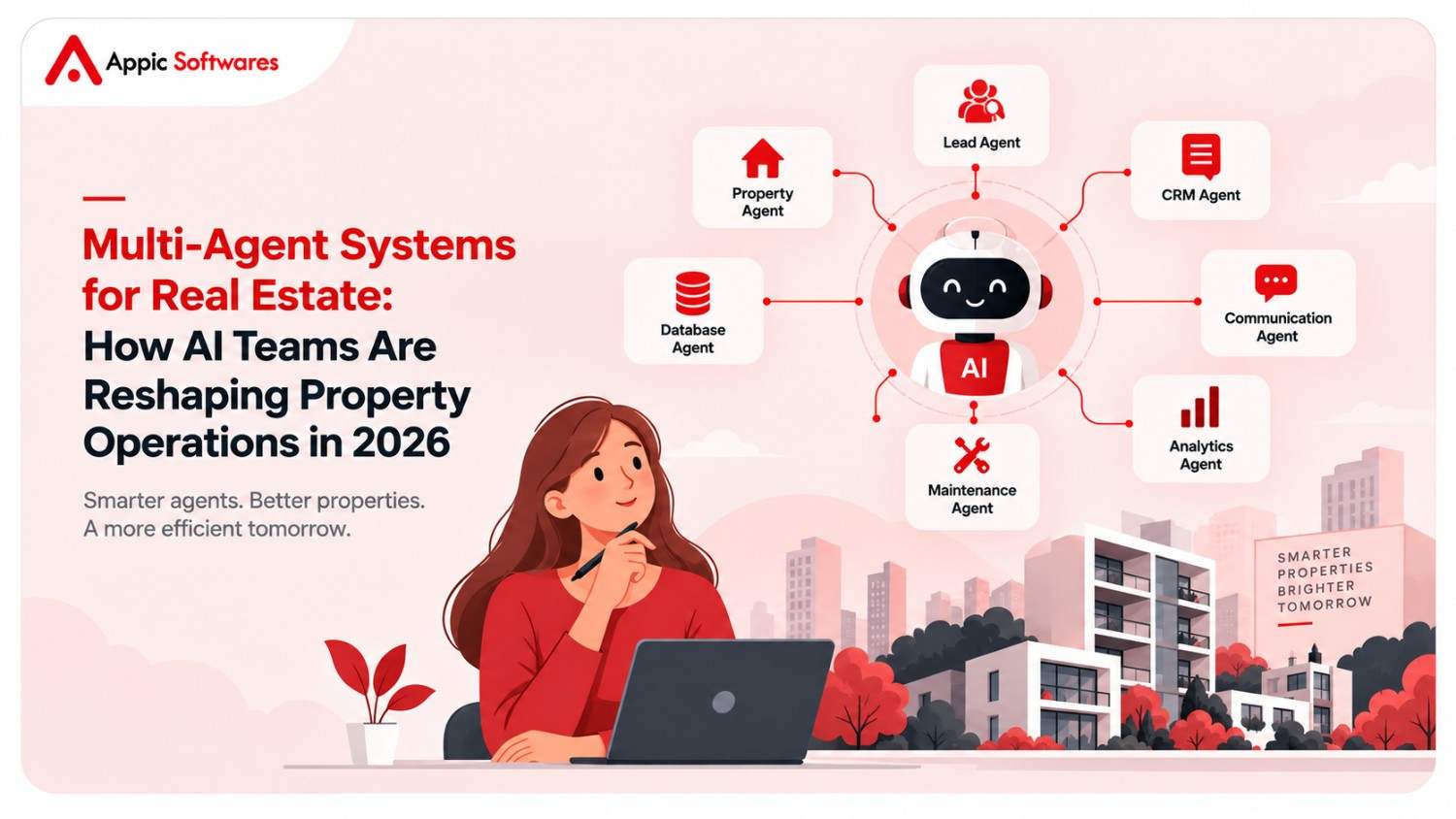
Multi-Agent Systems for Real Estate: How AI Teams Are Reshaping Property Operations in 2026
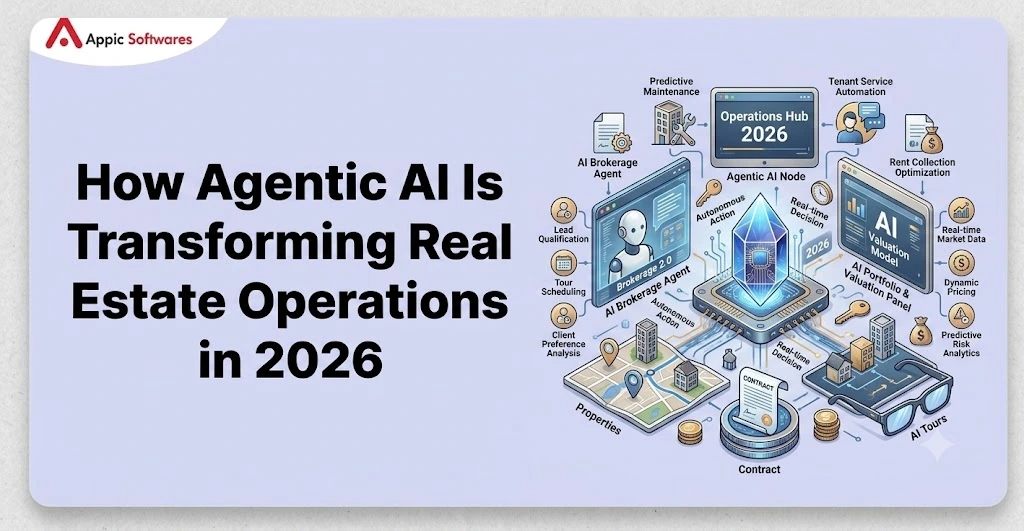
How Agentic AI Is Transforming Real Estate Operations in 2026