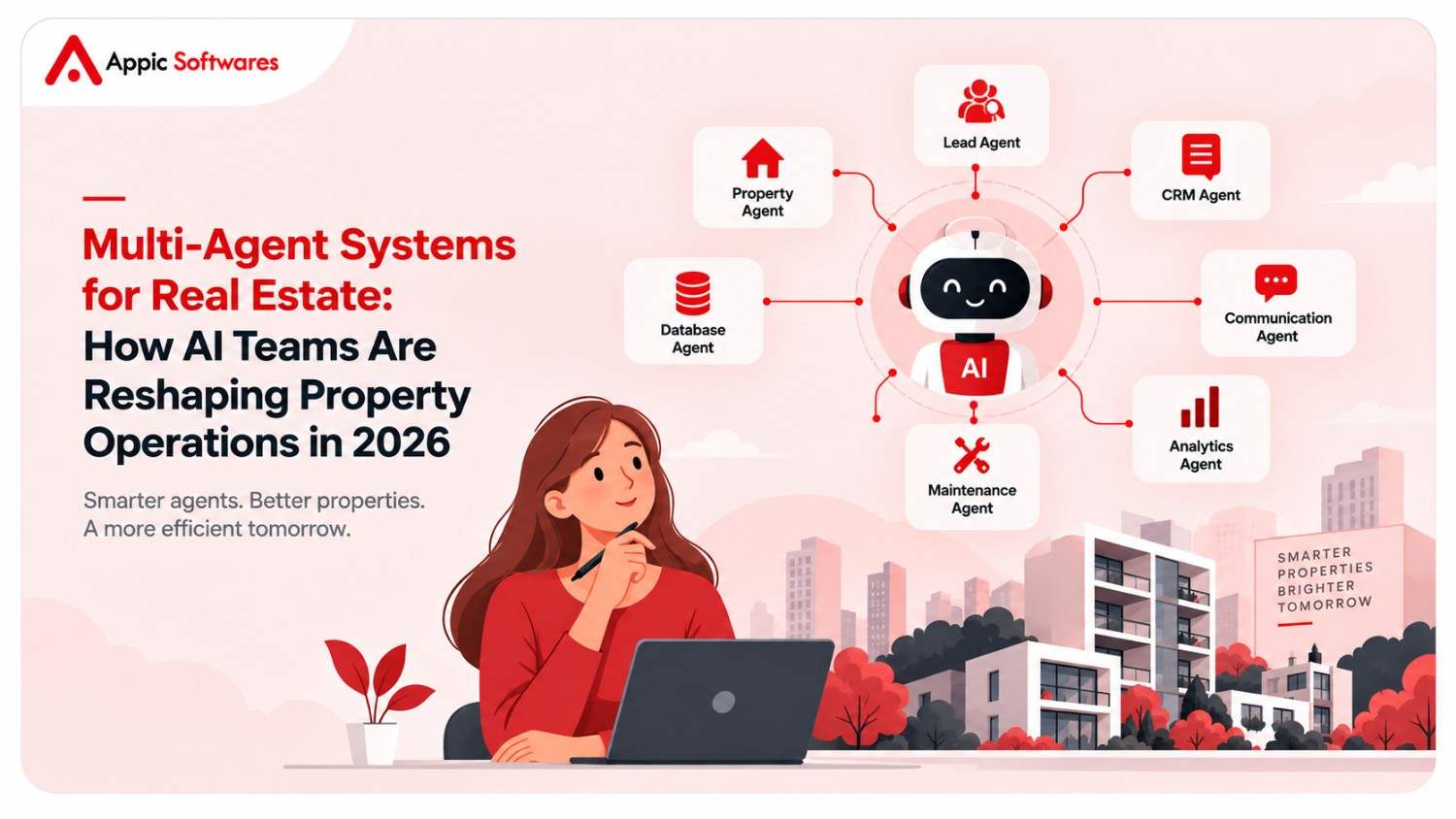
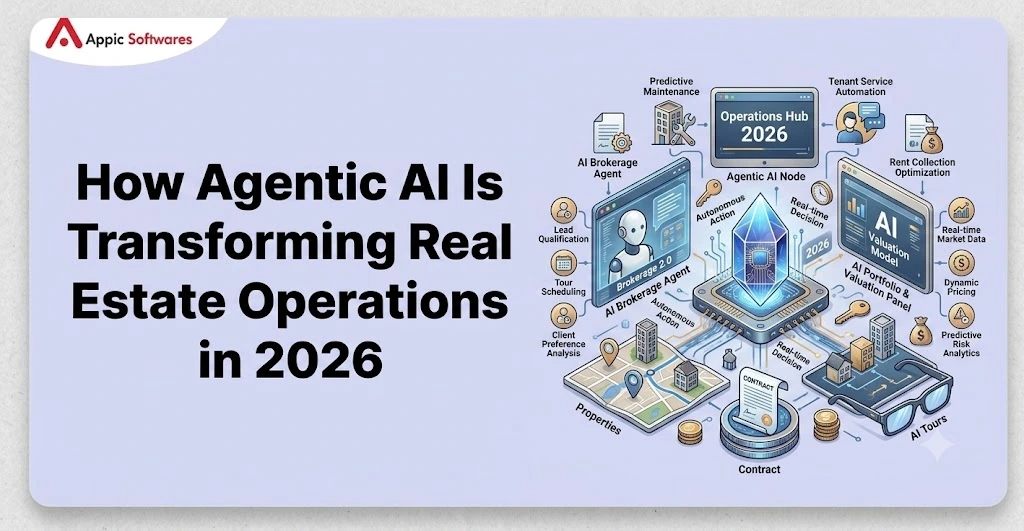
The proptech industry is still evolving and has a lot of room for transformation as we approach 2024, and advancements aren’t just being made by AI and machine learning. Now without further ado, let’s explore the top proptech trends that businesses and professionals should be closely monitoring to stay ahead of the always-changing proptech landscape.
Co-Renting & Co-Living Marketplaces
Call it “adult dorms” or “community living,” but the truth is that co-dwelling and co-renting are proptech trends to keep an eye on in the face of inflation and growing housing costs. The majority of co-living websites, such as Common, Allihoop, and Badi, function as real estate markets where users may search for a home, discover more about the community, and communicate with the owner.
With shared places and personalized experiences, proptech’s future will require more of the following:
- smart home automation to enhance comfort throughout one’s stay;
- smart building systems, since a larger rental population uses more resources;
- Property management systems with sophisticated messaging and booking features, as well as, in certain situations, integration with event management systems, are necessary for the operation of co-working and “co-leisure” facilities;
- Automation will be needed for some jobs, such as rent collection and maintenance request processing because managing co-renting spaces involves more property management duties;
- Platforms for co-living and co-renting frequently serve as mid-term rental portals, necessitating the use of AI chatbots that are available around the clock, AI property matching algorithms, and AI lease abstraction.
Neighborhood Social Networking Apps
Neighborhood social networking apps will play a role in community living (also known as co-renting and co-living). They will assist prospective tenants in finding and interacting with future co-renters based on shared interests and geographic location. They will also enable them to compare property ratings and reviews, much like the “real estate Tik-Tok” app Playhouse does.
Neighborhood social networking sites such as Nextdoor typically mimic social media in that users publish news, interact with one another, establish profiles, and have conversations.
The core functionality of such apps will be:
- streamlined the process of registering users and creating customized profiles;
- NLP-powered community search and location-based matching (which calls for third-party connection with geolocation providers);
- robust chat features for group conversations and private messages;
- Tools for moderation and group management to make sure the group adheres to the safety and trust initiatives.
The democratization of real estate investing will stay a component of top proptech trends next year because of the lower investment barriers it offers, stronger diversification, greater liquidity, and increased flexibility.
By 2030, the global crowdfunding market—which is currently valued at $10.8 billion—is expected to have grown significantly, with estimates of $250 billion. Yes, there will be more competition for fractional ownership platforms like Picaso and crowdfunding sites like PeerStreet and RealtyMogul, according to the proptech forecast.
Regarding the growth of real estate platforms, this specific proptech trend indicates:
- increased emphasis on data analytics functionality (usually driven by AI);
- the requirement for AI modules for contract summarizing and legal compliance analysis;
- streamlined the procedures for risk assessment and due diligence;
- Increased emphasis on digital security.
GreenTech and ESG
Given that the real estate industry is responsible for over 40% of the world’s carbon dioxide emissions, it makes sense that proptech solutions of the future will encourage increased openness in ESG practices.
The following proptech sustainability solutions are anticipated to be the most well-liked by 2024:
- The goal of energy efficiency technologies was to lower carbon emissions by consuming less energy;
- sources of renewable energy combined with cutting-edge technologies for effective management;
- smart building technologies to improve operational building efficiency and resource use;
- Platforms for gathering ESG data that allow for th
e real-time tracking and reporting of governance, social, and environmental variables.
IoT and Smart Home Automation
To maximize resource usage, improve user comfort, and contribute to a sustainable future, IoT and smart home automation will become an indispensable component of any property. This is because energy efficiency and sustainability, as well as individualized living experiences, are becoming increasingly important.
For proptech software outlook, this trend means:
- the development of cutting-edge property management platforms that can be integrated with IoT and smart home automation devices to provide real-time building system monitoring and control;
- predictive maintenance analytics – property managers can monitor building infrastructure and equipment in real time with IoT sensors, addressing possible problems before they become more serious;
- integration of smart grids and other renewable energy sources, such as solar panels;
- An increased emphasis on interconnectivity between smart devices within an estate to ensure an optimal user experience
eSigning
From 2023 to 2033, the digital signature market is projected to grow at a Compound Annual Growth Rate (CAGR) of 20.8%. With a 67.6% global market share, DocuSign currently holds a dominant position.
Any proptech solution that involves real estate deal administration will continue to include ESigning. Documents can be electronically signed in a matter of minutes with eSigning, speeding up transaction closing and removing the need for in-person meetings.
eSigning is a proptech trend in real estate software development, which means:
- a rise in the market for standalone eSigning products or proptech software that includes eSigning modules, particularly when discussing document management systems;
- It will be necessary to integrate additional systems, like document management or crowdfunding platforms, to build a customized eSigning solution;
- For added protection, several eSigning solutions may include biometric authentication.
AI Proptech Trends to Follow in 2024
AI Chatbots
Conversational AI is a sure bet in the proptech future; examples of such solutions are Roof AI, STAN AI, and Hyro. Conversational AI solutions, such as virtual assistants and chatbots, are based on natural language processing (NLP) models and are used to process requests, respond to inquiries from tenants, and assist in the property matching process.
AI chatbots for proptech software development entail:
- combining AI assistants and chatbots with other solutions, such as smart building systems and property management applications;
- AI chatbots will interact with leads, gather their contact details, and store them directly in CRM (provided the two are integrated). This will increase their significance in lead creation and qualification.
AI Real Estate Search
Artificial intelligence (AI) real estate search, powered by natural language processing (NLP), enables users to explore interactive maps and obtain the most accurate results.
AI real estate search for proptech software development entails:
going above and beyond with your property search. Rather than having to switch between multiple filters, users can type in their query as if they were speaking with a buddy (or ChatGPT). The most appropriate possibilities would appear on the map the moment you typed something like, “I’m looking for a cozy 1-bedroom flat in Dallas for no more than 150 dol a night, close to the center with good transportation around.” Furthermore, the AI engine would become a support agent as you would be able to ask direct questions about the properties you are interested in. We see a significant increase in the use of rental websites and real estate marketplaces, such as Airbnb. It’s interesting to note that Zillow has already revealed this functionality for their platform, thus in 2024 other platforms will undoubtedly catch up;
The capability for users to do intricate search queries and find unusual or niche properties in novel methods, such as by using a voice-activated real estate search or giving descriptions of properties without giving specific specifics. The latter strategy is fantastic for those looking for a place to call home because AI can read between the lines and present only possibilities that exactly match. The first moves in this direction have been taken by Realtor’s Dream Home Solution.
AI Property Price Valuation
A function like this is quite helpful for property owners and landlords. Users can compare homes, set exact prices, and identify which properties and areas are most likely to be preferred by sellers or renters.
What does the proptech forecast mean by AI Property Price Valuation?
AI-powered property price estimation will be a crucial component of real estate markets;
It can also be included in AI systems for property valuation, which will enable real estate agents to do property appraisals more quickly.
AI User Preference Analysis
The increased property search and personalized user experience will be greatly boosted by this proptech trend. AI can provide more accurate search results by using past data. For example, if a user looks for a property with a parking lot and non-smoking policy, the AI system will remember these preferences and take them into account without requiring the user to enter them again.
In terms of developing proptech software, the trend indicates:
markets for real estate using AI algorithms that make use of past data to deliver pertinent results;
Proptech developers will work with data providers to design and execute cutting-edge AI User Preference Analysis solutions.
AI Demand Forecasting
With the use of artificial intelligence (AI), landlords and property managers may forecast demand for their homes based on several variables, including seasonality, trends in the real estate market, past booking patterns, and more.
- AI demand forecasting is going to be an
essential component of every real estate market;
- Marketing strategies can be customized to target consumers with relevant properties and specific demographics using AI-powered insights regarding future demand;
- Investment tools will also include AI demand forecasts, which will assist users in identifying properties with the highest demand and, thus, the greatest profit potential.
AI Automated Translation
In an era of globalization and cultural diversity, artificial intelligence (AI)-assisted translation not only helps real estate professionals overcome language barriers but also promotes smooth communication and cooperation.
- Property developers and proptech investors who wish to enter international markets will use AI automated translation as part of their real estate tech stack in the future;
- It is also going to be integrated into foreign real estate platforms;
- Simplifying the translation of contracts and legal papers as an add-on feature of other products like AI lease abstraction apps and document management systems.
Proptech Investment Trends in 2024
The worldwide proptech market was valued at $30.16 billion in 2022, and it is projected to grow to a valuation of over $40.5 billion in 2024, thanks in part to significant proptech investments.

AI and Machine Learning
The proptech industry had an AI-fueled boom in the first half of 2022, which helped loan and equity investments cross the $8 billion mark. Interestingly, AI startups received 70% of all transactions.
At the moment, investors are focusing more of their money on certain proptech applications of AI and machine learning, with the greatest attention going to domains like property valuation, predictive maintenance, and customized user experience.
Proptech venture capitalists have high expectations due to the optimistic estimate for returns since 64% of enterprises are utilizing AI to increase productivity and shape the industry perspective.
Sustainability Technologies
Did you know that, between 2026 and 2030, global yearly investment in energy-efficient buildings must top $500 billion to meet the net-zero goals by 2050?
Even though real estate accounts for about 40% of global carbon emissions, it will continue to be a solution to the greenhouse problem. However, we should anticipate greater investment in sustainability solutions like building automation systems, smart energy management systems, and renewable energy sources—all of which are fueled by AI and IoT.
In the meantime, investments are being made in proptech solutions such as energy intelligence platforms and ESG data analytics platforms, demonstrating how sustainability efforts are being applied to the construction industry.
In 2024, there will be a greater focus on cheap housing, which will lead to the advancement of co-living and co-renting real estate marketplaces, fractional ownership investment opportunities, and AI-powered crowdfunding platforms.
Savills and Savills Investment Management, which together manage assets valued over €1 trillion, polled investors in Euro
pe during the first quarter of 2023. According to the report, 38% of these investors presently have stakes in co-living. Over the next three years, 51% of European investors want to make investments in co-living.
According to UK co-living statistics, plans for an additional 12,150 beds have been submitted, more than double the amount of co-living projects that were submitted for development before the epidemic.
In contrast, the second quarter of 2023 saw investments of €8.5 billion in the US multi-housing sector, which includes purpose-built student housing as well as multifamily and single-family rented homes. These investments surpassed the €7.8 billion made in offices during the same period.
Rising housing costs and the consequent need for affordable housing solutions account for this specific proptech investment trend. For example, the number of American households struggling to pay for housing expenses increased from 2019 to almost 22 million in 2021. In the meantime, a 2022 study found that more than one-third of renters did not acquire a home because of budgetary limitations.
Smart Home and Building Automation
When it comes to investing, smart homes, and building automation often provide more reliable and low-risk options than other proptech topics.
The smart home market is predicted to develop at a compound annual growth rate (CAGR) of 11.43% between 2023 and 2028. With this growth trajectory, the market is expected to reach a projected volume of $231.6 billion by 2028.
AI-powered predictive maintenance systems that assist property managers and landlords in increasing operational efficiency and Internet of Things (IoT) home automation systems that customize the customer experience will be the most popular software to invest in in the interim.
How Can Appic Softwares Help You Stay at the Forefront of Proptech Innovation?
Appic Softwares, a dependable partner dedicated to strengthening real estate companies, including proptech startups and major players in the m
arket like JLL and Colliers, is well-positioned to further your proptech innovation path.
Why does Appic Softwares exist?
We have been actively involved in the commercial real estate industry for 20 years, providing tailored proptech solutions to match our clients’ changing demands. We are delighted to have authored 17 proptech CRE products.
Appic Softwares provides a strategic edge by utilizing a worldwide delivery network of five international locations, which optimizes your budget and guarantees effective project execution.
How are we able to assist?
- We can test, thoroughly audit, and modify existing software or create a brand-new mobile or web proptech solution from scratch;
- Appic Softwares helps you find a digital solution that is precisely in line with your operations by providing consultancy services in real estate business automation;
- We understand how to integrate clever APIs, including AI, into your Proptech Software Development Company to give it more power.
Get in touch with us directly or schedule a free proptech call to find out which proptech solutions can transform your processes and help you stay ahead of the competition. Don’t miss the newest proptech trends.
FAQ
What prospects does proptech have in 2024?
Proptech has a bright future in 2024 thanks to rising investment, innovative AI applications, smart home and building automation, and the expanding need for sustainable and reasonably priced housing solutions.
What are the anticipated trends in proptech investing for 2024?
AI-powered solutions, sustainability technologies, co-living, crowdfunding, fractional ownership platforms, and smart home/building automation systems are the proptech investment themes to watch in 2024.