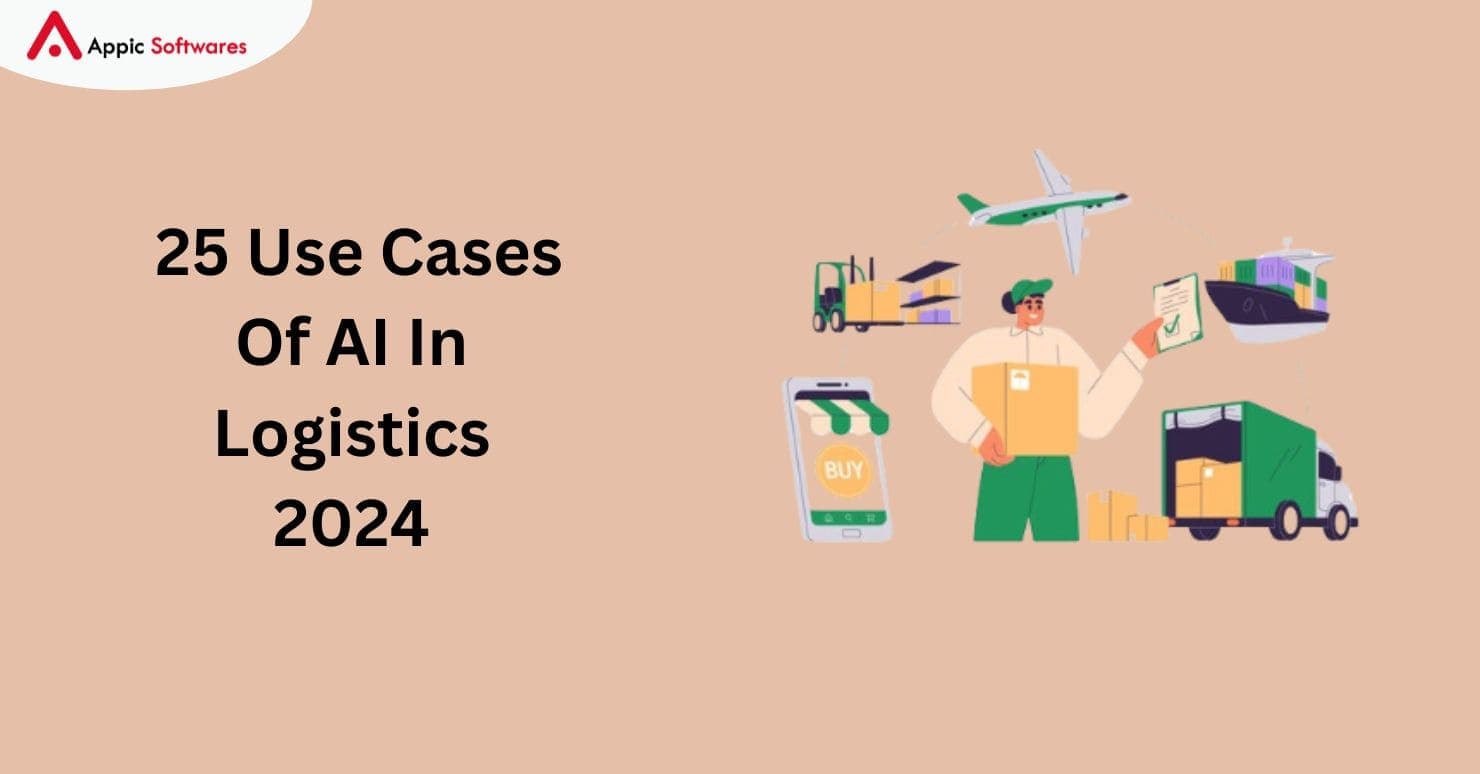
Use Cases of AI in Logistics: 12 Practical Examples, 2026 Adoption Data and How to Start
The main use cases of AI in logistics are demand forecasting, inventory replenishment, route optimization, last-mile dispatch, warehouse automation, predictive maintenance, shipment visibility and ETA prediction, document processing, freight pricing and matching, quality inspection, fraud and anomaly detection, and customer service. Start with one measurable use case and a clean data source.
Key Takeaways
- An industry study reports the share of firms with an active approach to AI rose from 16% in 2025 to 43% in 2026, and 65% of employees use AI, but only 7% strongly trust its recommendations.
- ORTEC's survey of more than 2,000 North American executives found 42% are not yet exploring agentic AI, and first and final mile route scheduling was the top area named for reinvention, at 35%.
- The most common barrier is integration cost with existing systems, at 32% in the ORTEC survey.
- Use cases overlap. Pick one with clear data, a named owner and a metric you already track.
- These are survey and vendor figures with different definitions, so treat them as directional.
How widely is AI used in logistics in 2026?
Surveys disagree because they define "use" differently.
- The 35th Annual Study of Logistics and Transportation Trends reports the share of companies taking an active approach to AI rose from 16% in 2025 to 43% in 2026, with 65% employee use and strong trust in AI recommendations at only 7% (Supply Chain 24/7).
- ORTEC's survey of more than 2,000 North American transportation and supply chain executives found 42% not yet exploring agentic AI and 23% planning a pilot within 12 months. Route scheduling for first and final mile was the top area named for AI-driven reinvention (35%), and integration cost was the top frustration (32%) (AJOT).
- An Agility survey of 503 professionals reports 98% say their companies use AI for some part of supply chain or operations. That is far higher than the others, so the sample and definition likely differ.
- nShift cites early autonomous supply chain adopters at roughly 27% shorter order lead times and 25% higher labor productivity (nShift). This is a vendor figure.
We read search summaries of these pages, not the full reports. Check each source before you quote a number.
What are 12 practical use cases of AI in logistics?
| Use case | What AI does | Metric to track |
| 1. Demand forecasting | Predicts volumes by lane, product or region | Forecast error, stockouts |
| 2. Inventory replenishment | Suggests order quantities and timing | Inventory turns, service level |
| 3. Route optimization | Plans routes with time windows, capacity and traffic | Miles per stop, fuel, on-time rate |
| 4. Last-mile dispatch | Assigns drivers and re-plans during the day | Delivery success, cost per drop |
| 5. Warehouse automation | Directs picking, slotting and robots | Picks per hour, error rate |
| 6. Predictive maintenance | Flags vehicles and equipment likely to fail | Unplanned downtime |
| 7. Shipment visibility and ETA | Predicts arrival times from live data | ETA accuracy, exception count |
| 8. Document processing | Reads bills of lading, invoices and customs forms | Processing time, manual touches |
| 9. Freight pricing and matching | Suggests rates and matches loads to carriers | Margin, empty miles |
| 10. Quality inspection | Spots damage or labeling errors in images | Damage claims, rework |
| 11. Fraud and anomaly detection | Flags unusual invoices, claims or shipments | False positives, losses found |
| 12. Customer service | Answers status questions and routes issues | Response time, resolution rate |
The earlier version listed 25 use cases that overlapped, such as predictive maintenance twice and routing twice. Autonomous trucks and drones are real areas of work, but they depend on regulation and are not a near-term option for most shippers, so we leave them out of this practical list.

Which use cases are easiest to start with?
- Document processing needs scanned or digital documents you already hold and has an obvious time saving.
- Demand forecasting and replenishment use sales and stock history that most companies have.
- ETA prediction works when you have telematics or carrier tracking data.
- Route optimization needs clean stop and vehicle data. See our guide to route optimization for waste collection for realistic savings from studies.
Planning an AI project for your logistics operations? Tell us the process and the data you have, and we will help you scope it. Get your project scoped
What challenges should you expect?
- Integration. The top frustration in the ORTEC survey. Plan for TMS, WMS, ERP and carrier data.
- Data quality. Missing scans, wrong addresses and inconsistent product codes weaken any model.
- Trust. Only 7% strongly trust AI recommendations in the study above. Show reasons, keep a human override and track outcomes.
- Short-term vs long-term value. Pilots can pay back fast while platform work takes longer. Plan both.
- Change management. Dispatchers and planners need training and a say in the design.
- Security and privacy. Shipment, customer and driver data need protection and clear access rules.
How do you start an AI logistics project?
- Pick one process with a metric you already measure.
- Check the data: sources, quality, history and who owns it.
- Set a baseline for a few weeks.
- Choose build, buy or extend. A ready tool suits standard problems, custom suits unusual workflows.
- Pilot on a small scope and keep a human in the loop.
- Measure against the baseline and review failures.
- Scale step by step with integration and monitoring in place.

Should you build, buy or extend?
| Approach | Best when | Trade-off |
| Buy a ready product | Standard need such as ETA or document capture | Less control, subscription cost |
| Build custom | Unusual workflows or you want to own the model | Higher upfront cost, needs data and maintenance |
| Extend your TMS or WMS | Your vendor already offers an AI add-on | Tied to the vendor roadmap |

How Appic builds AI logistics solutions
Appic Softwares has built custom software since 2018, with offices in Jaipur (India), Frisco, Texas (USA) and Munich (Germany), and a 5.0 Clutch rating from 24 verified reviews. We offer logistics app development, AI development services, machine learning development and AI agents. Our average rate is about $35 per hour, and projects typically start around $10,000 for a focused scope. Appic is a publisher with a commercial interest, so compare quotes.
What changed from the earlier version of this post?
The March 2024 version was titled 2025, listed 25 overlapping use cases with invented-sounding names, used logistics market sizes from 2022 and had no examples, FAQ or real data. This update consolidates to 12 clear use cases, adds 2026 adoption, trust and barrier data from named surveys, a metric for each use case, a start plan and a build-or-buy table.
Ready to bring AI into your logistics operations? Share your process, data and goals. We will reply with a pilot plan and a cost range. Talk to our team
Frequently Asked Questions
What are the main use cases of AI in logistics?
Common use cases are demand forecasting, inventory replenishment, route optimization, last-mile dispatch, warehouse automation, predictive maintenance, shipment visibility and ETA prediction, document processing, freight pricing and matching, quality inspection, fraud and anomaly detection, and customer service.
How many logistics companies use AI?
Surveys differ. One 2026 study reports 43% of firms take an active approach to AI, up from 16% in 2025, while another survey reports 98% use AI in some part of operations. Definitions and samples differ, so treat the figures as directional and check how each defines use.
What is the biggest barrier to AI in logistics?
In ORTEC's survey of more than 2,000 North American executives, the top frustration was integration cost with existing systems, at 32%. Data quality, low trust in recommendations and change management also slow projects. Start small, keep a human override and plan integrations early.
Which AI use case should a logistics company start with?
Pick one process with clean data and a metric you already track. Document processing, demand forecasting, ETA prediction and route optimization are common starting points. Set a baseline, run a small pilot with a human in the loop and measure results before scaling.
Does AI replace logistics staff?
In most current projects AI supports planners, dispatchers and warehouse staff by handling repetitive analysis and suggestions, while people make exceptions and relationship decisions. Only 7% of respondents in one study strongly trust AI recommendations, so human review remains standard practice.
How much does an AI logistics project cost?
Cost depends on the use case, data quality, integrations and whether you buy or build. Ready products charge subscriptions, while custom builds cost more upfront. Appic projects typically start around $10,000 for a focused scope. Get written estimates and run a pilot before scaling.
Related Articles

How AI Can Help In Skin Care? A Complete 2025 Guide
AI has revolutionized skincare in recent years, bringing innovation and efficiency to the sector. AI in skincare revenues is growing exponentially and primed for additional expansion. Revenues hit $3.27 billion in 2023, a major industry milestone. The market is expected to reach $3.97 billion by 2024, growing by 21.5% annually. AI is transforming skincare, as shown […]

Cost to Develop An AI Software Like Model Verse in 2025
The cost to develop an AI image generation software like Model Verse would depend on various factors such as the complexity of features, development time, technology stack, and team expertise. For a rough estimate, such a project could range from tens of thousands to hundreds of thousands of dollars. What Is Model Verse? Model Verse […]

How To Develop An AI Call Receiver In 2026?
In today’s digital era, businesses are relentlessly pursuing innovative solutions to streamline operations and enhance customer satisfaction. One such advancement is the development of AI call receivers. The conversational AI industry is $10.7B and expanding 22% annually. These intelligent systems are adept at managing incoming calls, providing relevant information, and even executing tasks autonomously, thereby […]

Cost To Create An AI Image Generation Software 2025
Artificial intelligence (AI) breakthroughs have caused a significant revolution in the digital imaging scene in recent years. The world market for AI image generators was worth $257,175 thousand in 2022. It’s expected to grow at a compound annual growth rate (CAGR) of 17.4%, from $299,295 thousand in 2023 to $917,448 thousand by 2030. With a […]
AI App Development: How to Build AI and AI Agent Apps (2026 Guide)