Top Fintech App Development Companies: 6 Picks for 2026 and How to Choose One
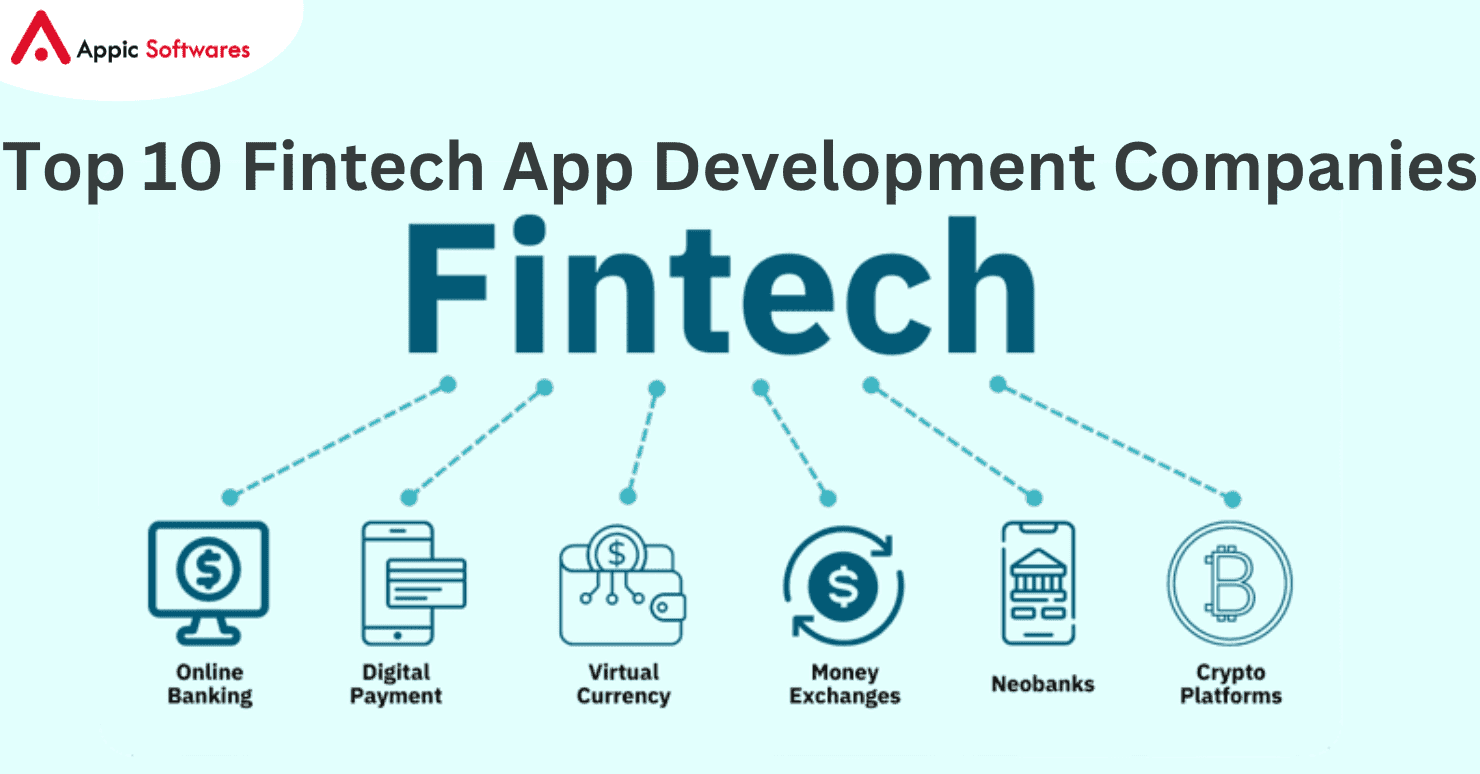
Fintech app development companies build payment, banking, lending, trading and insurance products and the security, compliance and integrations behind them. This list covers six firms, in alphabetical order, with facts taken from each company's own website. It is a shortlist, not a ranking. Appic Softwares is one of the six and is the publisher, so we disclose that interest here.
Key Takeaways
- Choose a fintech partner on verified fintech work, compliance experience and references, not on size or a self-reported rating.
- All numbers about the companies below are their own claims, captured from their websites in October 2026. Confirm each before you rely on it.
- Appic is the publisher and appears in the list in alphabetical order. We cannot rank ourselves fairly, so we do not rank anyone.
- Always ask for named fintech references, a security and compliance plan, and a paid pilot.
How was this list made?
We opened each company's website and recorded what it states about fintech work, size and location. We included a firm only when its own site showed relevant fintech or finance work. We did not use Clutch scores here because they change and we could not re-check them. The earlier version of this post listed ten companies, ranked Appic first and used unsourced awards and ratings, so we rebuilt the list.
Which fintech app development companies should you consider?
1. Appic Softwares
Appic is a custom software company founded in 2018 with offices in Jaipur (India), Frisco, Texas (USA) and Munich (Germany). It builds finance apps, mobile banking apps and AI fintech solutions, and holds a 5.0 Clutch rating from 24 verified reviews (company-reported, check Clutch for the current figure). Average rate about $35 per hour, with projects typically starting around $10,000.
2. Appinventiv
Appinventiv describes itself as an enterprise technology and digital engineering firm with 11+ years of experience, 1,700+ technology specialists and 3,000+ solutions delivered. Its finance section lists fintech app, payment, lending, banking, trading, insurance, e-wallet and crypto development, plus fintech consulting, and cites PCI DSS, SOX and FTC Safeguards Rule compliance. It shows client logos with fintech captions but its featured finance case study is a children's financial literacy platform (appinventiv.com).
3. Brainvire
Brainvire is based in Plano, Texas, and says it builds "secure lending, payments, and decision-intelligence platforms built for audits, uptime, and scale." Its site claims 2,000+ brands served, 95% client retention and a Clutch rating of 4.8 from 265 reviews. It names no fintech clients on the page we read (brainvire.com), so ask for references.
4. EffectiveSoft
EffectiveSoft lists trading platforms, crypto exchange software, blockchain and smart contracts, payment solutions and fintech apps. It says it is the core engineering partner of a multi-asset trading platform with more than one million registered users in over 50 countries, claims 23 years of experience, says 86% of clients are in highly regulated industries and states ISO/IEC 27001:2022-certified processes. Offices are listed in the US, Costa Rica and Poland (effectivesoft.com).
5. Miquido
Miquido, with a Krakow address, states 200+ experts, 15+ years in the business and 250+ digital solutions. Its site features a fintech case study, Nextbank, for AI-powered credit scoring and loan origination, with claims of 500M+ loan applications processed and 97% prediction accuracy. Client logos include banks and insurers, but the page does not describe that work (miquido.com).
6. Netguru
Netguru is based in Poznań, Poland, and states 400+ people, 17+ years on the market and 2,500+ projects. It has a finance and banking industry page and a case study for UBS mobile design work, but its site focuses mainly on commerce, so fintech looks like a smaller part of its portfolio (netguru.com). Check its finance references directly.

| Company | Fintech evidence on its own site | Ask about |
| Appic Softwares | Finance, mobile banking and AI fintech service pages | Named fintech references and security practices |
| Appinventiv | Broad finance offering, PCI DSS and SOX mentions | Case studies beyond logo captions |
| Brainvire | Lending and payments platform claims | Named fintech clients |
| EffectiveSoft | Trading platform partner, crypto and payments work | Team size and the trading platform reference |
| Miquido | Nextbank credit scoring case study | How the 97% accuracy was measured |
| Netguru | Finance industry page, UBS design case study | Depth of fintech delivery |
Looking for a partner for your fintech product? Tell us your market, licenses and integrations, and we will help you scope it. Get your project scoped
How do you choose a fintech app development partner?
- Check verified fintech work. Named clients, live products and case studies with outcomes.
- Ask about compliance. KYC, AML, PCI DSS and data protection in your markets. See fintech compliances.
- Review security practices. Testing, access control and incident plans. See cybersecurity in fintech.
- Confirm integrations. Banking APIs, payment providers, identity checks and your own systems.
- Verify ratings yourself. Open the review site, check the date and review count, and speak to two references.
- Agree scope, ownership and support. Who owns the code, accounts and hosting after launch.
- Run a paid pilot. A small first release shows how the team works.

How much does fintech app development cost?
Cost depends on the product type, compliance work, integrations and security. Read our detailed guide to fintech app development cost, and see starting a fintech company and fintech solutions for planning. Get written quotes on the same scope from each firm.

Where does Appic fit?
Appic builds fintech products for startups and growing companies and can begin with a focused MVP. We are a good fit when you want a smaller team with direct access to engineers. We are not the right fit for every project, and large banks with strict vendor requirements may prefer a larger firm. Compare us with the others on a pilot.
Before you contact any of these companies, it helps to know what a build involves: our guide on how to build a banking app covers features, cost and timeline, and our fintech compliance checklist lists the regulations your partner must handle.
What changed from the earlier version of this post?
The October 2023 version listed ten firms, ranked Appic first, used Clutch ratings with no date, pointed several links to unrelated pages, spelled one company two ways and contained unsupported claims such as "most affordable" and "award-winning". This update keeps six firms with fintech evidence on their own sites, lists them alphabetically, labels every figure as a company claim and adds selection steps and a disclosure.
Ready to build your fintech app? Share your idea, target market and integrations. We will reply with a plan, the compliance steps involved and a cost range. Talk to our team
Frequently Asked Questions
Which companies develop fintech apps?
Many firms do, including Appic Softwares, Appinventiv, Brainvire, EffectiveSoft, Miquido and Netguru, each of which states fintech or finance work on its own website. Facts in this list come from those sites in October 2026. Verify references, compliance experience and security practices before you choose a partner.
How do I choose a fintech app development company?
Check verified fintech work with named clients, ask about KYC, AML, PCI DSS and data protection, review security practices, confirm integrations, verify ratings yourself on the review site, agree code ownership and support, and run a paid pilot. Speak to at least two references before signing.
How much does it cost to build a fintech app?
Cost depends on the product type, compliance work, integrations and security needs. Published estimates for a lean fintech MVP run from tens of thousands of dollars, with compliant full-featured apps costing more. Appic projects typically start around $10,000 for a focused scope. Get written quotes on identical scope from each firm.
Is this a ranking of the best fintech companies?
No. It is an alphabetical shortlist based on what each company says on its own website. Appic Softwares is the publisher and appears in the list, so we do not rank firms. Use the list to find candidates, then compare them on a pilot, references and verified work.
Should I choose an outsourced fintech team or build in-house?
Outsourcing suits a defined project or a fast start, while in-house teams suit long-term products with steady work. Either way, you remain responsible for compliance with licensing and data rules in your markets. Many companies start with a partner for an MVP and hire in-house later.
Do fintech apps need special licenses?
It depends on the product and country. Lending, payments, trading, insurance and crypto services often need a license or a licensed partner. Many startups launch through banking-as-a-service or payment provider APIs that hold the license. Ask a regulatory specialist before you design the product.
Related Articles

How to Create an App Like Slice in 2024?
Slice is a well-known participant in the fintech business, transforming credit and financial services for young professionals and students in India. Slice, which was founded in 2016, provides a digital credit card that caters to the unique demands of its target audience, giving them quick access to credit without the hassles of traditional banks. To […]

12 Easy Steps To Create An App Like Zogo
In today’s world, knowing about money is both a necessity and an advantage. Making a money app as popular as Zogo has become an exciting expedition. With its creative use of games to teach people about personal finance, Zogo has made a big difference in the field of financial education. To start learning how to […]

Step-by-Step Guide To Build Your FinTech App In 2025
The global FinTech market is expected to reach $460 billion by 2025. Digital banking, mobile payments, and other FinTech services have made financial transactions faster, easier, and more accessible. If you want to create a FinTech app, you must know the processes. This guide covers FinTech app development from ideation through launch. Everything from market […]

Biometrics In Digital Banking 2024: Know Everything Here
To protect sensitive information and improve user experience, financial institutions require a secure authentication solution, such as biometrics in digital banking. Passwords, PINs, and OTPs are easily forgotten, stolen, or compromised by knowledge-based authentication techniques. Microsoft disclosed that weak passwords exposed 44 million user accounts to account takeover. According to Google, the majority of users […]
How AI Agents Are Transforming Financial Markets
Financial markets have continually evolved in response to technological advancements. Electronic trading systems, mobile banking, and other technologies continue to revolutionize how money changes hands. The biggest driver of this change is AI agents in finance. These intelligent systems are no longer just experimental tools being tested by tech companies. They are now the backbone […]
7 Use Cases of Predictive Analytics In Finance
Today, the financial service industry is no longer reliant on simply looking back at previous years of data. Institutions expect that they will be able to not only predict and mitigate risks but also forecast potential market fluctuations and provide personalized customer experiences in real time through predictive analytics. Predictive analytics is an important area […]