
How to Build a Stock Trading App Like Investopedia: Simulator vs Live Brokerage, Features, Data and Rules
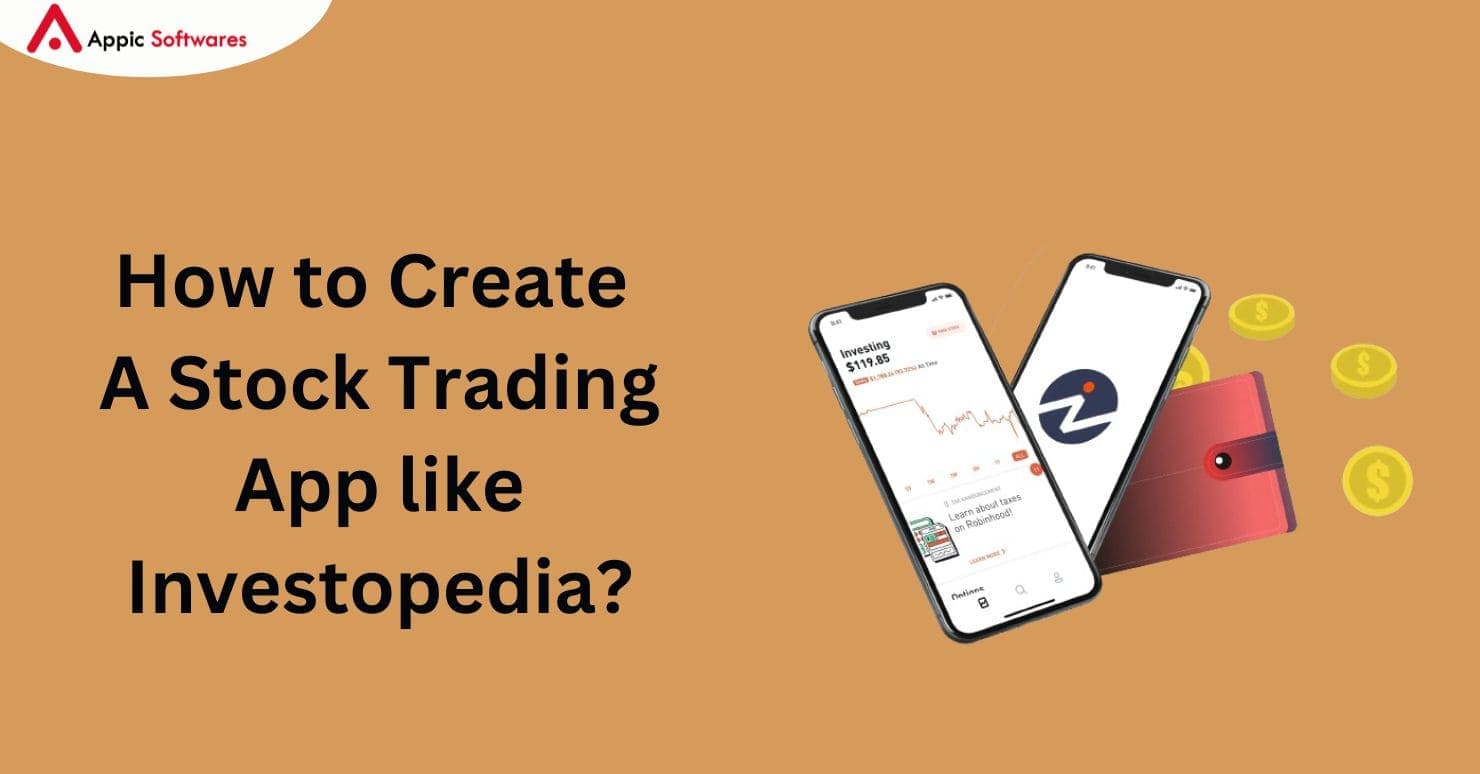
Investopedia is best known for financial education and its Stock Simulator, a paper trading game where users start with virtual cash. An "app like Investopedia" is usually a trading simulator plus learning content, not a brokerage. A simulator needs market data, a virtual portfolio engine, education and community. A live trading app also needs a broker partner or registration, KYC and AML, and securities compliance.
Key Takeaways
- Search sources agree that the Investopedia simulator gives users $100,000 in virtual cash and offers challenges against other users. Reports differ on data delay (one says 15 minutes), so check Investopedia's site for details.
- Decide first: simulator (education, low regulatory burden) or live trading (regulated, much more work). Mixing them without clear labels confuses users.
- Market data is a main cost. Real-time exchange data requires licenses and fees, while delayed data is cheaper.
- Per secondary sources, the SEC approved on April 14, 2026 the removal of the pattern day trader designation and the $25,000 minimum equity requirement, effective June 4, 2026, with brokers having until October 20, 2027 to implement. Verify in the SEC and FINRA texts.
- Published 2026 estimates put a trading platform at about $150,000 to $500,000 or more, and robo-advisors at about $70,000 to $200,000.
What does Investopedia's simulator do?
Based on SmartAsset and other search results, users get $100,000 in virtual cash, can place as many trades as they like and can join challenges against other users to compete each day. SmartAsset reports a 15-minute lag in trade execution, so it is not fully real time, while other pages claim real-time quotes. Low-quality pages also claim many asset classes. We did not verify these on Investopedia's site, so check it for current features and data delays (SmartAsset). The earlier version of this post did not explain the simulator at all.
What type of app should you build?
| Factor | Simulator (paper trading) | Live brokerage app |
| Money | Virtual cash | Real money and securities |
| Regulation | Mainly consumer protection, privacy and advertising rules | Broker-dealer rules, KYC and AML, best interest and disclosure rules |
| Core value | Learning, practice, community | Order execution, custody, funding |
| Data needs | Delayed or real-time quotes for display | Real-time data, order routing and execution |
| Revenue | Subscriptions, ads, education, referrals | Commissions, spreads, interest, payment arrangements (regulated) |
| Time and cost | Lower | Much higher |
Many teams start with a simulator to build an audience and learn what users need, then add a regulated broker partner. For live trading, read stock trading app development companies and how to create a stock market app.

What features should the app have?
- Accounts and onboarding. Sign-up, profile and, for live trading, identity verification.
- Market data and charts. Quotes, price history, watchlists and basic indicators.
- Virtual portfolio engine. Cash balance, positions, order types, fills, fees and performance tracking.
- Order types. Market, limit and stop orders, with clear rules for how the simulator fills them.
- Education. Lessons, glossary, quizzes and trading journals.
- Challenges and leaderboards. Competitions with fair rules and anti-cheating checks.
- Alerts and notifications. Price alerts and contest updates.
- Analytics. Return, risk, win rate and benchmark comparisons.
- AI assistance. Explanations and feedback on trades, with clear disclaimers. See the future of AI in fintech.
- Safety. Clear text that results are simulated and not advice.
The earlier version mentioned robo-advisors, algorithmic trading plans and "no fee" trading as features, but never explained them. These are different products with their own rules, so decide whether you need them before you scope the app.

Where does the market data come from?
Market data is licensed. Exchanges and data vendors set rules and fees for real-time and delayed quotes, and for what you may display or redistribute. Delayed data (often 15 minutes) is cheaper and fine for a simulator. Real-time data costs more and is needed for live trading. Pick your provider early, read its license terms and budget for per-user or per-exchange fees. The earlier version mentioned DolphinDB and SingleStore without explaining them. They are databases, and most simulators can start with a standard database and caching.
What rules apply to a live trading app?
- Broker-dealer status. In the US, you either register as a broker-dealer or partner with one that holds the registration and clears trades.
- KYC and AML. Identity checks, sanctions screening and monitoring.
- Conduct and disclosure rules, including best interest standards for recommendations to retail customers.
- Data protection and security. Strong authentication, encryption and incident response.
- Margin and day-trading rules. These are changing, as described next.
On day trading, search results say the SEC approved on April 14, 2026 the proposed new rules that eliminate the pattern day trader designation and the $25,000 minimum equity requirement under FINRA Rule 4210, with the changes effective June 4, 2026 and brokers allowed until October 20, 2027 to implement. Sources differ on details such as a $2,000 threshold for intraday margin, and one broker said it would stop counting day trades from June 8 (Schwab). Verify the rule text before you design margin features. Nothing here is legal advice.

Planning a trading simulator or brokerage app? Tell us your market, data and partners, and we will help you scope it. Get your project scoped
Which technology should you use?
| Layer | Typical choices | Notes |
| Mobile and web front end | Flutter or React Native for mobile, React or Next.js for web | One cross-platform codebase lowers cost. See Flutter app development |
| Back end | Node.js, Python, Java or .NET services | Pick what your team knows. These are languages and frameworks, not databases. |
| Database and cache | PostgreSQL or similar, plus Redis for quotes and sessions | Time-series stores can help with price history at scale |
| Real-time updates | WebSockets or server-sent events | For live quotes and leaderboards |
| Cloud and DevOps | A major cloud, containers and CI/CD | See DevOps services |
| Security | Multi-factor authentication, encryption, audit logs | Required for any financial app |
The earlier version listed Java as a front-end skill and mixed programming languages with databases. Front-end web work uses HTML, CSS and JavaScript, and mobile apps use Swift, Kotlin or a cross-platform framework.
How much does it cost?
The earlier version gave no cost figures. 2026 agency estimates cited in our fintech app development cost guide put trading platforms at about $150,000 to $500,000 or more over 8 to 14 months and robo-advisors at about $70,000 to $200,000. A simulator without live trading costs less, but we found no reliable independent price data for it. Market data fees, security testing and compliance add to the total. Appic projects typically start around $10,000 for a focused scope.
How do you build it, step by step?
- Choose the product: simulator, live brokerage or both in stages.
- Define the audience: beginners, students or active traders.
- Pick data and broker partners and read their license and API terms.
- Design the core loop: learn, practice, review results, compete.
- Build the portfolio and order engine with clear fill rules and tests.
- Add education and community with moderation.
- Test security and accuracy, including edge cases such as halts and corporate actions.
- Launch to a small group, measure engagement and fix problems.
How Appic builds trading apps
Appic Softwares has built custom software since 2018, with offices in Jaipur (India), Frisco, Texas (USA) and Munich (Germany), and a 5.0 Clutch rating from 24 verified reviews. We offer trading app development, finance app development and AI fintech solutions. We build software and do not provide legal, investment or compliance advice. Our average rate is about $35 per hour. Appic is a publisher with a commercial interest, so compare quotes.
If you want real-money trading rather than a simulator, see how to build a trading app like Robinhood, including cost ranges, and browse the top mobile apps for investments to see which features users now expect.
What changed from the earlier version of this post?
The December 2023 version never explained what Investopedia's app does, said these apps "make billions", quoted a 2020 survey (67%) with no source, mixed languages and databases, called an app a "hybrid or cross-platform game", gave no cost figures, covered no regulation or market data and had broken headings. This update explains simulator versus live trading, features, data, the 2026 day trading change, technology, cost links and steps.
Ready to build a trading app? Share your market, data and partners. We will reply with a plan and a cost range. Talk to our team
Frequently Asked Questions
What is Investopedia's stock simulator?
Search sources describe it as a free paper trading game where users start with $100,000 in virtual cash, trade as often as they like and can join challenges against other users. One source reports a 15-minute lag in execution, while other pages claim real-time quotes, so check Investopedia's site for current features and data delays.
Is a trading simulator regulated like a brokerage?
A simulator that uses virtual money is generally lighter on securities regulation than a live brokerage, but consumer protection, privacy, advertising and data license rules still apply, and you should avoid presenting results as investment advice. A live trading app needs broker-dealer status or a registered partner, KYC and AML and conduct rules.
How much does it cost to build a stock trading app?
2026 agency estimates put trading platforms at about $150,000 to $500,000 or more and robo-advisors at about $70,000 to $200,000. A simulator without live trading costs less, but we found no reliable independent price data. Market data fees, security and compliance add cost. Appic projects typically start around $10,000.
Where do trading apps get market data?
From licensed exchanges and data vendors. Real-time data requires licenses and fees, and licenses set rules on what you can display or redistribute. Delayed data, often 15 minutes, is cheaper and works for simulators. Choose your provider early and read the license terms before you design features.
What changed with the pattern day trader rule in 2026?
Secondary sources say the SEC approved on April 14, 2026 the removal of the pattern day trader designation and the $25,000 minimum equity requirement, effective June 4, 2026, with brokers having until October 20, 2027 to implement. Details such as intraday margin thresholds differ by source, so verify the rule text.
Can I start with a simulator and add live trading later?
Yes, many teams do. A simulator builds an audience and shows what users want, and you can later partner with a registered broker for live trading. Keep simulated and real accounts clearly separated in the interface, and plan the legal, compliance and security work before you add real money.
Related Articles

Insurance App Development: Cost and Key Features
A lot is going on in the world every day, and we all want to feel a little safer. Because of this need for safety, more general insurance apps have been made. Insurance and banking companies are putting money into making insurance apps. Fintech firms are also trying to make the process of making insurance […]

Top Mobile Apps For Investments You Must Give A Try
Are you looking for the best business app for your phone to help you with your everyday money tasks? Is it hard for you to keep track of your spending or move your money around in your investing accounts? You’re in the right place if you said yes. The market for investment mobile apps is […]

Top Factors Affecting Payment Gateways Integration
We have to agree that mobile technology is quickly taking over the internet. As more people use their phones to connect to the internet, this field is expected to change in ways that are hard to predict. M-commerce is only going to grow, and smartphones have become the best places to shop these days. At […]

Best Technologies For FinTech App Development 2025
Introduction More and more, economies around the world are adopting digital payment methods to make them normal in many areas. As long as the trend keeps going up, digital payments will be common in every business. For fintech companies to stay ahead of this change, they need to use the most cutting-edge technology tools to […]
How AI Agents Are Transforming Financial Markets
Financial markets have continually evolved in response to technological advancements. Electronic trading systems, mobile banking, and other technologies continue to revolutionize how money changes hands. The biggest driver of this change is AI agents in finance. These intelligent systems are no longer just experimental tools being tested by tech companies. They are now the backbone […]
7 Use Cases of Predictive Analytics In Finance
Today, the financial service industry is no longer reliant on simply looking back at previous years of data. Institutions expect that they will be able to not only predict and mitigate risks but also forecast potential market fluctuations and provide personalized customer experiences in real time through predictive analytics. Predictive analytics is an important area […]