01. Headless Drupal Consulting
Get the best Headless Drupal consulting services and build or manage the Drupal software with ease. We also provide in-house training that helps you to train your in-house staff.







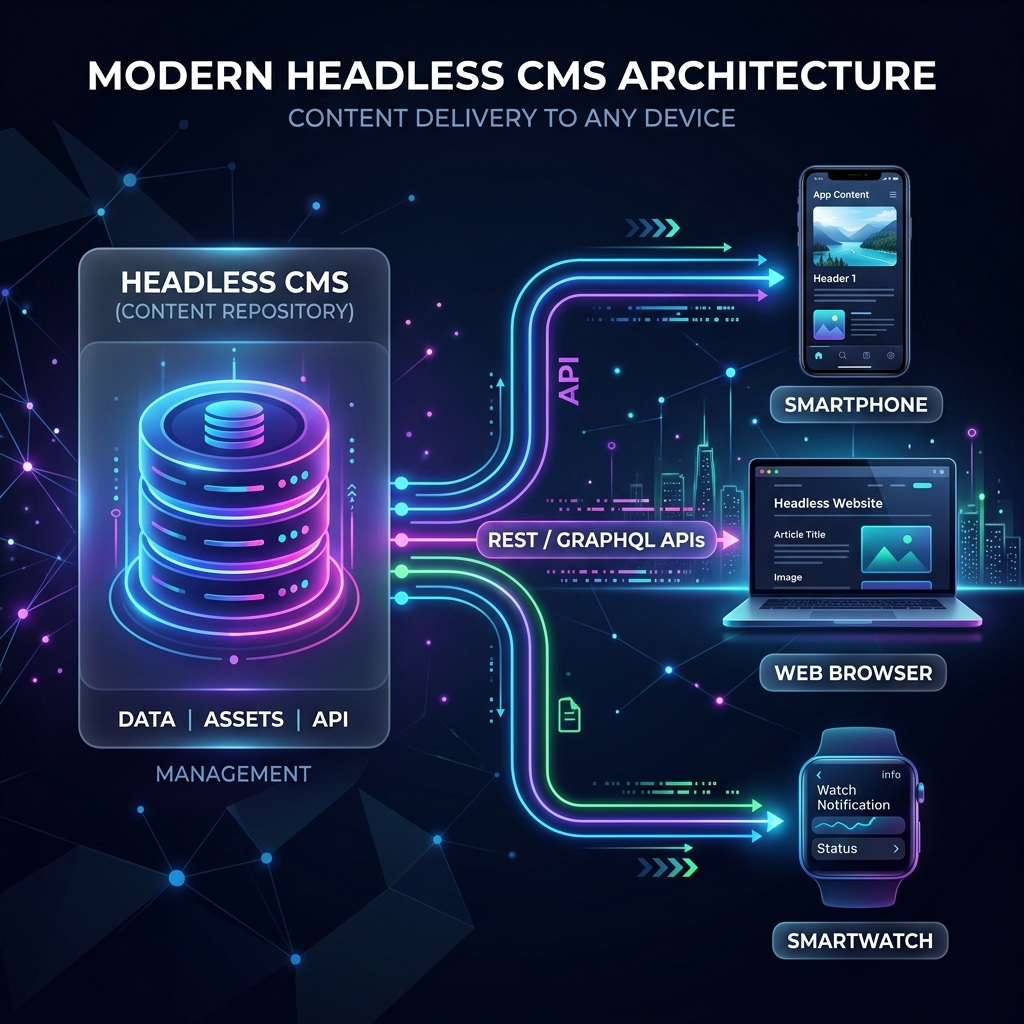
A novel method of web construction called Headless Drupal separates the front-end user experience from the back-end content management system. With headless Drupal, programmers may use any language or framework to create dynamic, interactive front ends while still utilizing Drupal's robust content management features.
This separation of the front end and back end offers a wide range of pertinent advantages to site owners as well as developers. While site owners can simply monitor and update their content without having to worry too much about the code or the backend, developers can continue to work using their choice of programming language or framework.Additionally, headless Drupal can be used to support digital interactions across a variety of platforms, such as conventional websites, voice assistants, and chatbots.
As a trusted Flutter App Development Company, we deliver fast, future-ready, cross-platform apps.
Client Retention Rate
Investment Raised by Startups
Mobile Apps Developed
When building a headless Drupal website, you'll want to ensure that it has the necessary features to meet your project's requirements and provide an excellent user experience.

A robust content management system (CMS) is the core of any Drupal website. Ensure that your headless Drupal setup provides efficient content creation, editing, and organization capabilities.
Headless Drupal relies on APIs to expose content and data to the front-end application. Key API features include support for JSON:API or GraphQL for efficient data retrieval and manipulation.
Implement strong security measures to protect both your Drupal back-end and the front-end application. This includes authentication, authorization, data validation, and protection against common web vulnerabilities.
Optimize your headless Drupal setup for speed and responsiveness. Use caching, content delivery networks (CDNs), and server-side optimizations to minimize load times.
Ensure that your architecture can handle increased traffic and growing content without performance degradation. Scalability can be achieved through load balancing, caching, and efficient database design.
Design the front-end application to be responsive, adapting to various screen sizes and devices. This is crucial for providing a seamless user experience on mobile devices and desktops.
Implement SEO best practices in your front-end application. Ensure that URLs are structured correctly, and metadata can be easily customized for each page or content type.
If your site requires user accounts, implement secure user authentication and authorization mechanisms. Consider single sign-on (SSO) integration if needed.
Include robust search functionality to help users find content quickly. Drupal can provide search capabilities, or you can integrate external search services like Elasticsearch.
Use user data and behavior to provide personalized content recommendations and experiences. This can enhance user engagement and conversion rates.
If your audience spans multiple languages, ensure that your Drupal setup supports multilingual content creation and localization.
Implement analytics tools to gather insights into user behavior and site performance. Tools like Google Analytics can help you track user interactions and optimize your site accordingly.
Ensure that your front-end application is accessible to users with disabilities. Follow web accessibility guidelines (WCAG) to make your site usable by all audiences.
Implement regular backup and recovery procedures to safeguard your data. In the event of data loss or corruption, you should be able to restore your site quickly.
Establish a robust development workflow with version control, continuous integration, and automated testing. This ensures that your codebase remains stable and maintainable over time.
Thus if you are planning to digitalize your services then it's the right time. Consult Our App Developers!

For more than 6 years, we have created Drupal websites for respectable clients all around the world. When you choose us, you can rely on the caliber of our service. We have the greatest experts who will build flexible, scalable, and agile Drupal sites.

In respect of the various business requirements, we offer our clients a range of pricing models. Thanks to our flexible terms of engagement, they can easily hire Drupal developers on an hourly, weekly, or monthly basis.

Our Drupal website development firm is frequently praised for effectively completing tasks on schedule. We were able to reach our deadlines because every team member worked completely together. We have finished a number of projects with a high rate of customer satisfaction.

The efficient PMS (Project Management System) that we have in place has helped to streamline communication. With the help of this, we can regularly update our clients on the project's status. Because of this, we are able to successfully cooperate throughout the course of a project's development.

We continually prioritize the needs of our clients as a leading Drupal web development company. We offer customers entire development solutions based on their particular goals, timescale, and budgetary restrictions. As a result, we have built a base of devoted clients.

Customers can get answers to their inquiries more promptly thanks to our round-the-clock support. If you have any issues with your Drupal website, our proactive technical support team is here to offer first-rate assistance. Our Drupal development company employs this strategy as we continually strive to suit your needs.
Headless Drupal development is an approach that decouples the front-end and back-end of a Drupal website, allowing for flexibility in designing user interfaces while retaining Drupal's content management capabilities.
Headless Drupal offers benefits such as flexibility in front-end technologies, improved performance, scalability, and the ability to deliver content to various platforms and devices.
Traditional Drupal development tightly integrates the back-end and front-end, while Headless Drupal separates them, providing more flexibility in front-end technology choices.
Front-end technologies in Headless Drupal often include JavaScript frameworks like React, Angular, or Vue.js, allowing for dynamic user interfaces.
Yes, content management remains easy with Headless Drupal. Content creators and editors can use the Drupal admin interface to create, edit, and organize content, delivered to the front-end application via APIs.
Yes, Headless Drupal can be used for e-commerce sites by integrating e-commerce solutions with the decoupled Drupal back-end.
Security is vital. Ensure both the front-end and back-end follow best practices for authentication, authorization, data validation, and protection against common web vulnerabilities.
Yes, Headless Drupal is suitable for mobile app development. APIs allow content to be delivered to mobile apps, providing a consistent user experience.
Challenges may include increased complexity due to the separation of front-end and back-end, the need for strong API development skills, and ensuring proper synchronization between components.


Leveraging cutting-edge stacks and robust frameworks to build scalable, secure, and future-proof digital solutions.
CEO, City Of Car
I wanted to take a moment to express my gratitude and appreciation for Shubham Jain. Shubham quickly assumed the leadership of the project during a critical phase when things were uncertain. Despite facing numerous challenges and obstacles along the way, Shubham remained a calm and steady presence, always putting the needs of the project first. He took the time to truly understand the project specifications and overall concept, diving deep to identify potential issues before they could become problems.
CEO, Furniture.Mu
This is one of the best team I have worked with, very professional, submitted within the deadline, and always ready to cooperate. Did a great job, submitted the project one time, and had prompt communication, I will be happy to work with him again. I will also recommend Appic Softwares to anyone looking for a software development company. They were very professional and took the time to listen to our requirements and also provided recommendations that greatly enhanced our software.
Co-founder, Laiqa
The team exceeded my expectations by delivering the project not only on time but also ahead of schedule, which was truly impressive. Their professionalism and attention to detail were evident in every aspect of the work they did. I am genuinely delighted with the results, as they went above and beyond to ensure everything was perfect. The entire process was seamless and hassle-free, making it a pleasure to work with them. I highly recommend their services to anyone seeking quality and reliability!
Founder, SimpleTechX Inc.
Shubham and his team truly went above and beyond in delivering the project, showcasing their dedication and expertise throughout the entire process. Their commitment to achieving high-quality results was evident in every detail, as they took extra steps to ensure the final outcome exceeded my expectations. They met the project requirements and also consistently demonstrated a willingness to go the extra mile to ensure satisfaction. I am thoroughly impressed with their work.
Operations Head, Primemetrics
The quality of work delivered by the team has been truly exceptional, far surpassing my expectations. Their attention to detail and commitment to excellence were evident in every aspect of the project, making the entire experience smooth and satisfying. They demonstrated a high level of professionalism, ensuring that all my requirements were met with precision. Based on this impressive performance, I am highly inclined to hire them again for my next project, confident that they will deliver outstanding results once more.
CEO & Founder, NolimitQR
Very satisfied with the customer service of Shubham. Avinash was taking care of my project and has been very helpful and answered all my questions. He was very professional and replied very fast and with the proper knowledge for my project. We worked on a QR code manu platform and will be happy to again collaborate and work on some other project. They were very clear about the development phase and ensured that my product was delivered within the set time frame.
"I wanted to take a moment to express my gratitude and appreciation for Shubham Jain. Shubham quickly assumed the leadership of the project during a critical phase when things were uncertain. Despite facing numerous challenges and obstacles along the way, Shubham remained a calm and steady presence, always putting the needs of the project first. He took the time to truly understand the project specifications and overall concept, diving deep to identify potential issues before they could become problems."

"This is one of the best team I have worked with, very professional, submitted within the deadline, and always ready to cooperate. Did a great job, submitted the project one time, and had prompt communication, I will be happy to work with him again. I will also recommend Appic Softwares to anyone looking for a software development company. They were very professional and took the time to listen to our requirements and also provided recommendations that greatly enhanced our software."

"The team exceeded my expectations by delivering the project not only on time but also ahead of schedule, which was truly impressive. Their professionalism and attention to detail were evident in every aspect of the work they did. I am genuinely delighted with the results, as they went above and beyond to ensure everything was perfect. The entire process was seamless and hassle-free, making it a pleasure to work with them. I highly recommend their services to anyone seeking quality and reliability!"

"Shubham and his team truly went above and beyond in delivering the project, showcasing their dedication and expertise throughout the entire process. Their commitment to achieving high-quality results was evident in every detail, as they took extra steps to ensure the final outcome exceeded my expectations. They met the project requirements and also consistently demonstrated a willingness to go the extra mile to ensure satisfaction. I am thoroughly impressed with their work."

"The quality of work delivered by the team has been truly exceptional, far surpassing my expectations. Their attention to detail and commitment to excellence were evident in every aspect of the project, making the entire experience smooth and satisfying. They demonstrated a high level of professionalism, ensuring that all my requirements were met with precision. Based on this impressive performance, I am highly inclined to hire them again for my next project, confident that they will deliver outstanding results once more."

"Very satisfied with the customer service of Shubham. Avinash was taking care of my project and has been very helpful and answered all my questions. He was very professional and replied very fast and with the proper knowledge for my project. We worked on a QR code manu platform and will be happy to again collaborate and work on some other project. They were very clear about the development phase and ensured that my product was delivered within the set time frame."

We are all ears!