Real Estate Mobile App Development: Features, Cost Ranges, MLS Data and Steps to Build in 2026
A real estate mobile app costs roughly $20,000 to $65,000 for an MVP with listings, search filters, accounts and lead forms, $50,000 to $120,000 for a mid-market app, and $120,000 to $300,000 or more for a marketplace with MLS or IDX data, maps, messaging and AI recommendations, based on 2026 agency estimates. Data access, integrations and features drive most of the difference.
Key Takeaways
- The 2025 NAR buyer survey, as reported, says 46% of buyers started their search online, 52% found their home online and 70% used a mobile or tablet device. Even so, 88% bought through an agent.
- Agency estimates for 2026: MVP about $20,000 to $65,000, mid-market about $50,000 to $120,000, marketplace about $120,000 to $300,000 or more.
- MLS or IDX integration is usually the biggest add-on, estimated at about $15,000 to $40,000, and data access approval can take months.
- Maintenance is commonly estimated at 15% to 20% of build cost per year.
- Decide your data source and who your users are (buyers, agents or both) before you design features.
Why build a real estate mobile app?
Buyers, renters and agents already search and message on their phones. The 2025 NAR Profile of Home Buyers and Sellers, as summarized by secondary sources and NAR's store listing, reports that 46% of buyers started their search online (20% started by contacting an agent), 52% found the home they bought online and 70% used a mobile or tablet device during the search (NAR). We could not access the full report, so check its tables before quoting exact figures. An app can help you reach those users with saved searches, alerts and fast replies, but it must offer something a website cannot, such as push alerts, offline access or a better agent workflow.

What features does a real estate app need?
| Feature | What it does | Stage |
| Sign-up and login | Email, phone or social login, with roles for buyers, sellers and agents | MVP |
| Listings and database | Properties with photos, price, details and status | MVP |
| Search and filters | Price, location, bedrooms, property type and more | MVP |
| Property pages | Gallery, description, features, agent contact | MVP |
| Favorites and saved searches | Shortlist homes and get alerts for new matches | MVP |
| Maps | Map search, neighborhood and nearby places | MVP |
| Messaging and lead forms | Chat, call, request a visit | MVP |
| Agent dashboard | Manage listings, leads and tours | Phase 2 |
| Virtual tours and 3D | Video and 360 tours | Phase 2 |
| Mortgage and affordability tools | Payment calculators and pre-approval links | Phase 2 |
| Push notifications | Price drops, new listings, tour reminders | Phase 2 |
| AI recommendations and chat | Personalized matches and instant answers | Phase 3 |
For a wider view of what to build, read must-have features of PropTech software. Our related services include real estate chatbots, a real estate CRM, a property recommendation engine and virtual property tours.

How much does it cost to build a real estate app?
| Tier | Typical 2026 estimate | What it usually includes |
| MVP | About $20,000 to $65,000 | Listings, search filters, accounts, lead forms (estimates range from $20,000 to $50,000 to $35,000 to $65,000) |
| Mid-market app | About $50,000 to $120,000 | Maps, messaging, agent tools, notifications, admin panel |
| Marketplace | About $120,000 to $300,000 or more | MLS or IDX feeds, maps, messaging, payments, AI recommendations |
- MLS or IDX integration: about $15,000 to $40,000, depending on the vendor estimate.
- AI recommendations: about $30,000 to $60,000 as an add-on.
- Maintenance: about 15% to 20% of build cost per year.

These ranges come from 2026 agency guides such as RaftLabs, CMARIX and Fruitful Code, which sell development services. One of them calls its ranges directional benchmarks, not quotes. We read search summaries, not the full pages. Costs also depend on platform (iOS, Android or both), design, team location and compliance work.
Planning a real estate app? Tell us your users, data source and budget, and we will help you scope it. Get your project scoped
Where does the listing data come from?
Choose a data source early, because it affects cost and timelines. Options include MLS or IDX feeds, listing APIs from large portals, your own listings database, or a regional provider. One vendor says MLS data access in the US can take 2 to 4 months to approve. Each source has license terms about what you may display and how often you must refresh it, so read them before you design the product. See also our MLS software development page.
What risks and rules should you plan for?
- Data licensing. Display rules, attribution and refresh requirements from your listing source.
- Fair housing and discrimination. Search filters, ads and recommendations must not steer users by protected characteristics. Have counsel review them, especially AI features.
- Privacy and security. Location, contact details and financial data need protection and clear consent.
- Payments and mortgage features. May involve third-party providers and financial regulations.
- App store rules. Apple and Google review policies apply to listings and payments.
How do you build a real estate app, step by step?
- Define the user. Buyers, renters, agents or all three.
- Pick the data source and check license terms.
- List MVP features and park the rest for later phases.
- Design the core flows: search, property page, contact and alerts.
- Choose the approach: native, cross-platform or a no-code start.
- Build and test on real devices with real listings.
- Launch in one city and measure searches, saves and leads.
- Expand features and markets based on data.
How Appic builds real estate apps
Appic Softwares has built custom software since 2018, with offices in Jaipur (India), Frisco, Texas (USA) and Munich (Germany), and a 5.0 Clutch rating from 24 verified reviews. We offer real estate app development, PropTech development and mobile app development, and start new products through MVP development. Our average rate is about $35 per hour, and projects typically start around $10,000. Appic is a publisher with a commercial interest, so compare quotes. For more on the sector, read our PropTech overview.
What changed from the earlier version of this post?
The February 2022 version had a 2026 title but 2022 body text, a truncated and unsourced statistic, no cost figures despite promising them, unsourced claims such as "95% of agencies", mislinked anchors pointing to ecommerce and food delivery pages, and no FAQ. This update adds 2026 cost ranges with sources, 2025 buyer data, features by stage, data source and risk sections, and a build plan.
Ready to build your real estate app? Share your users, data source and timeline. We will reply with a plan and a cost range. Talk to our team
Frequently Asked Questions
How much does it cost to develop a real estate app?
2026 agency estimates put a real estate MVP at about $20,000 to $65,000, a mid-market app at $50,000 to $120,000 and a marketplace with MLS or IDX data, messaging and AI at $120,000 to $300,000 or more. Maintenance is often estimated at 15% to 20% of build cost per year.
What features should a real estate app have?
An MVP needs sign-up, listings, search filters, property pages, favorites and saved searches, maps and messaging or lead forms. Later phases add agent dashboards, virtual tours, mortgage tools, push notifications and AI recommendations. Start with the features your first users need most.
Where does a real estate app get listing data?
Common sources are MLS or IDX feeds, listing APIs from large portals, your own listings database and regional providers. Each has license terms for display and refresh, and one vendor says US MLS access can take 2 to 4 months to approve. Choose the source before you design features.
How long does it take to build a real estate app?
A focused MVP often takes a few months, while marketplaces with data feeds, maps and AI take longer. Data access approval can add months. Published timelines vary by vendor, so ask for a phased plan with milestones and launch a first version in one city before you expand.
Do buyers use mobile apps to find homes?
The 2025 NAR survey, as reported, says 46% of buyers started their search online, 52% found their home online and 70% used a mobile or tablet device, while 88% still bought through an agent. Apps work best when they add alerts, speed or agent tools beyond what a website offers.
What legal issues apply to real estate apps?
Main issues are data licensing from your listing source, fair housing rules for search filters, ads and recommendations, privacy and security of location and contact data, payment and mortgage regulations if you offer them, and app store policies. Ask a lawyer who knows real estate and your markets.
Related Articles
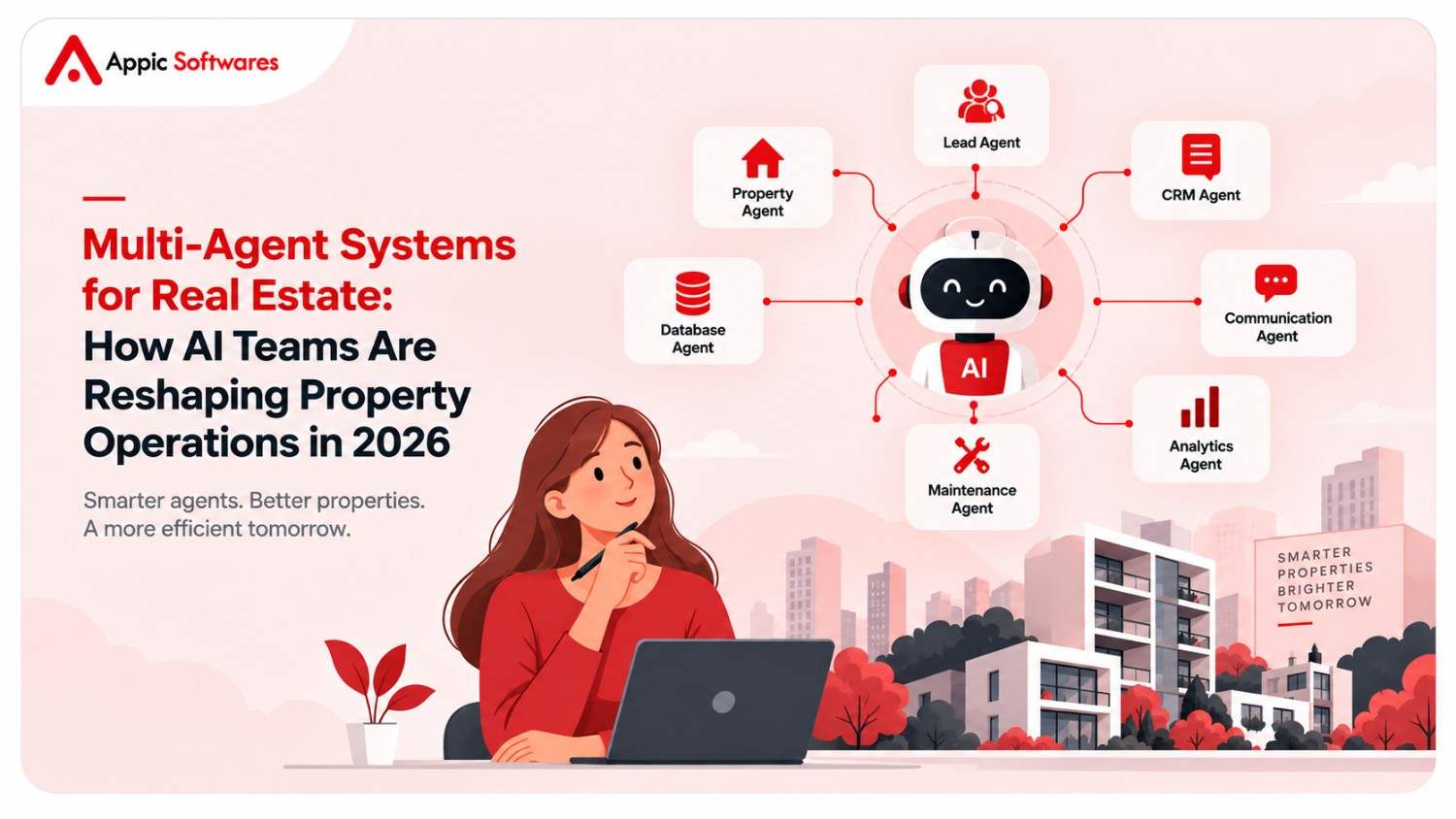
Multi-Agent Systems for Real Estate: How AI Teams Are Reshaping Property Operations in 2026
How To Create An App Like Property Finder In 2026?
Did you know that in 2023, the residential real estate market in Dubai, United Arab Emirates, increased by 43.9%, with over 17,741 transactions occurring in the first two months alone? The United Arab Emirates economy is currently being diversified in large part because of the real estate industry. The UAE government wants to diversify its […]

How Agentic AI Is Transforming Real Estate Operations in 2026

How To Create An App Like LandGlide?
Do you know there were 170K visitors on LandGlide in July 2025, making it the #5th most-grossing app under the business category in the USA? If you too are planning to create an app similar to LandGlide then you are in the right place. Here we will be informing you about the cost and the […]

What is Proptech In Real Estate? Types, Examples, And More 2026
The proptech industry is growing rapidly. It accounted for USD 38,432.2 million in 2024 and is expected to reach $47.08 billion by 2025, growing at a CAGR of 16%. However, if you still need to learn what Proptech is in Real Estate, then this post is for you. Real estate is well-known for using traditional […]
How To Create An App Like Bayut In 2026?
Do you know the annual revenue of Bayut is estimated to be between $15 million to $25 million? The reason behind such a high revenue on their site is the traffic that they have gained on their site. In July 2023 they had 5.3 million visitors on their website. If you too are planning to […]