Real Estate Prototype V/S MVP: Choose The Best
A product’s prototype and minimal viable product (MVP) are crucial components. You work on a product for weeks or months, invest a lot of money in it, and then discover that no one likes it. Alternatively, your product ends up on the app store because there are a lot of comparable apps out there. How would you respond?
Are you aware that one of the most important aspects of developing a product is testing the idea?
Prototypes and MVP enter the picture at this point. They assist you in developing prototypes of the product so you can decide if producing the finished version is worthwhile.
Minimum Viable Product (MVP) and prototype: Both are essential to the process of launching a product, but they have different functions and are used at different phases of development.
We’ll go over the main distinctions between an MVP and a prototype in this blog post to assist you choose which is best for your particular project.
Prototype: A Glimpse into the Future
A prototype is an early iteration of a product designed to illustrate and evaluate its main characteristics. It’s a useful tool in the early phases of product development, frequently employed for concept validation and communication. Let’s examine in more detail a few essential traits of a prototype:
Put Design and User Experience First
Prototypes highlight a product’s interactive and visual features. They aid in providing stakeholders and designers with a sense of the overall aesthetics, layout, and user interface.
Limited Capabilities
Prototypes may only have rudimentary functionality to mimic the user experience, or they may be completely functionally devoid. They are not intended for use in production.
Iterative and Exploratory: Prototypes can change quickly as new concepts and understandings arise because they are very iterative. They are a great method to investigate and improve the idea for the product.
Minimal Expense and Work
In general, creating a prototype requires fewer resources than creating an MVP. It’s a productive method of testing concepts before spending money on comprehensive development.
MVP: Putting a Minimal Product to the Test
On the other side, a working version of a product with the minimal functionality needed to address a particular issue or provide value to users is known as a Minimum Viable Product (MVP). What you should know about MVPs is as follows:
Functional and Usable
MVPs are products that are designed to be used by actual users to address real-world problems, not only wireframes or mockups. Even if their feature set may be small, the ones that they do have functioned as planned.
Validation of Markets
An MVP’s main objec
tive is to confirm the product’s commercial feasibility. It assists in getting actual user input, tracking user activity, and determining whether the product is accomplishing its goals.
Expense and Time Commitment
More time and resources are usually needed to develop an MVP than to create a prototype. It entails developing a rudimentary version of the product that early adopters or clients can utilize.
Iterative Enhancement
Similar to prototypes, MVPs are flexible enough to grow and change in response to user input and market demand. The main distinction is that MVPs are made with actual customers in mind.
Choosing Between Prototype and MVP
Depending on the objectives of your project and where you are in the development process, you can decide whether to create an MVP or a prototype. The following advice can help you decide:
If You Must Test a Concept
Start with a prototype if you have an idea and want to gauge its viability and user approval. It’s an affordable way to test your concept before committing to a finished product.
When It Comes Time for Market Validation
An MVP is necessary when you’ve progressed past the concept stage and want to evaluate how effectively your product will function in actual use. You may validate your busine
ss assumptions and get user input by developing a working product.
Utilize both consecutively
An MVP and a prototype together can often be a very effective strategy. Your concept and design should be refined using a prototype before moving on to an MVP so that actual users may test it.
Think About Your Resources
Your resources will also play a role in the selection. MVPs demand a larger investment, whereas prototypes use fewer resources. When choosing a course of action, take into account your team’s talents, budget, and time constraints.
Conclusion
Selecting the right approach between a real estate prototype and MVP depends on the specific goals and requirements of the project. By understanding their differences and benefits, businesses can make informed decisions to effectively validate ideas and launch successful real estate solutions.
Moreover, if you are looking for a Real estate development company that can help you create a future-proof solution then you should check out Appic Softwares. We have an experienced team of Proptech developers who have created several real estate solutions like RoccaBox.
So, what are you waiting for?
Connect with us now!
Related Articles

Cost To Create MLS Real Estate Software
Do you know the real estate market is growing at a CAGR of 3.14% and is expected to reach $729.40 trillion by 2028? In the current age of real estate, real estate agents, brokers, and clients can make an extraordinary investment in a strong Multiple Listing Service (MLS) platform. In 2025, varying factors will influence […]

Top 13 Real Estate App Development Companies In 2025
In 2025, the real estate app industry saw a surge in users and growth in the number of apps overall. With more than 2,500 real estate apps for different platforms, it’s clear that digital tools are becoming more and more important for property transactions. New studies show that about 70% of all real estate questions […]

VueJs Real Estate App Development: A Complete Guide
Developers should concentrate on Headless CMSs, even though everyone is enamored with ChatGpt and related AI fads. It’s almost like this how web development will go on. Real estate is arguably one of the most useful use cases of headless structure now that APIs are sweeping over the market. Before we go into using Vue.js […]

25 Must Have Real Estate Website Features In 2026
Certain things are essential for a real estate website and that you cannot live without as a real estate agent. Make sure your website contains these components, and you’ll be able to give visitors the information they require, nurture leads, grow your clientele, and build search engine authority to increase organic traffic—the gold standard in […]
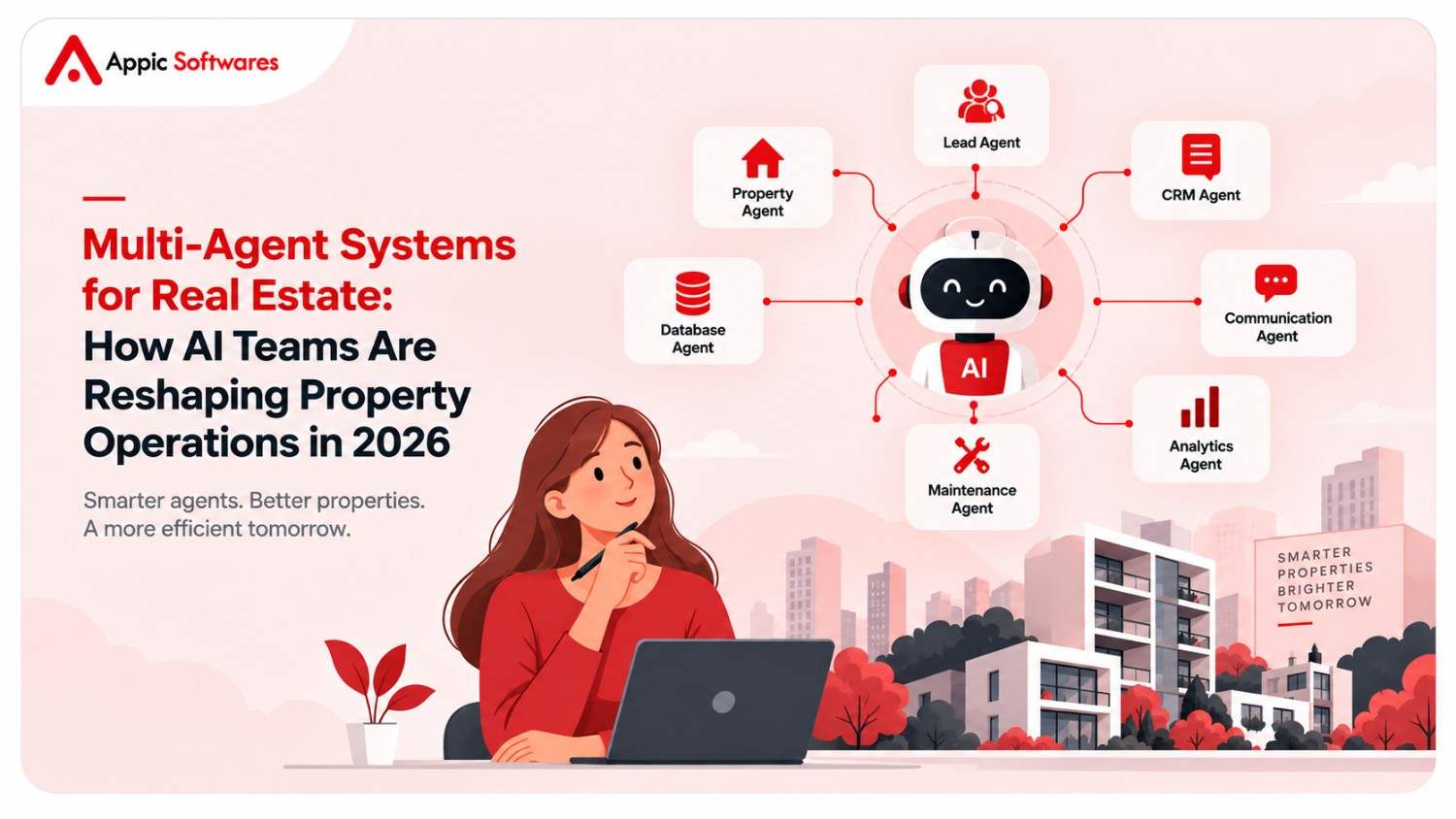
Multi-Agent Systems for Real Estate: How AI Teams Are Reshaping Property Operations in 2026